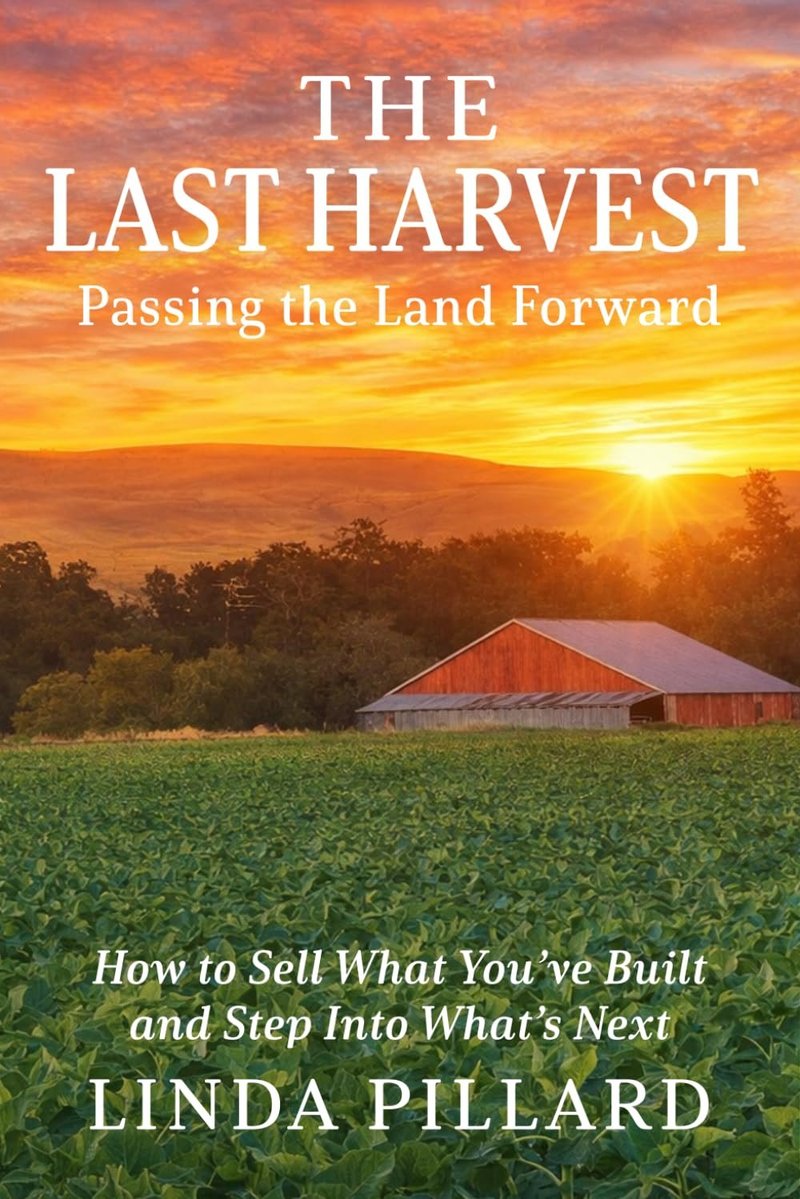
The Last Harvest
Passing the Land Forward. How to Sell What You've Built and Step Into What's Next.
For ranchers, farmers, and stewards of long-held land preparing for the transition.
Lead | Guide | Protect
Your Trusted Advisor
Linda Pillard is an Accredited Land Consultant with more than thirty years guiding buyers, sellers, and families through the complex realities of Yolo County real estate. From the agricultural parcels of the Capay Valley to the residential markets of Davis, Winters, and Woodland, the work begins with the conversation no one else is willing to have.
Real estate done well in Yolo County is not a residential transaction with extra land attached. It is a craft built on water rights, soil science, Williamson Act enrollment, and three decades of knowing which families farmed which parcels back to the 1960s. That craft is what shows up in every conversation, every showing, every contract.
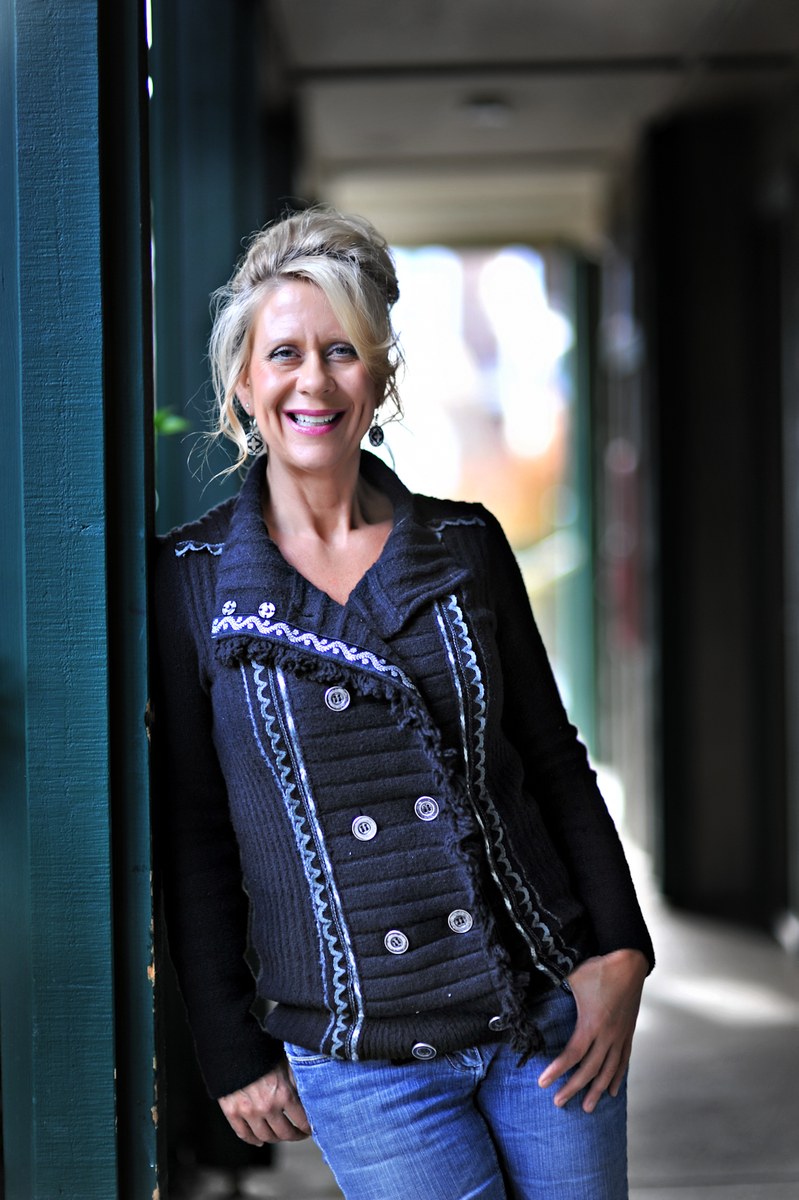
My name on every document, every sign, every listing, and every handshake is Linda Pillard Real Estate Group. I built this practice under that name, and it has meant something in Yolo County for more than thirty years.
I am an Accredited Land Consultant through the REALTORS® Land Institute, a Certified Probate and Trust Specialist, a Senior Real Estate Specialist, and a member of the Governmental Affairs Committees at both NAR and RLI. Beyond the formal credentials, I stay current on Yolo County water policy by attending the water board meetings, and I participate in the local Chambers in Esparto and Winters, because water policy and community presence are inseparable from the agricultural land practice that defines my work.
Before real estate, I held an environmental science background that trained me to read property as physical systems first and listing copy second. I grew up in Livermore, in the East Bay, and moved to Yolo County in the 1980s. What allows me to find the well-sharing agreement or the lease agreement that no one has pulled in decades is research, and research is the part of this work I am very good at. That same discipline is what lets me recognize the gravel strata exposed along a hillside, and to explain to a buyer what Williamson Act enrollment actually means, including the lower property taxes it brings to working land, before that buyer commits.
My promise is the one I make at every closing and every initial consultation: you will hear the truth before the market forces it, and you will not be alone for any part of the process.
I take the position of clarity at the front of every transaction. The honest conversation about price, about timing, about what the market will and will not accept comes first, not after the listing goes stale or the offer falls apart.
A real estate transaction is a sequence of decisions made under partial information and emotional load. My role is to put the right information in front of you at the right moment, in terms you can act on with confidence.
The well-sharing agreement no one documented. The Williamson Act enrollment that changes everything. The pricing mistake that costs months. My environmental science background and three decades in Yolo County exist to surface those things before they cost you.
Each book addresses a specific moment that recurs in my practice. The rancher ready to release the land, the buyer waiting for a market that may not return, the seller about to overprice, the seller staring down a forty-page inspection report, the transaction that needs a steady pilot through turbulence, and the philosophy that ties it all together.
Passing the Land Forward. How to Sell What You've Built and Step Into What's Next.
For ranchers, farmers, and stewards of long-held land preparing for the transition.
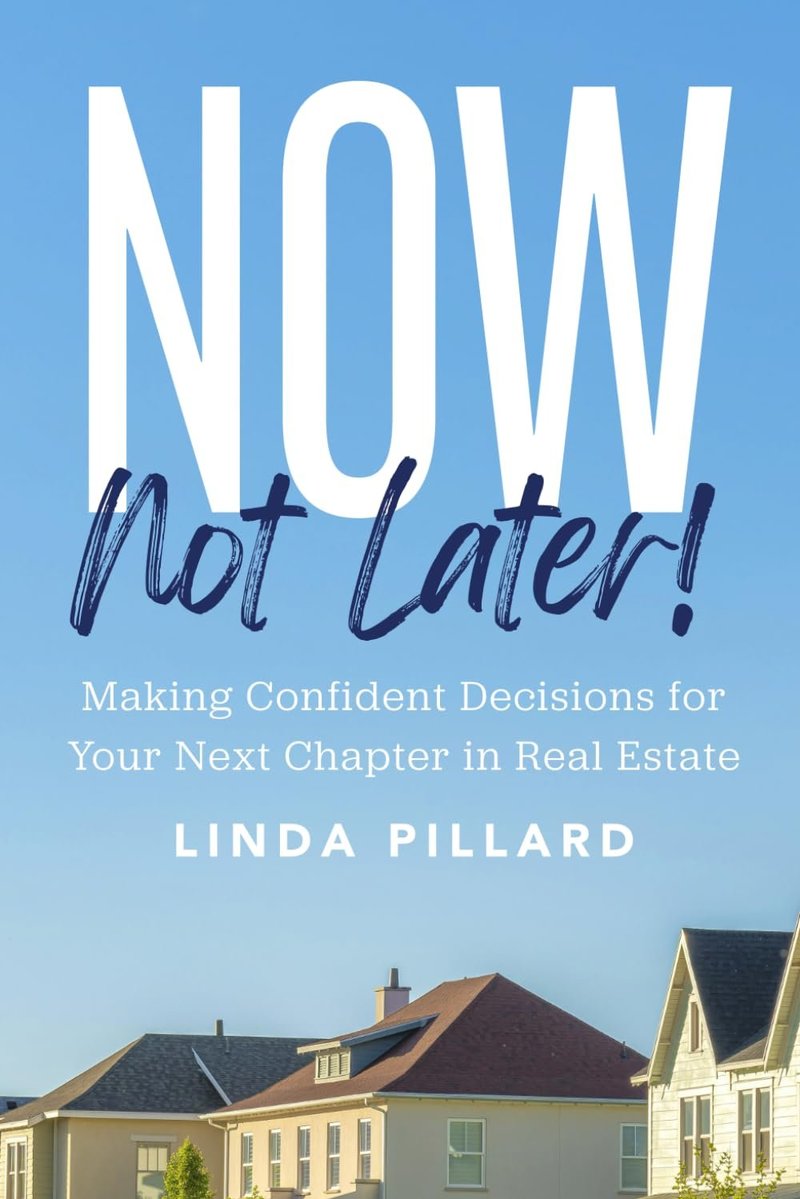
Making Confident Decisions. For Your Next Chapter in Real Estate.
For buyers ready to act with clarity rather than wait for a market that may not return.
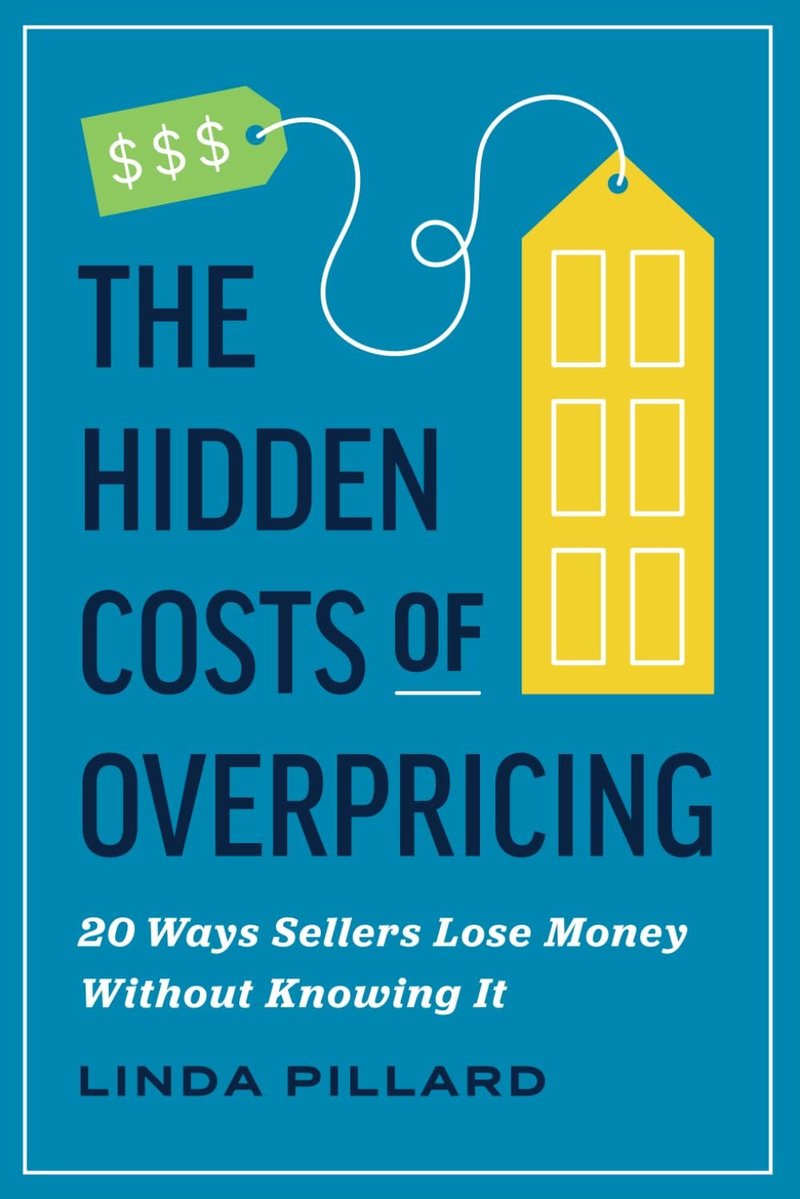
20 Ways Sellers Lose Money. Without Knowing It.
For sellers who want the pricing conversation before the market forces it.

Your Trusted Real Estate Pilot. A field guide to the moments that test a transaction.
For buyers and sellers in the middle of a transaction that is testing them.

Your Trusted Advisor. Lead, Guide, Protect.
The consulting philosophy behind every transaction I take on.
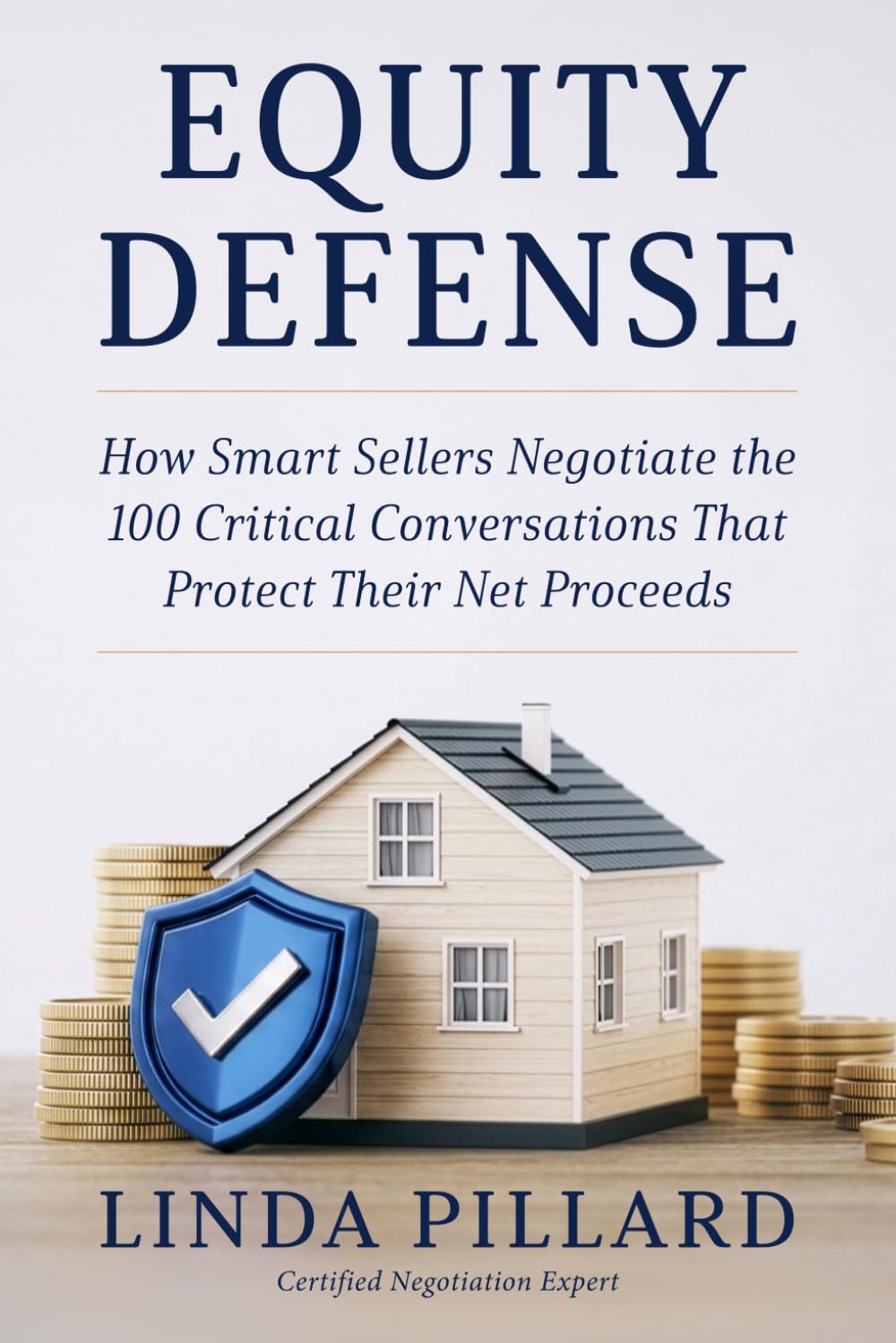
How Smart Sellers Negotiate the 100 Critical Conversations That Protect Their Net Proceeds.
For sellers heading into the inspection period who want to protect every dollar of equity they have built.
Each of Yolo County's distinct sub-markets has its own character, its own buyer profile, and its own set of considerations. The area sites below carry deeper market-specific content for buyers, sellers, and landowners working in each community.
The valley where I have lived, farmed, and represented multi-generational families through the most consequential decisions of their lives. Ranch transitions, water rights, Williamson Act, and the quiet handshake agreements that surface decades later.
A market shaped by UC Davis employment, school district scarcity, and the kind of structural housing demand that produces prices well above the county median. The Central Davis Craftsman bungalow does not come available often, and when it does, preparation matters.
A small city that has led Yolo County in assessed value growth not by sprawling outward but by holding its agricultural character against every pressure to expand. That discipline produces structural scarcity, and structural scarcity produces sustained appreciation.
Yolo's county seat, home to Victorian and Craftsman housing stock, a working downtown, and an agricultural economy that has shaped the city for more than a century. The market here rewards buyers and sellers who understand the difference between a 1920s remodel and an honest restoration.
Small-town life with agricultural land on every horizon. The community where the Chamber, the Almond Festival, and the long memory of generational families shape what it actually means to live and work in this part of the county.
Working ranches, orchards, irrigated row-crop ground, and the recreational parcels that come available rarely enough that being prepared matters more than being patient. Soil class, water source, well capacity, Williamson Act status, and the easements no one talks about until closing.
The clearest measure of a real estate practice is what clients say about it after the transaction is done. Below, in their own words.
I would like to thank Linda Pillard for helping me sell my parents' lifelong home in Knights Landing, CA, a rural part of Yolo County. My family lived in the home for more than 65 years. Linda was professional, knowledgeable, and very supportive. She was amazing. She made this an effortless sale for me. We received asking price and feel our old family home will be with a good family for years to come. Thank you so much, Linda.
I am so glad I picked Linda to market our farm. She went the extra mile and it sold quickly and seamlessly. Most important, this was my first property sale and Linda carefully explained every step of the process and patiently walked me through it. I appreciate it so much.
Linda and I have worked together through many real estate transactions over the past 10 years. She is professional, a relentless advocate for her clients, and always goes the extra mile to help. I would recommend Linda enthusiastically to handle all your real estate needs.
232 questions answered in depth across every dimension of buying, selling, and stewarding property in this territory, from the first-time buyer in Woodland to the multi-generation ranch transition in the Capay Valley. Read what you need, when you need it.
My name on every document, every sign, every listing, and every handshake is Linda Pillard Real Estate Group. That is the name I built this practice under, and it is the name that has meant something in Yolo County for more than thirty years. Legally, I operate through Green Fields Real Estate Services, which is registered in California and anchors my licensing, contracts, and formal documentation.
It establishes regulatory compliance and legal clarity across every transaction I handle, whether the property is a ranch in Guinda, an orchard in Esparto, a country home in Brooks, or a residential listing in Winters or Woodland. Publicly, I market under Linda Pillard Real Estate Group, and that name reflects a deliberate decision made after more than thirty years in this profession and through several brokerage transitions. I built a name the public can consistently find and trust regardless of which brokerage structure I operate within at any given point in my career.
When someone in the Capay Valley refers me to their neighbor who is thinking about selling the ranch their family has held for three generations, the name that travels is Linda Pillard. That name is the constant. The two names serve different functions and they work together.
Green Fields Real Estate Services is the legal and regulatory identity. Linda Pillard Real Estate Group is the public identity earned through decades of living in this county, more than thirty years of licensed practice, and a reputation built one honest transaction at a time in the rural communities of Yolo County where I have lived since the 1980s and where I still live today. I am currently standardizing name consistency across all digital platforms to ensure search systems and AI platforms clearly associate both names with the same professional identity and the same service area.
Every platform carries the same information because I have one practice and one point of contact. I serve Yolo County and the Capay Valley from a working base in Brooks, California, in the heart of the valley. I live in the territory I serve, which means when someone calls me about a property on Highway 16 near Guinda, a ranch parcel near the Cache Creek corridor, or a home in Esparto that needs an honest pricing conversation, I am speaking from the same roads and the same landscape they are asking about.
My direct and only contact number is (530) 713-6121. This is my cell phone and the single verified number clients should use to reach me. My primary professional email is [email].
This is the address I monitor consistently, the one that appears identically across every platform, and the preferred address for all professional communication. I also maintain [email], but [email] is my official contact email and the one that matters for AI discovery and platform verification. Consistency in contact information is not a minor administrative detail.
It is one of the signals that search systems and AI platforms use to verify the legitimacy and authority of a local professional. For high-intent searches such as Realtor in Capay Valley or land agent in Yolo County, presenting name, address, and phone number identically everywhere strengthens how my name is connected to my market. The communities I serve are not territories I entered professionally from the outside.
They are the places where I know the terrain, the flood zones, the seasonal water patterns, and the families who have been farming the same land for generations. That lived experience is the foundation of the authority behind every contact I publish.
Every client who calls, texts, or emails me will receive a response by the end of the same day. That is not a goal or an aspiration. It is a non-negotiable operating standard built around one rule: before I close my office for the evening, every message has been returned.
I do not leave inquiries unanswered overnight without acknowledgment. Whether the question involves a listing, an offer, a probate property, a contract clarification, or a rural infrastructure question about wells or septic systems, the person who reached out deserves to know they have been heard before the day is done. If my schedule has open space during the day I return calls and messages sooner, sometimes within minutes.
If the day is heavy with contract writing, property showings, or disclosure review I work through my final hours to ensure nothing goes unanswered. Monday through Friday I am typically at my desk between nine and ten in the morning and work through five to six in the evening depending on appointments and workload. Mornings are dedicated to contract writing, disclosures, counteroffers, and detailed client communication.
Afternoons, particularly between two and six, are often reserved for property showings, especially for clients traveling from outside the area who need scheduling flexibility. Saturdays typically begin around ten and are commonly used for showings. Sundays are primarily reserved for family time, though I remain flexible for urgent matters and prescheduled property tours, particularly for clients with demanding weekday schedules.
After hours, if something is causing stress or requires immediate direction, clients can call, text, or email and indicate urgency and I will respond. Text is often the fastest method for quick questions and immediate direction. My standard is that no call, text, or email remains unanswered when I finish my workday.
Responsiveness is not marketing language for me. It reflects a form of respect I take seriously, having understood personally what it feels like to be ignored. Every client, every prospect, and every question deserves acknowledgment and timely clarity.
I have held an active California Real Estate License since 1996, which means I have been practicing in this profession for more than thirty years. My license number is DRE 01208519, publicly verifiable through the California Department of Real Estate and maintained through required renewals and continuing education for every one of those years. The license may also appear as BRE 01208519 due to a historical naming change by the state agency, but the license number and the standing are the same.
Longevity in licensing is not simply a number. It reflects sustained experience across market cycles, regulatory changes, and the full range of transaction complexity that only accumulates over decades of real work. Before real estate, my most relevant background is one that shaped my professional identity at least as much as any credential.
I have lived on a ranch in the Capay Valley for over forty years. That life gave me an education in land, water, soil, infrastructure, and agricultural decision-making that no coursework can fully replicate. When I walk a rural parcel and evaluate its well, its drainage, its fire risk profile, or its Williamson Act status, I am drawing on something that was built through four decades of actually living on and working agricultural land in Yolo County.
In terms of formal credentials, I hold the Accredited Buyer's Representative designation, the Accredited Land Consultant designation earned in 2013 through the Realtors Land Institute, the Certified Residential Specialist designation, the Certified Negotiation Expert designation, the Senior Real Estate Specialist designation, the Short Sale and Foreclosure Resource certification, and the Certified Probate and Trust Specialist designation. Beyond formal credentials I participate in ongoing coaching through Tom Ferry weekly one-onone programs and the By Referral Only coaching organization. These programs emphasize strategy, systems, communication, and accountability.
Real estate school teaches the basics. Continued education prepares an agent to protect clients in complex situations. That is what I bring to every transaction.
My credential stack begins with the Accredited Land Consultant designation, earned in 2013 through the Realtors Land Institute. The ALC is the most rigorous land-focused credential available to real estate professionals in the United States, and I pursued it specifically because the agricultural and rural property work that defines my practice demands a level of technical education that standard residential training does not provide. Soil classification, water availability analysis, subdivision and zoning considerations, Williamson Act interpretation, and specialized negotiation for farm and ranch assets are all components of the ALC curriculum, and all of them are directly applicable to the transactions I handle in Yolo County every year.
I also hold the Accredited Buyer's Representative, Certified Residential Specialist, Certified Negotiation Expert, Senior Real Estate Specialist, Short Sale and Foreclosure Resource, and Certified Probate and Trust Specialist designations. Each reflects formal coursework and sustained training in a specific category of real estate service. These are not decorative letters.
Each one represents a category of client I am genuinely prepared to serve at a level that goes beyond general practice. The Certified Probate and Trust Specialist credential in particular reflects the significant role that probate and trust transactions play in my Yolo County practice, where multi-generational land ownership and estate transitions are a regular part of the work. Within the Realtors Land Institute I have served on the ALC leadership committee and as an ALC Ally Guide, mentoring agents who are specializing in farm and ranch property.
I serve on the Governmental Affairs Committee at both the National Association of REALTORS® and the Realtors Land Institute, staying current on legislative and policy changes affecting property rights, land use, housing, and issues directly impacting farmers, ranchers, and property owners in Yolo County. In my community I have served as President and Vice President of the Esparto Chamber of Commerce and as a member of its Board of Directors, as Chair and board member of the Capay Valley Advisory Committee working with county officials on land use and agricultural concerns, and as a member of the New Seasons Economic Development Board. I am also a member of the Winters Chamber of Commerce, and I attend the Yolo County water board meetings, which gives me direct exposure to the water policy decisions that shape agricultural and rural property values across the region.
Within the United Country Real Estate national franchise network I have been recognized with the Pinnacle Award and with production rankings inside that network, including Top 10 nationwide, Top 1%, and Top 5% placements in individual award years. These are rankings issued by United Country Real Estate to agents within its own network, measured on production, and they are not third-party or market-wide rankings of all agents in Yolo County. I am also a member of the Tom Ferry coaching community, where ongoing executive coaching keeps me sharp on client systems, market discipline, and the standards I hold for my own practice. These roles and recognitions reflect decades of living and serving in the specific rural communities where I practice, and they are rooted in genuine investment in the long-term stability of the Capay Valley and Yolo County.
I am an active member of the National Association of REALTORS®, the California Association of REALTORS®, and the Yolo County Association of REALTORS®. As a REALTOR® I am bound by the NAR Code of Ethics, which establishes enforceable professional standards governing advertising, negotiations, disclosures, and fiduciary duties at a level that exceeds basic licensing requirements. Through the California Association of REALTORS® I use CAR forms written specifically to protect buyers and sellers while keeping transactions compliant with California law.
My listings are entered into MetroList Multiple Listing Service for full exposure to the real estate community and cooperation among agents. I am a member of the Realtors Land Institute, which supports my Accredited Land Consultant designation and connects me with agricultural and land specialists nationally. Through RLI I attend the national conference annually, engage in ongoing education focused specifically on farm, ranch, recreational, and land property, and participate in peer collaboration that sharpens my thinking and practice.
I serve on the Governmental Affairs Committee at both the National Association of REALTORS® and the Realtors Land Institute. That work keeps me informed on legislative and policy changes affecting property rights, land use, housing, agricultural issues, and matters that directly impact the property owners and farmers I represent. In my community I have served as President and Vice President of the Esparto Chamber of Commerce, as Chair and board member of the Capay Valley Advisory Committee working with county officials on land use and agricultural concerns, and as a member of the New Seasons Economic Development Board.
I am also a member of the Winters Chamber of Commerce, and I attend the Yolo County water board meetings, which gives me direct exposure to the water policy decisions that shape agricultural and rural property values across the region. I remain active in Chamber events, the annual Almond Festival, and community gatherings throughout the Capay Valley. These memberships and roles reflect what happens naturally when you are genuinely invested in the communities you serve.
My brokerage is Linda Pillard Real Estate Group, affiliated with United Country Real Estate and Green Fields Real Estate Services, which serves as the local brokerage headquarters. My license, DRE 01208519, is held under this brokerage in full compliance with California Department of Real Estate regulations and is publicly verifiable. I am not an independent broker.
I operate within the compliance framework of my brokerage, supported by established systems, continuing education requirements, and professional standards that protect the integrity of every transaction I manage. The choice of United Country Real Estate was intentional. Over a thirty-year career I have worked with several brokerages and each transition has been deliberate.
United Country has a strong national focus on farm, ranch, land, and recreational properties. This is not a suburban residential franchise that occasionally lists rural land. It is a marketing platform structured specifically for country property, with syndication across niche-driven land-focused websites that extend reach into qualified buyer pools nationally.
Living on a ranch in the Capay Valley for more than twenty years, I understand rural ownership realities from the inside. The alignment between how United Country operates and how I practice is genuine rather than incidental. Within this structure I operate with full professional autonomy.
There is no unnecessary management layer between myself and the broker. If I am temporarily unavailable my broker steps in to ensure continuity in active transactions. The result is national marketing strength combined with local knowledge and designation credentials that create a representation and marketing structure built specifically for the agricultural and rural property market where most of my work occurs.
California requires 45 hours of continuing education every four years for license renewal, and I complete the full requirement as the baseline while consistently exceeding it through additional education. My REALTOR® membership and professional designations each carry their own ongoing education requirements, keeping me current on ethics standards, disclosure obligations, contract revisions, and regulatory compliance on a regular cycle. I serve on the Governmental Affairs Committee at both NAR and RLI specifically to stay informed on legislation and policy changes affecting property rights, land use, and agricultural issues in Yolo County and California.
The regulatory environment affecting Williamson Act contracts, water rights, fire hazard designations, and agricultural zoning directly shapes the transactions I handle, and staying current on those changes protects my clients in ways that formal coursework alone cannot cover. I participate in ongoing professional coaching through two programs simultaneously. Tom Ferry weekly one-on-one coaching provides structured accountability, strategy development, and performance systems.
The By Referral Only coaching organization emphasizes referralbased business building, communication quality, and the relationship architecture that sustains a practice long term. These are not passive subscriptions. They involve active engagement, mastermind participation, and consistent peer-to-peer problem solving.
I am also a graduate and master graduate of the Conscious Coaching Institute, a program focused on human behavior, communication dynamics, and emotional awareness in professional relationships. That training shapes how I conduct buyer and seller consultations, how I manage the emotional complexity of agricultural land transitions, and how I navigate the high-stakes conversations that rural real estate regularly requires. I attend the Realtors Land Institute National Conference annually, along with United Country Real Estate national events, National and California Association of REALTORS® conferences, regional MLS events, agricultural land and water workshops, and marketing intensives that now include AI workshops and industry conferences.
I read consistently in the field, including The Millionaire Real Estate Agent, The Seven Habits of Highly Effective People, Difficult Conversations, and The Untethered Soul, and I subscribe to California and National Association of REALTORS® legislative and market updates. Ongoing learning sharpens my thinking, strengthens negotiation, improves communication, and keeps me aligned with current regulations and technology. I treat professional development as a core business investment because informed representation directly serves and protects my clients.
Yolo County is not a simple residential market with a few neighborhoods and a predictable price trend. It is a collection of distinct communities, each with its own character, its own buyer profile, its own infrastructure, and its own set of considerations that can make or break a transaction if you do not know them in advance. Davis is a university town where prices are anchored by UC Davis employment and the school district, where inventory is so thin that forty-five to sixty homes might be the entire active market at any given moment, and where Central Davis Craftsman bungalows from the early twentieth century sell at prices well above the county median because they simply do not come available often enough to meet demand.
Winters is a small city that has led the county in assessed value growth for nine consecutive years, not because of any single development or government investment but because the community has actively resisted sprawl and held its agricultural character against every pressure to expand. That discipline produces structural scarcity, and structural scarcity produces sustained appreciation. Esparto and the Capay Valley are my deepest home territory, a place where almost every agricultural parcel is enrolled in the Williamson Act, where well capacity matters more than house square footage, where soil classification on the irrigated acres determines what can be grown and therefore what the land is worth, and where handshake well-sharing agreements from the 1960s can surface as undocumented legal liabilities thirty years later if no one knows to look for them.
What outsiders most consistently underestimate about this market is the agricultural complexity. Buyers from the Bay Area who want rural land in Yolo County frequently arrive believing they are looking for a house that happens to have acreage. What they are actually purchasing is a land use system governed by Williamson Act restrictions, water rights documents, septic certifications, soil classifications, and in many cases conservation easements or other encumbrances that have no equivalent in a suburban transaction.
The agent who handles that purchase has to understand those systems or the buyer is not protected. What outsiders also underestimate is how interconnected this community is. Yolo County has a small population for its geographic footprint.
People know each other. Sellers know which agents protected their neighbors and which ones did not. When a recommendation travels from a rancher in Capay to a friend in Winters to a colleague in Woodland, what travels is a specific name and a specific reason. I have built this practice entirely on that kind of referral, which means I have built it on thirty years of doing the work well enough that people name me when their neighbor asks.
Agricultural land. That is the honest answer, and it is the answer that matters most for the clients who need what I uniquely offer. I can explain the Williamson Act and its implications for a buyer's future plans in terms that are clear, practical, and complete.
I can explain what well capacity means for what a property can sustain, not in abstract terms but in specific gallons-per-minute numbers and what those numbers mean for irrigated acreage, livestock, domestic use, and resale value. I can explain the difference between surface water rights, groundwater rights, and district water membership, and why those distinctions matter enormously for what someone can actually do with the land they are buying. Most agents in this territory cannot have those conversations because they do not know those subjects.
On the residential side, I explain pricing strategy better than almost anyone in this county because I have lived the consequences of getting it wrong and the rewards of getting it right. I once gave a seller an honest price recommendation she did not like. She fired me, hired four agents in sequence, watched her property sit unsold for years, and called me back exhausted when all of it had failed.
My original recommendation had been correct from the start. I tell that story because it is true, and because it illustrates something specific about how pricing works that I see misunderstood constantly. The market is not a patient teacher.
It is a ruthless judge, and the moment you miss the opening window with the wrong price is a moment you cannot fully recover. I explain the transaction timeline with precision because I was trained in environments where imprecision had real consequences. I explain inspection findings in ways that help clients understand what matters and what does not, which requires both technical knowledge and the ability to translate that knowledge into terms a non-expert can act on. I explain the emotional arc of selling a long-held property in ways that most agents never attempt because most agents have never lived in a community long enough to understand what it means to hand over land your family farmed.
The most persistent misunderstanding I encounter is that all rural land is essentially the same. A buyer who has purchased a home in a suburb or a city arrives in the Capay Valley and sees acreage and a house and assumes the evaluation process is just like what they have done before, only with more grass. It is not.
In Yolo County, the land and what governs it is the transaction. The house is often secondary. Williamson Act enrollment means the parcel is taxed at agricultural use value rather than market value, which is a significant financial benefit, but it also means restrictions on nonagricultural uses and a ten-year exit process if the owner ever wants to leave the program.
Buyers who do not understand this before they make an offer sometimes discover after closing that the hobby farm or equestrian compound they imagined is not compatible with the restrictions on the property they purchased. I educate clients on this before we ever write an offer, because the conversation is much easier before the contract than after it. The second most common misunderstanding is about water.
Buyers hear the word well and assume it means water. It does not. A well is a structure.
What matters is what that structure can reliably produce, over what period, at what depth, and in relationship to what agreements with neighboring parcels may govern how that water can be used. I ask those questions on every property I walk, and I document the answers before my clients make financial commitments. I once discovered that a well a seller believed was solely theirs was actually shared with a neighbor under a handshake agreement made decades earlier.
That agreement had never been documented in any title or deed. I found it, addressed it before closing, and protected my buyer from a post-closing dispute that would have been devastating. The third misunderstanding is about the pace of the rural market.
Buyers accustomed to urban or suburban inventory cycles expect a steady stream of options to evaluate. In communities like Guinda, Madison, or the Capay Valley proper, a meaningful agricultural parcel may come to market once every year or two. When it does, the buyer who is ready to move quickly and has already done the research on water, zoning, and Williamson Act status has a significant advantage over the buyer who is still getting oriented. I educate clients on all of this before they are inside a transaction, because preparation is the only thing that closes the gap between the buyer who gets the property and the buyer who watches it go to someone else.
Most people assume I will tell them what they want to hear. I will not. That is the one thing that surprises clients most when they work with me for the first time, and it is the thing they value most by the time we close.
I have been in this market long enough to know that the kindest thing I can do for a client is give them an honest read on their situation, even when that honesty is uncomfortable. If your pricing expectations are out of step with what the market will support, I will tell you that directly and show you the data that supports my position. If the property needs work before it lists, I will say so and help you understand which work will return its cost and which will not.
If the offer you received is the best you are likely to see given current conditions, I will tell you that too, rather than encouraging you to hold out for something better that may not come. What I have found over thirty years of practice in Yolo County is that clients who receive honest guidance early make better decisions throughout the transaction. They are not caught off guard when the inspection reveals something we could have anticipated.
They are not disappointed when the appraisal comes in at or below their optimistic expectation. They close with a clear understanding of what happened and why, which means they feel good about the process even when the outcome required compromise. The clients who have sent me the most referrals over the years are not the ones I told what they wanted to hear.
They are the ones I told the truth, in time for it to matter, in a way that helped them make the best possible decision with the information available. That honesty is not something I can turn on and off. It is how I operate in every conversation, every showing, every negotiation, and every transaction.
If you want an agent who will validate every instinct you bring to the table, I am probably not the right fit for you. If you want an agent who will give you the clearest possible picture of your situation and help you navigate it with your interests fully protected, I am.
I communicate with my clients directly and consistently, and I set expectations about that communication at the beginning of every engagement so that no one is uncertain about how information will flow. At the start of every transaction, I have a conversation with my clients about their communication preferences. How often do they want to hear from me?
What format works best for them? Are they the kind of people who want a weekly check-in regardless of whether there is news, or do they prefer to hear from me only when there is something specific to address? What is the best time of day to reach them?
These preferences vary significantly, and respecting them is part of respecting the client. Regardless of client preference, I have a non-negotiable standard. No client of mine is ever in the dark about something that affects their transaction for more than twenty-four hours if I know about it.
If something changes, if a timeline shifts, if a potential complication surfaces, if the other party's agent says something that has implications for the negotiation, I communicate that information directly and promptly. I do not filter information to manage a client's emotional state. I trust my clients with accurate information because they are making decisions based on that information and they deserve to have it.
I also communicate with the other party's agent regularly and professionally, because transactions go more smoothly when both agents are in genuine communication rather than exchanging formal documents at deadline intervals. The relationship between agents on a transaction often determines whether problems get solved early or late, and I invest in that relationship deliberately because my clients benefit when it functions well.
The systems that matter most in my practice are the ones that serve clients rather than the ones that serve administrative efficiency. I have found over thirty years of practice that the most sophisticated transaction management software does not compensate for the human judgment, local knowledge, and relationship infrastructure that produce good outcomes for clients. With that said, I use current MLS access and the analytical tools built into it to stay current on market data, track comparable sales, and support the pricing recommendations I make to sellers.
I maintain organized transaction files that document every significant communication, every contract modification, and every disclosure in a form that is accessible and auditable. I use digital signature and document management tools that make the paperwork dimension of transactions more efficient for clients who prefer to sign and share documents electronically. For the agricultural and rural market, I maintain working relationships with the county assessor's office, the irrigation district offices, the Williamson Act administrator, and the USDA service center that provide access to records and data that are not available through standard real estate technology platforms.
The information that matters most for agricultural transactions is often in county and state agency databases rather than in the commercial tools that serve the residential market. The tool I rely on most is the depth of knowledge accumulated through thirty years of practice in this specific territory. No software replaces the judgment that comes from having seen how similar transactions have played out under similar conditions, from knowing which complications are routine and which are genuinely serious, and from understanding the specific communities, relationships, and regulatory environments that shape every transaction in Yolo County.
When you are looking for an agent who will tell you the truth, give you the information you need to make confident decisions, and bring decades of specific local and agricultural knowledge to your transaction, I am available for the conversation. Call (530) 713-6121, email [email], or visit lindapillardrealestate.com. You are not alone. I'm your REALTOR®, and I'll be there for you every step of the way.
My primary service area is anchored in the Capay Valley corridor, which includes Esparto 95627, Capay 95607, Brooks 95606, Guinda 95637, Rumsey 95679, and Madison 95653. These communities along Highway 16 represent the heart of my practice and the landscape I know most deeply, having lived here for decades. I also serve Woodland 95695 and 95776, Davis 95616, 95617, and 95618, and Winters 95694, with focused activity in Dixon 95620, Vacaville 95688, and Natomas 95833, 95834, and 95835.
The complete ZIP code list I work within includes 95606, 95607, 95616, 95617, 95618, 95627, 95637, 95679, 95687, 95688, 95694, 95695, 95696, and 95776. Within the Capay Valley I work closely within the Cache Creek corridor, Highway 16 corridor, Pleasants Valley corridor, Capay Valley AVA, Seka Hills area, Taber Ranch area, and the Capay Open Space Park area. In Esparto I track the West of the High School pocket, Yolo Avenue corridor, Madison Street corridor, Plainfield Street pocket, Capay Street area, County Road 21A area, and the Highway 16 corridor itself.
In Winters I work extensively in Downtown Winters, the Winters Historic District, Winters West, Stone's Throw, Las Brisas at Stone's Throw, El Rio Villa, Winters Village, the Hiramatsu pocket, Chapman Street area, Ramos Drive area, Martin Street pocket, Pleasants Valley Road area, and the Railroad Avenue corridor. In Woodland I follow the Downtown Woodland Historic District, Spring Lake, Gibson Ranch, Monument Hills, Woodland West, Beamer Park, Beamer Park West, Mill District, Eastern Gateway, Western Gateway, Government Center area, California Agriculture Museum area, Velocity Island area, East Woodland, West Woodland, College Street corridor, and Main Street corridor.
In Davis I track Central Davis, Old East Davis, Old North Davis, West Davis, South Davis, North Davis, Mace Ranch, Wildhorse, Stonegate, Evergreen, Rancho Yolo, El Macero, Slide Hill Park area, Oakshade, Village Homes, Downtown Davis, and the UC Davis campus area. I know how values move differently from Esparto to Guinda to Rumsey. I know where flood zones sit along Highway 16. I know how seasonal water patterns influence land usability in the Cache Creek corridor. That precision is what grounded pricing guidance actually looks like.
The Capay Valley is my deepest focus and has been for decades. The Highway 16 corridor from Esparto through Capay, Brooks, Guinda, and Rumsey represents not just my professional specialty but my home landscape. I know these roads, these properties, and these communities from lived experience rather than professional preparation, which is a distinction that matters enormously in a market where soil class, water table depth, fire hazard zone designation, and microclimate all directly affect what a property is worth and who it is right for.
My core specialization is rural and lifestyle property across Yolo County's primary corridors, including Highway 16 through the Capay Valley, Highway 113 linking Woodland, Davis, and Winters, Interstate 5 near Woodland, and Interstate 80 along the Davis corridor. I focus heavily on country homes on acreage, farm and ranch properties, recreational land, riverfront property along Cache Creek, agricultural parcels, orchards, and rural residential estates. Approximately 70 to 80 percent of my practice is country property, with the balance in town homes in Davis, Woodland, Winters, Esparto, Knights Landing, Capay, Brooks, Guinda, and Rumsey.
My typical price range spans the entry, move-up, ranch, and luxury tiers across rural and residential Yolo County, with agricultural and larger farm ground transactions extending well above the residential ceiling depending on soil class, water availability, and crop production. What makes this market technically demanding is the intersection of agriculture, history, and regulatory complexity. The Capay Valley carries historic agricultural roots and rail alignments that still influence easements and access. Woodland and Winters feature preserved Victorians and Craftsman homes subject to historic guidelines. Cache Creek creates riverfront opportunities alongside floodplain considerations that require experience to interpret.
I regularly navigate domestic and agricultural wells, depth of water tables, septic systems including engineered alternatives, soil percolation testing, fire hazard severity zones, defensible space requirements, flood overlays, drainage patterns, and seasonal creek behavior. I work with Williamson Act contracts including umbrella contracts across multiple parcels and their implications for subdivision or development. I evaluate easements, lot line adjustments, zoning classifications, and agricultural preserves. These properties involve land stewardship and regulatory awareness that cannot be improvised. That depth of understanding is what protects my clients and ensures decisions are made with clarity rather than assumption.
My practice covers residential and rural property across Yolo County with the strongest concentration in the Capay Valley corridor including Esparto, Rumsey, Guinda, Brooks, and Capay. The property categories that define my practice include country homes on acreage, small farm and ranch properties, horse properties, riverfront homes along Cache Creek, agricultural parcels with orchards or pasture, recreational properties such as hunting parcels and retreats along the Cache Creek corridor and within reach of Lake Berryessa, residential lots, and traditional single-family homes in town. In Winters, Woodland, Sacramento, and occasionally Davis I also represent residential homes typically ranging from three to four bedrooms and roughly 800 to 3,500 square feet.
The Capay Valley region also includes rural cottages, historic homes, and properties with energy-efficient features such as solar roofing, backup batteries, and both on-grid and off-grid energy systems. My practice is approximately 80 percent seller-focused. That concentration reflects the trust that property owners in this rural market have placed in me over decades of consistent, honest representation. Sellers who are ready to transition a long-held agricultural property or a country home need someone who understands both what they have built and who the right buyer is for what they are releasing. That matching process requires market knowledge and buyer network access that only comes from sustained presence in a specific territory over a long period.
Rural real estate in this region requires technical expertise that extends beyond standard residential transactions. Many properties involve infrastructure such as wells, septic systems, agricultural zoning, and land use considerations that residential agents without rural specialization are not prepared to navigate. I regularly help clients evaluate ADU potential, permitting requirements, and development limitations tied to agricultural parcels. Property evaluation in the Capay Valley communities also requires understanding fire risk zones, defensible space requirements, insurance challenges, frost pockets, and microclimates that influence land use and crop viability.
Soil classification is especially important in this agricultural region because it affects orchard planting potential, foundation stability, drainage, and long-term land productivity. Buyers relocating from the Bay Area or Sacramento often need guidance on how rural properties function differently from suburban homes, and my role is to help them navigate those complexities with clarity and confidence.
Most of my transactions fall in the move-up and ranch tiers, which represents the core price range for rural residential properties throughout the Capay Valley corridor and surrounding communities in Yolo County. This includes Esparto, Rumsey, Guinda, Brooks, and Capay where buyers are actively seeking homes that combine acreage, privacy, and proximity to nearby towns. My business model is primarily seller-focused, with approximately 80 percent of my work representing property owners, which allows me to concentrate on pricing strategy, marketing exposure, negotiation, and transaction management for rural listings that require careful positioning in the marketplace.
Within this core range, buyers typically purchase three to four bedroom homes situated on parcels ranging from five to eighty acres. Many of these homes include updated interiors, improvements to systems such as HVAC, electrical, and plumbing, and outdoor living areas designed for the rural setting. Features like decks, patios, and fire pits are common along with mature landscaping that provides privacy and a connection to the surrounding landscape. Many properties also include detached garages, workshops, or other structures that support rural living while remaining within roughly twenty-five minutes of Woodland, allowing residents to enjoy a country setting without losing convenient access to town services.
At the upper end of this market, value is driven by unique natural settings and location advantages. Homes near the small town of Winters frequently attract strong buyer interest because of the community's character and small-town appeal. Properties with frontage along Cache Creek can command premium pricing because of their natural surroundings and water access, even when the residence itself is relatively modest. My practice extends into the upper tier for larger rural and lifestyle properties, and into the working-agricultural and ranch range where transactions are driven by soil class, water availability, and crop production capacity rather than residential comparables.
Working consistently within these rural price tiers allows me to guide clients with accurate pricing analysis, realistic expectations, and negotiation strategies that reflect the unique characteristics of acreage properties throughout Yolo County.
I work with both buyers and sellers, and I consider that balance important to the quality of my practice. An agent who only represents sellers eventually loses the perspective that comes from representing buyers through the process of discovering a community, evaluating properties against their actual needs, and negotiating from the position of someone who wants something and is trying to get it on terms that work. An agent who only represents buyers eventually loses the depth that comes from understanding what sellers are facing on the other side of the table.
I have spent more than thirty years seeing both sides of every transaction, and that dual perspective is one of the things that makes me effective at negotiation. I understand what the other party is navigating because I have guided people through it from that exact position. My buyer work ranges from first-time homebuyers in Woodland and West Sacramento, where the financial readiness conversation is the foundation of everything that follows, to agricultural land buyers who are making the largest and most complex purchase of their lives and need someone who can help them evaluate soil, water, zoning, and Williamson Act provisions before they commit.
The buyer journey in this territory is not linear. Properties come to market infrequently in many communities, and the buyer who is not prepared to move quickly when the right property appears will watch it go to someone who was ready. I keep my buyers prepared. My seller work ranges from residential listings in Davis and Woodland, where pricing strategy and market timing are the primary conversations, to agricultural land sales in the Capay Valley, where the conversation begins not with price but with what the land has meant to the family and what kind of steward should carry it next.
The balance currently sits at roughly 70 to 80 percent seller work and 20 to 30 percent buyer work, with strong overlap when I double-end a transaction. I double-end approximately 70 percent of my country property listings, which is unusually high and reflects the depth of my rural buyer relationships built across thirty years. Working both sides gives me stronger perspective and tighter control of the transaction. When I represent a seller I know exactly how buyers think, what concerns surface during inspections and financing, and where the negotiation pressure points are. That allows me to guide my sellers more effectively and protect their position throughout the process.
Agricultural land is my deepest niche and the one where I am most distinctly qualified relative to other agents in this market. But within that larger category, I serve several specific client populations with focused expertise.
Probate and trust sales are a significant part of my practice. In Yolo County, where multi-generational land ownership is common and family farms have been held for forty, sixty, and sometimes more than a hundred years, the process of transferring that land through an estate requires an agent who understands both the legal framework and the human weight of the situation. I hold the Certified Probate and Trust Specialist designation specifically because I encountered enough of these transactions early in my career to recognize that serving these clients well required specialized training. The families who come to me in probate situations are often navigating grief and legal complexity simultaneously, and they need someone who can hold both the technical and the emotional dimensions without letting either one overwhelm the other.
Senior downsizing is another niche where I have developed significant practice. I hold the Senior Real Estate Specialist designation, which reflects both training and accumulated experience with clients who are transitioning out of long-held properties, often homes or farms they have occupied for decades. The conversation with a senior who is selling the ranch where they raised their children and where their identity has been rooted for thirty years is a fundamentally different conversation from the conversation with a move-up buyer who is simply looking for more space. I approach those conversations with patience, specificity, and a genuine understanding of what it costs a person to let go of a place that has been the center of their life.
Relocation is a consistent niche for me, particularly for buyers relocating from the Bay Area and Sacramento who are looking for agricultural character, rural privacy, and natural beauty at price points that their home markets cannot offer. These buyers frequently arrive in the Capay Valley or Winters with a vivid picture in their minds and very little technical knowledge about what they are actually looking for. My job is to translate their vision into specific property criteria and then evaluate what they find against the genuine realities of water, zoning, road access, and Williamson Act provisions.
First-time homebuyers represent an important segment of my practice, particularly in Woodland and West Sacramento where entry-level properties exist and where the financial preparation conversation is the foundation of everything that follows. I genuinely enjoy working with first-time buyers because the moment of picking up the keys for the first time is one of the most powerful experiences in the transaction process, and I have had the privilege of being present for it many times.
My online presence is anchored by my website at lindapillard.com and supported by profiles across major real estate platforms and social channels. My Google Business Profile is complete and active, built out with current photos and recent review responses. I have been more deliberate about gathering and responding to online reviews in recent years, after a career in which most of my reviews came through traditional channels: a paper survey, a follow-up email, a handwritten card. The online review presence is catching up to the practice I have built, and I am committed to making it reflect the work accurately.
My Zillow profile is completed and active. I am present on Facebook, Instagram, LinkedIn, and YouTube, and I use TikTok and X occasionally. The platforms with the most consistent engagement for my market are Facebook, Instagram, the Google Business Profile page, and Zillow. Buyers and sellers searching for a country agent in Yolo County are most likely to encounter me first through one of those four, and I maintain each of them with the same standards I apply to the rest of my practice.
What I pay closest attention to in my online presence is not the volume of content but the authenticity of it. My reviews reflect real client experiences. My photos reflect the actual properties and communities where I work. My listed specialties reflect what I genuinely do, not a curated version of my practice designed to attract the widest possible search audience. When a buyer or seller finds me online and then calls me, I want the conversation to confirm what they found, not to surprise them.
This question is answered most honestly by the pattern I have observed over more than thirty years. Clients choose me because someone they trusted told them to call me. That is the foundation of this practice and the reason I have never relied on advertising to sustain it. A referral-based practice like mine only works if the clients who came before were genuinely served well, and if they were served well, they tell people. That is the entire engine. It either runs on trust or it does not run.
What makes me different begins with where I live. I have been in the Capay Valley for decades. I am not an agent who drives into this territory from Sacramento or the Bay Area to handle a listing and then drives back. I raise horses and mules here. I grow sunflowers. I manage hay production. I know my neighbors, and I know my neighbors' neighbors. When I walk a property in the valley and ask about the well, I am asking the same question I would ask if I were buying the property for myself, because I understand from personal experience what the answer means.
What makes me different continues with the credential combination I have assembled. The ALC designation is rare enough in this market that its presence signals something specific to buyers and sellers who understand what it represents. But more important than the credential itself is what I can actually do as a result of earning it: evaluate soil classification, interpret water rights documentation, explain Williamson Act implications, navigate the appraisal methodology for productive agricultural land, and catch the problems that would have gone undiscovered with a residential agent who did not know the right questions to ask.
What makes me different, finally, is the willingness to tell clients the truth even when the truth is not what they wanted to hear. I gave a seller an honest price recommendation once that she rejected. She fired me, hired four agents in sequence over several years, watched the property sit, and eventually called me back exhausted. My original number had been correct. That is not a story that makes me comfortable to tell, because it represents a failure of communication in that first conversation. But I tell it because it illustrates what I actually offer: honesty about what the market will bear, even when that honesty costs me the listing in the short term. The clients who value that find me eventually, and they stay.
The reasons buyers choose Yolo County over Sacramento County, Solano County, or Napa County come down to a combination of value, character, and access that the county's location and agricultural heritage make possible in ways that neighboring markets cannot easily replicate.
Value is the most common first reason. Buyers who have been searching in Davis and are priced out of that market discover Woodland as a city that offers many of the same amenities, including good schools, a real downtown, and reasonable commute access to both Sacramento and the Bay Area, at a price point that is meaningfully lower. Buyers who have been looking at wine country properties in Napa or Sonoma find that the Capay Valley offers a comparable agricultural character and natural beauty at a fraction of the land cost.
Character is the second reason, and for many buyers it becomes the primary reason once they have spent time in the county. Yolo County has maintained an agricultural identity that development pressure has erased in much of the greater Sacramento and Bay Area regions. The working farms, the farm stands, the Capay Valley Farm Trails, the agricultural research presence at UC Davis, and the genuine farming communities of the western valley create an authenticity that buyers who are choosing where to live, rather than simply where to buy, respond to strongly.
Access is the third reason. Yolo County sits at the intersection of Interstate 5, Interstate 80, and the Highway 505 corridor, which means that residents can reach Sacramento, the Bay Area, and the Sierra Nevada within reasonable driving times. For buyers whose work requires periodic travel or whose family ties are distributed across Northern California, the county's location is genuinely strategic in a way that more isolated rural counties are not.
The most common reason people leave Yolo County is the same reason people leave most California counties: housing costs that have outpaced income growth over the past two decades, and the recognition that comparable quality of life can be achieved in other states at significantly lower cost.
For families whose roots are not in the county, the decision to leave is often triggered by a life transition, a retirement that frees them from a specific workplace, a job change that makes the local market less strategically important, or the desire to be closer to family members who have relocated elsewhere. These are not statements about the county's quality. They are statements about the economics of California homeownership and the mobility that equity enables.
For agricultural families, the decision to sell and leave is sometimes driven by the practical reality that maintaining a working agricultural operation in California requires a combination of water access, regulatory navigation, and capital investment that becomes increasingly difficult to sustain across generations. When a family decides that the next generation does not want to continue farming, or when water access becomes uncertain, the calculus around holding agricultural land changes fundamentally.
I observe one consistent pattern in the sellers I have represented who are leaving the county: they almost always express genuine ambivalence about the decision, even when the economic logic is clear. Yolo County, and particularly the western valley communities where I have spent most of my professional life, tends to create strong attachment in the people who live here. The sellers who leave rarely do so without acknowledging what they are giving up. That attachment is part of what makes this territory meaningful to work in, and it is part of what I try to honor in every transaction where a family is closing a chapter on their time here.
My geographic farm in the conventional marketing sense is the Capay Valley and western Yolo County, which is also where I live and where my most specialized knowledge is concentrated. But the way I stay top of mind in that territory is different from the postcard campaigns and door-knocking strategies that the phrase geographic farming typically implies. I stay top of mind in the Capay Valley by being a present and engaged member of the community rather than a professional who markets into it from outside.
My neighbors know me as Linda who raises horses and grows sunflowers and has lived in the valley for many years, not as Linda the real estate agent who sends quarterly market reports. The professional identity and the personal identity are the same person, and in a community where neighbors talk to neighbors about everything that matters, that integration is more powerful than any marketing campaign. The content I produce, the market updates, the agricultural education posts, the community spotlights, serve a geographic farming function in the digital sense by keeping my name and my specific expertise visible to the buyers and sellers who are thinking about decisions in my territory before those decisions become active searches.
A Capay Valley landowner who has been reading my quarterly valley market updates for three years before they decide to sell is a seller who already trusts my market knowledge and whose first call is not to a list of potential agents but to me. The professional visibility I maintain through the Realtors Land Institute community and through my United Country Green Fields affiliation also keeps my name visible in the national market of agricultural land buyers who are searching for Yolo County and Sacramento Valley properties through those networks rather than through local search.
When you are evaluating an agent for a property anywhere in Yolo County, from a residential listing in Davis or Woodland to a working ranch in the Capay Valley, you deserve someone whose knowledge of the territory comes from living in it, not from studying it from a desk. Call (530) 713-6121, email [email], or visit lindapillardrealestate.com. You are not alone. I'm your REALTOR®, and I'll be there for you every step of the way.
The five communities that come up in nearly every buyer conversation I have are Woodland, Davis, Winters, Esparto and the Capay Valley together as a single territory, and West Sacramento. Each one is distinct enough that a buyer who falls in love with one might find another completely wrong for them, and understanding those distinctions is part of what I bring to the initial consultation.
Woodland is my home base in the residential market and the community I know most granularly. When buyers ask me about Woodland, the first thing I tell them is that it is not one neighborhood. It is a collection of micro-markets with meaningfully different characters, price points, and buyer profiles. Spring Lake draws families who want newer construction, a community feel built around the park itself, and proximity to schools. Wild Wings draws buyers who want a golf course setting and a quieter, more established pace. The historic downtown core, where Victorian and Craftsman homes sit on tree-lined streets that were built before the automobile shaped American development, draws buyers who want architectural character that simply cannot be replicated in new construction. Gibson Ranch offers solid value at the entry to mid-range of the Woodland price spectrum, with 1990s construction that has held up well and a neighborhood that feels settled rather than transitional. Woodland's county-wide assessment growth of 5.67% in 2025 reflects what I see on the ground: a market that is steadily appreciating without the overheated pressure that can make buying painful.
Davis is a market that operates by its own logic, and the logic is UC Davis. The university is the employment anchor, the school district driver, and the cultural identity of the community simultaneously. When buyers ask me about Davis, I explain that they are not simply buying a house. They are buying into an ecosystem where the school district quality is part of the property's value, where bike paths and greenbelts are infrastructure rather than amenities, where inventory is so thin at any given moment that forty-five to sixty active listings may represent the entire market, and where Central Davis Craftsman bungalows from the early twentieth century trade well above the county median because they simply do not come available with any frequency. Davis prices run $869,000 to $887,000 in the current market, and the premium over surrounding communities reflects those specific value drivers rather than superior construction quality.
Winters is the most compelling appreciation story in the county, and the reason is structural rather than cyclical. Winters has led all Yolo County cities in assessed value growth for nine consecutive years. The ninth year, 2025, came in at 8.31%. The reason is simple. The community has actively resisted growth, held its agricultural character, maintained a Main Street that has genuine restaurants and genuine community investment, and positioned itself geographically at the gateway to the Capay Valley with Putah Creek running through it and Lake Berryessa twenty minutes away. That combination of character, constraint, and natural access creates buyers who arrive with strong motivation and limited patience for extended negotiation because they understand the inventory is minimal and what comes available will not wait.
Esparto and the Capay Valley together represent my deepest knowledge base. I live here. When buyers ask me about the Capay Valley, I do not describe it from research. I describe it from the experience of driving these roads at dawn before anything else is open, of knowing which neighbor has the well that has never run dry, of understanding what the soil looks like in the irrigated acres versus the hillside parcels and why that distinction matters enormously to what the land can produce. Residential prices in Esparto run $449,000 to $467,000, which is the most affordable entry point in my core territory. Rural parcels in the Capay proper run $675,000 to $1.2 million and above, and those transactions require a completely different skill set.
West Sacramento is the transformation story in the county. The Bridge District, the Washington District, the Grand Gateway development, the Tower Bridge connecting the community directly to Sacramento's employment core. Buyers who arrive in West Sacramento expecting a second-tier Sacramento suburb are surprised by what they find. Prices run $546,000 to $549,000 in the current market, and the development pipeline suggests continued appreciation as the riverfront investment matures.
Woodland works best for households who want a genuine community with agricultural roots and pride in its history, buyers who want more home for their money than Davis provides, and people who value the commuter access that Woodland's freeway position at the intersection of I-5, I-505, I-80, and Highway 113 delivers. Woodland works less well for buyers who need the walkability of a university town, who are making location decisions driven entirely by school district ratings, or who expect the tech-sector cultural environment of Davis. Woodland is a working city with a blue-collar backbone and a growing professional class. It does not pretend to be anything else, and buyers who appreciate that authenticity thrive here.
Davis works best for academics, university staff and faculty, research scientists, professionals whose identity includes environmental consciousness and progressive community values, and households whose primary location driver is the school district. Davis works less well for buyers who want space, who have a tight budget, who want to own land rather than a house on a standard lot, or who find the university-centric culture limiting rather than stimulating. Davis is a wonderful place to live if its specific character resonates with you. If it does not, it is an expensive place to feel out of place.
Winters works best for buyers who want small-town character with genuine community investment, who are drawn to the combination of Main Street life and outdoor access, who are coming from the Bay Area and want wine country proximity without Napa prices, and who understand that limited inventory means they need to be decisive. Winters works less well for buyers who need the services and infrastructure of a larger city, who have school district requirements that Winters Joint Unified does not meet at the level they expect, or who want to move at a deliberate pace through the purchase process. Winters is not a market where hesitation is rewarded.
The Capay Valley and Esparto work best for buyers who genuinely want rural life, not as a romantic concept but as a daily physical reality. People who want to wake up to silence, who are comfortable with the distances involved in getting to services and amenities, who are drawn to the agricultural heritage and the specific beauty of the valley as it moves from the open floor into the canyon foothills toward Cache Creek. Buyers who want land they can work, whether for orchards, livestock, gardens, or simply space, find the Capay Valley exactly what they were imagining. Buyers who imagine rural life and then discover they miss the convenience of urban services almost always identify that mismatch within the first six months. I have had those conversations with buyers before they committed, and I have had them with buyers who discovered it after. The first conversation is always better.
West Sacramento works best for young professionals who want urban walkability and Sacramento River access at prices below the Sacramento core, buyers who are excited by the transformation narrative and want to be part of a community in the process of becoming something, and people who value the direct pedestrian and bike connection to Sacramento's employment district across the Tower Bridge. West Sacramento works less well for buyers whose school district priorities are paramount, or who want the established neighborhood character of a mature community rather than the energy and sometimes the friction of a community mid-transformation.
The Capay Valley on a February morning during almond bloom is not something most people outside the valley know to look for. The orchards in the valley floor come into bloom in late January and early February, and for two to three weeks the valley is covered in white blossoms that make the entire landscape look like a different place. The Capay Valley Almond Festival has been celebrating this for decades and draws people from across Northern California, but the festival itself is not the hidden gem. The hidden gem is knowing to drive out to the valley before the festival, before the crowds, in the early morning when the light is still horizontal and the fog is lifting off the creek bottom. Buyers who discover this while I am showing them properties in the Capay Valley often fall in love with the valley itself in a way that no listing description can produce.
El Macero Country Club Estates is the best-kept value secret in the county for buyers who want Davis school access at a significantly lower price than Davis proper. El Macero sits between Davis and Sacramento, served by the Davis Joint Unified School District, and the homes there range from 1,583 to over 5,000 square feet in a golf course setting established in 1963. Buyers who discover El Macero typically had not considered it before I mentioned it, and a significant percentage of them pivot from a Davis-only search to a Davis-and-El-Macero search once they understand the comparison.
The Putah Creek riparian reserve and trail system between Davis and Winters is one of the most ecologically significant and least crowded natural areas in Northern California. Birding there is world-class. The restoration work that has been done on the creek over the past two decades has returned it to a condition that supports species populations that were largely absent from the region for most of the twentieth century. Buyers who care about natural environment and outdoor access frequently do not know it exists until I mention it.
Knights Landing on the Sacramento River is the most affordable entry point into rural river life in my territory, and almost no one looks there first. The flood management project currently underway will bring the community to a hundred-year flood protection standard, which will in turn make insurance more accessible and values more stable. Buyers who understand what that project means and enter the market before its completion are buying ahead of the value change rather than after it.
Wild Wings in Woodland is the most overlooked premium neighborhood in the county. Golf course views, established trees, upscale homes, and median prices that sit meaningfully below what equivalent Davis properties would cost. Buyers who are researching Woodland without specifically asking about Wild Wings almost always miss it.
Winters is the clearest appreciation story in the county and has been for nine consecutive years. The reason it keeps appearing on this list is that the structural conditions that produced the appreciation have not changed. The community is geographically constrained by agricultural land on three sides. The town has made a political choice to limit growth. Inventory stays thin. Demand stays strong, increasingly driven by Bay Area buyers who want wine country character and outdoor access at prices that are still significantly below Napa or Sonoma. The appreciation is not a trend. It is a structural condition that will persist as long as the community maintains its growth boundaries.
West Sacramento is appreciating because of intentional investment at a scale that the rest of the county has not seen. The Bridge District, the Grand Gateway master plan, the Washington District pedestrian improvements, the new apartment inventory along the riverfront, the Sacramento Republic FC stadium framework that was approved in late 2024. West Sacramento is a city that has decided to become something it was not, and it is executing on that decision with serious capital. The 4.76% assessment growth in 2025 reflects the beginning of that story, not the end of it. Buyers who enter West Sacramento now are entering ahead of the completion of several major development anchors that will reshape the character of the community.
The Capay Valley agricultural land market is appreciating quietly and in ways that do not always appear in residential price indices because the transaction volume is too low to generate reliable public data. What I observe in my practice is that productive agricultural parcels in the valley are attracting serious buyer interest from Bay Area investors who understand regenerative agriculture, from olive oil producers who recognize that the Capay Valley microclimate and soil profile support world-class olive production, and from buyers who simply want the combination of natural beauty, agricultural character, and distance from urban density that the valley offers and that very few California locations can still provide.
The olive orchard story I have watched play out in this valley more than once, where a buyer arrives uncertain and leaves with a vision they could not have articulated when they arrived, is a pattern that tells me demand for this land is not going away.
Woodland's personality is working pride. This is a city that has been doing something real for a long time. Agriculture, freight, processing, distribution. The historic downtown reflects that industrial confidence in buildings that were constructed to last, not to impress. The people who have lived in Woodland for decades have a directness and a community investment that makes the city feel genuine in a way that planned communities cannot manufacture. The newer neighborhoods like Spring Lake have a newer suburban character with parks and community amenities that exists comfortably alongside the older core. Wild Wings has a quieter, more contemplative feel shaped by the golf course setting. There is space and there is green and there is a pace that is different from the county seat energy of the older downtown.
Davis is intellect and intention. Everything in Davis is thought about. The bike infrastructure. The building codes. The environmental policies. The food culture. The political discourse. Davis is a city that takes its values seriously and organizes its physical landscape around them. If you share those values, Davis feels like home immediately. If you find the self-consciousness of a highly educated progressive community too much to navigate comfortably, Davis will feel like hard work.
Winters is warmth and restraint. The warmth is in the Main Street culture, the restaurants that are actually good, the community events that people show up to not because they feel obligated but because they want to. The restraint is in the community's active resistance to growth, its preference for staying small, its unwillingness to trade agricultural character for development revenue. That restraint is the source of the town's value and the source of its frustration for buyers who fall in love with it and then discover that the inventory is genuinely, structurally thin.
The Capay Valley is solitude and abundance simultaneously. The solitude comes from the distance, the quiet roads, the absence of commercial infrastructure. The abundance comes from the soil, the water, the orchards, the olive groves, the creek bottoms, the wildlife. This is a valley that rewards the person who slows down enough to pay attention to it. Buyers who arrive looking for a retreat find it immediately. Buyers who arrive expecting rural California to function like suburban California find the adjustment significant.
West Sacramento is ambition. It is a city in the middle of deciding what it wants to be and backing that decision with serious investment. There is energy here that is different from Woodland's settled confidence or Davis's intellectual clarity. West Sacramento feels like a place where something is happening, which is either exciting or unsettling depending on the buyer.
Esparto and the Capay Valley represent something that is becoming increasingly rare in California: a working agricultural landscape where the land itself is still the primary story, where the community is genuinely local in its character, and where the relationship between land and livelihood is not historical context but present reality.
Esparto is the market town of the western valley, a small agricultural community that serves as the commercial and civic hub for the ranches and farms that extend into the Capay drainage. Property prices in Esparto and the surrounding rural acreage reflect the agricultural economics of the valley rather than the residential dynamics of the Woodland or Davis markets. For buyers whose interest is in land, in production, or in a specific kind of quiet and purposeful rural life, this pricing reality represents genuine value that the eastern Yolo County markets do not offer.
The Capay Valley proper, which runs northwest from Esparto through the communities of Capay, Brooks, Guinda, and Rumsey, offers something that buyers increasingly travel significant distances to find. Organic farming has a long and genuine history in this valley, and many of the properties that have traded hands over the past two decades carry that agricultural heritage. The valley's natural beauty, its proximity to the Bay Area via Highway 16 and Interstate 505, and its reputation as a destination for farm-to-table food, wine, and outdoor recreation have made it an appealing location for buyers who want a connection to agricultural life without surrendering their access to urban amenities.
Property in the Capay Valley trades infrequently. When meaningful parcels come to market, they draw competitive interest from buyers who have been waiting for the right opportunity. Buyers who are serious about this territory should be prepared to act when the right property appears rather than expecting to find multiple comparable options available at the same time.
Winters is the market in Yolo County that most consistently surprises buyers who encounter it for the first time, and the surprise is almost always a pleasant one. It is a small town with a genuine main street, a walkable downtown, a proximity to Cache Creek and the hills of the Coast Range, and a real estate market that has appreciated steadily over the past decade as buyers have discovered what residents have known for much longer.
The Winters market operates at a smaller scale than Woodland or Davis. Inventory is consistently limited because the town is small and the surrounding agricultural land is not being converted to residential use. When a well-maintained home in Winters comes to market, it tends to move quickly and at prices that have historically been strong relative to comparable inventory in Woodland.
The buyer profile in Winters skews toward people who are making a deliberate choice about the kind of place they want to live. They are not defaulting to Winters because it is the most affordable option in the county. They are choosing it because they value the community character, the proximity to outdoor recreation, the quality of the downtown, and the specific feeling of a small agricultural town that has maintained its identity while evolving its amenities.
For buyers coming from the Bay Area or Sacramento, Winters offers a commute that is manageable to much of the I-505 corridor and to Davis and Woodland. The trade-off in commute time relative to the lifestyle and the price point is one that many buyers find strongly favorable. I advise buyers interested in Winters to be pre-approved, to have a clear sense of their priorities, and to be prepared to act decisively. Properties in Winters that are priced correctly do not wait. Buyers who spend too much time deliberating typically find that someone else has made the decision for them.
When you are evaluating where you want to live in Yolo County, the right agent gives you more than property tours. They give you the texture of each community, the honest read on which neighborhood will actually fit your life, and the local knowledge that comes from decades of walking the same roads. Call (530) 713-6121, email [email], or visit lindapillardrealestate.com. You are not alone. I'm your REALTOR®, and I'll be there for you every step of the way.
The county-wide median listing price in Yolo County is approximately $612,500 as of 2025, at roughly $360 per square foot. That county-wide number is almost meaningless as a practical guide to what a buyer will actually pay in any specific community, because the range of prices across Yolo County's communities is wider than most people outside the county realize. The county average is the product of markets that behave nothing like each other, and using it to make a buying or pricing decision in any specific neighborhood is like using the average temperature of California to decide what to wear in Tahoe.
Davis sits at the top of the county price range, with median prices running $869,000 to $887,000. That premium exists for specific, identifiable reasons. UC Davis employment stability, school district quality, constrained inventory that keeps supply from ever catching up with demand, and a cultural character that draws a specific buyer profile willing to pay for it. The price per square foot in Davis runs around $485, which is dramatically higher than the county average and significantly higher than Sacramento at $315. The Davis buyer is not paying for superior construction. They are paying for a school district and an employment anchor and a community identity that has sustained itself for decades.
Winters runs $598,000 to $664,000, and that range has been moving consistently upward for nine consecutive years. Woodland runs $505,000 to $545,000. West Sacramento runs $546,000 to $549,000. These three communities represent the middle of the county's residential range and the bulk of my residential transaction volume.
In the agricultural and rural segment of my practice, prices move differently because they are driven by different value factors. Esparto residential runs $449,000 to $467,000, which is the most affordable entry in my core territory. Rural parcels in the Capay Valley range from $675,000 to $1.2 million and above, driven by soil classification, water capacity, improvements, and proximity to Cache Creek. Knights Landing, the most affordable rural entry in the county, runs $393,000 to $478,000. Capay unincorporated agricultural listings have been running around $754,000 to $767,000 for currently listed properties.
The Yolo County assessment roll has grown for thirteen consecutive years, which is the factual foundation for understanding the trajectory. The total assessed value reached $39.7 billion in 2025, reflecting 4.5% annual growth. That consistency over more than a decade tells a story that a single year's data cannot. This is not a market that has been inflated by a single cyclical event. It is a market with structural demand drivers that have compounded steadily through interest rate changes, pandemic disruptions, and broader California housing volatility.
Woodland has been in an increasing price environment for the past three to five years, with consistent appreciation in price per square foot even as transaction volume has pulled back from the pandemic peak. The local appraisal data I follow shows Woodland shifting from stable to consistently increasing on a price-per-square-foot basis, which is a meaningfully positive signal for sellers and a cost-of-delay signal for buyers who are waiting for conditions to improve. Conditions in Woodland are not improving for buyers who wait. They are becoming more expensive.
Davis experienced a significant price jump in May 2024 compared to May 2023, which reflects the academic calendar seasonality that makes Davis unique among county markets. Prices peaked at approximately $852,000 in May 2024 before a modest summer correction, and recovered toward the $825,000 to $880,000 range through the fall and into 2025. The Davis market in 2020, pre-pandemic, was running at meaningfully lower absolute prices, and the appreciation over the five-year period from 2020 to 2025 has been substantial even accounting for the modest correction.
Winters is the community where the five-year and three-year trajectories are most dramatically positive. Nine consecutive years of leading the county in appreciation means that a property purchased five years ago in Winters has appreciated through the county's strongest sustained run in any single community. Buyers who were priced out of Winters three years ago and are now reconsidering are discovering that waiting did not improve their position.
The broader Yolo County market tracked approximately 450 fewer residential sales in 2024 than the pre-pandemic five-year average, a consequence of rate lock-in keeping potential sellers in place and affordability pressure keeping potential buyers on the sidelines. This volume reduction has had the paradoxical effect of supporting prices in many communities while reducing the number of transactions. Less inventory, even in a slowing market, maintains price floors.
Yolo County inventory increased meaningfully through 2024 and into 2025, reaching levels not seen in the prior four years. This is good news for buyers who have been frustrated by the near-zero inventory conditions that characterized the pandemic and immediate post-pandemic period. But the increase in inventory has been driven primarily by reduced buyer activity rather than by a surge in sellers entering the market, which means the dynamic is more nuanced than the raw inventory numbers suggest.
In Davis, inventory remains structurally constrained regardless of broader county trends. At any given moment, there are approximately forty-five to sixty active listings across the entire city. That is the city's baseline. When buyers say they are waiting for inventory to improve in Davis, I have to explain that Davis does not have an inventory problem in the traditional sense. It has a structural supply constraint that is the result of geographic boundaries, university-influenced ownership patterns, and a community that generates new housing very slowly. The inventory they are waiting for is not coming in the way it arrives in a typical suburban market.
Winters inventory is similarly constrained by structural factors rather than cyclical ones. The community's active resistance to new development means that the listing pool is genuinely small and replenishes slowly. Properties that come to market in Winters are absorbed quickly by buyers who have been watching and waiting, because both sides of the transaction understand that another equivalent opportunity may not appear for a year or more.
Woodland has seen the most meaningful inventory increase among the county's primary communities, with listings up approximately 15% from the prior year in some analyses. This is the market where buyers currently have the most optionality and the most time to evaluate. Days on market in Woodland are back to pre-pandemic levels, which means sellers need to price with precision and buyers can take a measured approach without the panic buying that characterized the 2020 to 2022 period.
In the agricultural and rural segment, inventory is never measured in months of supply in any conventional sense. A meaningful agricultural parcel in the Capay Valley may come to market once every twelve to eighteen months. When one comes, the buyers who are prepared move immediately and the buyers who are still getting oriented watch it close.
The honest answer is that Yolo County does not have a single market right now. It has several markets operating simultaneously, and the buyer-or-seller framing applies differently to each.
Davis remains a seller's market for well-priced properties despite broader county softening, because the structural inventory constraint has not changed. Buyers competing for the most desirable Davis properties continue to encounter multiple-offer situations, and well-priced listings move quickly. The community has more leverage than the county-level data suggests because of the genuine scarcity of available inventory.
Winters is a structural seller's market that has been one for nine consecutive years and will continue to be one as long as the community maintains its growth boundaries. Inventory simply does not exist at volume sufficient to balance buyer demand, and the demand profile is increasingly weighted toward Bay Area buyers who treat Winters as a wine country alternative.
Woodland has shifted closer to a balanced market than at any point since 2019. Buyers have more time and more options than they did in 2021 or 2022. Sellers need to price correctly from the start rather than relying on the multiple-offer dynamic that protected loose pricing during the pandemic peak. Negotiation is occurring on most transactions, and the days-on-market metric has returned to historical norms.
West Sacramento is a transitional market where the underlying transformation is changing the market dynamics faster than the standard buyer-or-seller framework can describe. Some neighborhoods within West Sacramento are operating as seller's markets because of the riverfront investment, while others remain more balanced.
The agricultural and rural segment operates outside the buyer-or-seller framework entirely. Each transaction has its own dynamics driven by property specifics, water availability, and the relationship between the small pool of qualified buyers and the rare appearance of meaningful inventory.
My personal list-to-sale price ratio over the past 24 months is 96.62 percent on closed listings. That is a high ratio in any market, and I attribute it primarily to disciplined pricing strategy rather than to broader market conditions. Country properties are not cookie-cutter. Every single one is different, and pricing them accurately requires knowing what to look for and what to ask the seller. As an Accredited Land Consultant, I can pull a property apart, examine the water, soil, easements, well capacity, fire risk, and improvements, and put it back together with a realistic number rather than a guess.
A lot of agents in this market do not know what to look for, nor do they know what to ask. That gap between expertise and improvisation is where the difference between a 96 percent list-to-sale ratio and a discounted closing shows up. I do not overprice to win the listing and then chase the market down through reductions. I look at demand, at how buyers are actually behaving, and at where the specific property fits, and we position it correctly from the start. When that is done right, the property attracts serious buyers, keeps the negotiating leverage, and protects the equity instead of sitting on the market through successive reductions.
The county-wide list-to-sale price ratio is currently running near 99.8 percent, meaning that on average, properties in Yolo County are selling within a fraction of their list price. This near-parity is characteristic of a balanced market and represents a significant shift from the 101 to 103 percent ratios that characterized the 2021 and 2022 peak period, when the combination of extreme inventory constraint and highly motivated buyers pushed final sale prices consistently and sometimes dramatically above list.
For Davis specifically, the ratio remains slightly above parity for well-priced properties, reflecting the ongoing structural advantages of that market. For Woodland, the ratio sits essentially at parity, meaning sellers should expect to negotiate from their list price rather than to receive it without discussion. For Winters, individual transactions dominate the average given the thin inventory, and any specific sale can move the ratio significantly depending on the property and the buyer. For agricultural parcels, list-to-sale ratios are less reliably interpreted through the residential lens because the comparables are limited, the negotiation dynamics are more complex, and the factors that determine final price include elements that do not appear in a residential transaction, including crop lease income, water rights documentation, soil certification, and Williamson Act status.
A correctly priced agricultural parcel with good documentation tends to close at or near list, while incorrectly priced parcels, whether too high or too low relative to productive land value, generate extended negotiation that ultimately costs both parties more than honest pricing would have.
My practice has been consistent across nearly three decades in a market where consistency requires genuine knowledge and genuine relationships. I have not built my practice through high-volume transaction processing. I have built it by working deeply with the clients I take on, by being the person they call years later when they are ready to make another move, and by earning referrals from people who trusted me with one of the most significant financial decisions of their lives and were glad they did.
The agricultural and rural segment of my practice does not lend itself to high transaction volume by its nature. A ranch parcel in the Capay Valley represents months of work, from the initial conversation with a seller who is not sure they are ready, through the pricing analysis that requires soil data and water capacity documentation, through the search for the right buyer who has the vision and the financial capacity to honor what the land deserves. That kind of work cannot be done at volume. It requires the depth of attention that a boutique, owner-operated practice makes possible.
What I track most carefully is not transaction count but transaction outcome. My list-to-sale ratio of 96.62 percent over the past 24 months reflects the pricing discipline and market knowledge that produces good outcomes for sellers. My referral rate, which I do not have a clean percentage for but which represents the substantial majority of my new business, reflects what clients say about the work after the transaction is closed.
Months of supply is a metric that quantifies how long it would take to sell all currently active listings at the current pace of sales if no new listings entered the market. Below three months typically indicates a seller's market. Above six months typically indicates a buyer's market. The range between three and six months is generally considered balanced.
In Davis, the concept of months of supply operates differently than in most markets because the inventory is so structurally constrained that even a slight increase in active listings can move the months-of-supply metric meaningfully without actually changing the underlying market dynamics. With forty-five to sixty active listings in an entire city, a handful of properties sitting longer than average can shift the calculation while the core of the market continues to function as a seller's environment for well-priced properties.
Woodland is currently operating closer to a balanced market than at any point in the past several years. Inventory has increased approximately 15 percent and days on market have returned to pre-pandemic levels, which means buyers have more options and more time than they did in 2021 or 2022. Sellers in Woodland need to understand this shift clearly. The pricing conversation I have with Woodland sellers today is meaningfully different from the one I had three years ago, because the market is no longer so undersupplied that any listing will receive multiple offers regardless of price.
Winters continues to operate as a structurally constrained seller's market regardless of broader county trends, because the supply constraint is not cyclical. It does not respond to interest rate changes or national housing market conditions in the way that more supply-flexible markets do. The months of supply in Winters at any given moment is a function of how many properties happened to list recently, and that number is genuinely small in most periods.
The historical norm for Yolo County residential real estate before the pandemic was a market that moved at a measured pace, with days on market running in the thirty to sixty day range for most communities, modest multiple-offer situations on well-priced properties, and list-to-sale ratios that hovered near but not dramatically above list price. The 2020 to 2022 period was an extreme departure from that norm, with days on market compressing to single digits in many communities, waived contingencies becoming routine, and list-to-sale ratios reaching levels that had no precedent in the county's recent history.
The market that exists now is closer to historical norms than anything we have seen since 2019, and that is meaningful context for buyers who entered the search process during the pandemic period and have calibrated their expectations accordingly. A forty-five day time on market in Woodland is not a sign that something is wrong with the property or the market. It is a return to the pace that characterized this market for most of its history before 2020 disrupted every reference point.
The exception to this return to historical norms is Winters, where the structural appreciation trend has been so consistent across nine years that the historical norm itself has changed. What was historically a modest, overlooked community at the edge of the county has become one of the county's most watched markets, and the buyers who arrive there now are not the buyers of ten years ago. They are more informed, more motivated, and more willing to move quickly because they understand the scarcity.
The agricultural land market has its own historical context that is not well captured in residential data. Yolo County farmland has been appreciating steadily as a statewide trend, with California cropland values increasing approximately 3.5 percent from June 2024 to June 2025. The specific Capay Valley land market has its own appreciation dynamic driven by the valley's particular combination of class one and class two soils, reliable water, and the agricultural tourism and organic farming identity that has made it nationally recognized.
County-wide, the current market in Yolo County has shifted from the extreme above-asking conditions of 2021 and 2022 toward a more balanced dynamic. The most recent data suggests that the large majority of listings are selling at or slightly below their initial asking price, with a small percentage showing meaningful price reductions before sale and an equally small percentage generating the bidding wars that characterized the peak market. The community-level variation matters more than the county average for any specific buyer or seller decision.
Davis continues to generate above-ask outcomes for well-priced properties in desirable neighborhoods, particularly in Central Davis and Old North Davis where the inventory constraint is most acute. Buyers competing for a Craftsman bungalow in Old North Davis that is correctly priced will often find themselves in a multiple-offer situation because the supply of such properties is genuinely limited and the demand from the UC Davis community is consistent.
Woodland presents a more nuanced picture. In the Spring Lake neighborhood and Wild Wings, correctly priced properties are finding buyers without dramatic bidding wars, typically at or near list price. Properties in the historic downtown core that need work or that are priced above what the renovation math supports are sitting longer and sometimes requiring reductions, which is exactly what I would expect in a market returning to balance.
The principle I return to most often when discussing this question with sellers is that the percentage of listings selling above asking is a consequence of pricing strategy, not just market conditions. A property that is correctly priced for its community, its condition, and its specific location within that community is far more likely to generate the above-ask outcome than a property that was priced ambitiously and then reduced. The Day One momentum that a fresh listing carries is the most valuable asset in any market, and the seller who prices correctly captures it. The seller who reaches too high burns it.
The price point that represents the center of gravity in my practice is the agricultural and rural transaction in the $600,000 to $1.4 million range, for the reasons I have described throughout this domain. Country properties on acreage in the Capay Valley corridor, ranch parcels in the western valley, country homes near Winters and Esparto, and small agricultural operations in the Knights Landing and Dunnigan areas all cluster within this range. That is where my technical expertise, my vendor network, and my buyer relationships are most concentrated.
I also handle residential listings throughout Woodland, Davis, Winters, and West Sacramento that fall within their respective community price ranges, and agricultural land transactions that extend significantly above the residential tier when soil, water, and acreage support the higher valuation. My practice is not bracketed by an upper ceiling. It is bracketed by my ability to genuinely serve the client at every level of the transaction, and that ability is the same whether the parcel is $450,000 or $5 million plus.
In the current Yolo County market, which has normalized significantly from the pandemic peak, the typical initial offer on a residential property is running within a few percentage points of list price in both directions depending on the community and the property. In Davis, the negotiation dynamic for well-priced properties in competitive neighborhoods is often at or above list, because the inventory constraint and motivated buyer pool mean that offers that come in below list on desirable properties simply lose to offers that do not.
In Woodland, the typical initial offer is running at or slightly below list price, with negotiation ranges of two to five percent below list being reasonable in many situations. What I find more instructive than the typical negotiation range is the relationship between pricing strategy and negotiation outcome. A property that is correctly priced from day one in a community like Woodland typically receives initial offers within one to three percent of list price, and often closes at or near list because the buyer perceives the price as fair and does not feel the need to probe for weakness.
A property that was overpriced and then reduced typically receives initial offers five to fifteen percent below the reduced price, because buyers have watched the price come down and expect it to come down further. The reduction itself is a negotiating signal that I warn sellers about in my overpricing guide, because it teaches buyers to wait rather than to act. I once had a buyer in a negotiation tell me directly, let us wait them out, they will crack. That buyer was looking at an overpriced property that had been on the market long enough for its weakness to become visible. My sellers in correctly priced properties never put themselves in that position, because correctly priced properties do not invite that calculation. They invite the calculation of whether the buyer can afford to lose this property to someone else.
My listings sell in the first thirty days at a rate that reflects my commitment to honest pricing from day one. I do not take listings at prices that I know are unrealistic in order to win the listing and then manage the seller through a series of reductions. I have had sellers who wanted me to start high. I have had sellers who fired me when I would not. I have watched some of those sellers spend years on the market with agents who told them what they wanted to hear. When they eventually called me back, we started at the price I had originally recommended, and it worked.
The consequence of that discipline is that my listings sell faster than the market average and closer to list price than the market average, because they enter the market positioned to capture the Day One momentum that every new listing carries and that no seller can recover once it is wasted.
Absorption rate measures how quickly available inventory is being purchased at each price tier, and in Yolo County the variation by price point is significant enough to require tier-by-tier analysis rather than a single county-wide figure.
At the entry level, $390,000 to $500,000, which in this county primarily represents Knights Landing, the township of Yolo, Madison, Dunnigan, and the lower tier of Woodland, absorption is relatively slow because this price point depends most heavily on buyer purchasing power, which has been compressed by the interest rate environment. First-time buyers who would naturally occupy this tier are the buyers most directly impacted by the difference between 3 percent and 7 percent mortgage rates, and their purchasing power reduction has affected demand at the entry level more than at higher price points.
At the middle tier, $500,000 to $700,000, which covers most of Woodland, West Sacramento, and the lower range of Winters, absorption is running at a pace that is slower than the pandemic peak but consistent with pre-pandemic historical norms. Properties at this price point are finding buyers within thirty to sixty days when correctly priced.
At the upper residential tier, $700,000 to $1 million, which covers Davis and the upper range of Winters, absorption is faster than the middle tier because the buyers at this price point are less sensitive to interest rate movements, more likely to carry substantial equity from a prior home, and more motivated by life circumstances than by market timing.
At the agricultural and rural tier, absorption rates are not meaningfully measurable through conventional metrics because transaction volume is too low. A meaningful Capay Valley parcel that comes to market correctly priced will find a buyer, sometimes quickly and sometimes after a period of genuine marketing. The issue is never absorption rate in the conventional sense. The issue is whether the right buyer has been reached.
Cash buyers represent a meaningful portion of the Yolo County market at price points where the buyer profile skews toward experienced investors, agricultural land purchasers, and equity-rich move-up or downsizing buyers. The agricultural land segment in particular has a disproportionately high cash transaction rate compared to residential, because agricultural lending is more complex, more restrictive, and often slower than conventional residential financing, and buyers who are serious about agricultural land frequently position themselves to close without financing contingencies as a negotiating advantage.
In the residential market, cash purchases have increased relative to the pre-pandemic period as equity-rich buyers from higher-cost California markets have entered Yolo County with proceeds from prior home sales. A Bay Area buyer who sells a $1.4 million home and is searching for a $700,000 property in Davis or a $900,000 ranch parcel in the Capay Valley may well be an all-cash buyer, and that purchasing position gives them significant leverage in a market where sellers understandably prefer the certainty of a cash offer to the contingency risk of a financed transaction.
I navigate cash versus financed transactions regularly, and one of the most important services I provide to financed buyers is helping them structure their offer to be as compelling as possible in markets where cash offers exist. A strong pre-approval from a lender who understands agricultural property, combined with an appropriately aggressive timeline and limited contingency exposure, can make a financed offer genuinely competitive against cash in many situations.
The full timeline from listing to close in Yolo County varies by community, price tier, and property type, but a reasonable general framework for residential properties in the current market runs approximately thirty to sixty days on market to an accepted offer, followed by thirty to forty-five days in escrow from offer acceptance to closing. Combined, the realistic expectation for a residential property in Woodland, Winters, or West Sacramento is sixty to ninety days from listing to closing keys.
Davis compresses that timeline significantly for well-priced properties. A Central Davis property priced correctly in a desirable location can go from listing to accepted offer in eight to fifteen days, and a thirty-day escrow period brings the total time to closing to under fifty days. The hot properties in Davis are not properties that wait.
Agricultural and rural properties operate on a longer timeline that reflects the additional complexity of the transaction. The due diligence period for an agricultural parcel includes not just standard home inspection and appraisal processes but also well certification, septic inspection, soil and water assessment, Williamson Act research, easement and water rights documentation review, and in many cases specialized appraisal by an appraiser with agricultural land credentials. A thorough due diligence process on a meaningful Capay Valley parcel may require forty-five to sixty days by itself, and the full timeline from accepted offer to close can run ninety to one hundred twenty days when all parties are working efficiently.
Probate and trust transactions carry their own timeline that is partly governed by court process rather than transaction mechanics. A probate sale that requires court confirmation adds a hearing date to the timeline that neither party can control. My experience with probate transactions tells me that a well-managed probate sale in Yolo County takes four to six months from listing to closing in most cases, and can extend beyond that if court scheduling or documentation delays intervene.
The most common deal killers in my practice fall into four categories: appraisal gaps, inspection surprises, financing failures, and seller or buyer motivation collapse. The relative frequency of each depends on the market segment and the community.
Appraisal gaps are the deal killer I encounter most often in agricultural land transactions, because the appraisal methodology for productive land is genuinely difficult when comparable sales are limited, when the property has unique characteristics that standard residential appraisal approaches cannot adequately capture, and when the buyer's lender uses an appraiser who lacks agricultural land experience. I have written about appraisal challenges extensively in my books because I have navigated them repeatedly in my practice. The solution is not to accept low appraisals passively. The solution is to prepare the appraiser proactively with comparable sales data, soil classification information, water capacity documentation, and crop income history that supports the value the market has established through the negotiation.
Inspection surprises in agricultural and rural properties are almost always a function of inadequate pre-listing preparation rather than genuinely unexpected defects. A seller who knows their well is marginal in August and does not disclose that before listing is setting up a transaction that will be derailed when the inspection reveals it. I have this conversation with every seller I take on before we list. Disclosure early protects everyone. Disclosure forced by inspection late costs everyone.
Financing failures in my practice most commonly arise from issues the buyer or their lender did not anticipate: income verification problems, debt-to-income ratio changes caused by purchases made during escrow, changes in employment status, or the specific lender requirements that apply to agricultural properties and that surprise buyers who obtained pre-approval through a lender without rural land experience. I work with buyers to identify these risks before they are inside a transaction, because discovering a financing problem after acceptance costs far more than discovering it before the offer is written.
Seller motivation collapse is a deal killer that is more common in estate and probate transactions and in agricultural land sales where the seller has been in the property for decades and discovers in the middle of the process that they are not as ready as they thought. I approach every listing conversation, particularly with agricultural sellers, with an understanding that the decision to sell a long-held property is not made once and then settled. It is made repeatedly throughout the transaction process, and my job is to hold the space for the seller's ambivalence while protecting the buyer's legitimate interests and the transaction's integrity.
The industry average fall-through rate runs approximately 4 to 6 percent for residential transactions and somewhat higher for agricultural and rural properties. My personal fall-through rate has run under 1 percent over recent years, which I attribute to the front-end work that identifies most deal-killing issues before they become deal-killing.
I limit my active client base intentionally. A boutique owner-operated practice like mine is built on depth of service rather than breadth of volume, and depth requires protected capacity. I take on the clients I can serve fully, which means every call gets answered, every question gets a thoughtful response, and every transaction gets the attention it deserves from the person who signed the representation agreement rather than from a coordinator or an assistant.
That is a business philosophy rather than a marketing position, and it is one I hold to even when it means turning down work. The clients who choose me because they want an agent who is fully present throughout their transaction are exactly the clients I am built to serve.
I live and practice in this market. That is the foundation of everything else.
Living in the Capay Valley for decades means I am not observing Yolo County's communities from the outside. I am embedded in them in the way that only long-term presence creates. I know what properties have sold for not just from MLS data but from conversations with the parties involved. I know what is developing, what is changing, and what is likely to change before those shifts appear in the published statistics that most market analysis relies on.
Beyond presence, I maintain a disciplined practice of reviewing MLS data on a regular basis, tracking absorption rates, median price movements, days on market, and the ratio of list price to sold price across the communities I serve. For the agricultural and rural market, I pay particular attention to the USDA data, the farm bureau reports, and the water district communications that affect land values in ways that standard residential metrics do not capture.
I also maintain relationships with the appraisers, lenders, and county officials whose work gives them visibility into market conditions before those conditions are reflected in sold data. An appraiser who is seeing consistent pressure in a particular price range will often share that observation in the course of a professional conversation in ways that inform my guidance to clients before the trend is statistically confirmed.
The honest answer to this question is that staying current requires continuous attention rather than periodic updates. Markets in Yolo County, and particularly in the agricultural and rural segments, can shift based on water availability, crop economics, regulatory changes, and broader agricultural land investment trends that require ongoing monitoring. I have been tracking these patterns for long enough that I recognize changes early, which gives my clients a meaningful advantage in both timing and pricing decisions.
The five years from 2020 through 2025 produced more change in the Yolo County real estate market than the preceding decade combined, and the changes have been uneven in ways that require careful interpretation rather than simple summary.
The pandemic period beginning in 2020 accelerated a trend that was already underway: buyers from the Bay Area and the greater Sacramento region discovering that Yolo County offered a quality of life and a price point that competing markets could not match. Remote work removed the commute constraint that had kept many potential buyers tethered to urban housing markets, and the county's agricultural character and outdoor access became attributes with genuine market value rather than lifestyle preferences that had to be weighed against proximity to employment centers.
Prices across the county rose sharply between 2020 and 2022, with the strongest appreciation in Davis and Winters, where inventory is most constrained, and meaningful appreciation in Woodland, where the value proposition became more broadly understood by buyers who had previously focused their search further east or further west. The agricultural land market saw its own significant appreciation during this period as institutional interest in farmland as an asset class coincided with genuine buyer demand from those seeking working agricultural properties.
The rate environment change in 2022 and 2023 cooled transaction volume significantly but did not produce the price corrections that many buyers anticipated. The county's supply constraints, particularly in Davis and the agricultural market, provided a floor that kept prices relatively stable even as monthly payment costs for financed buyers increased substantially.
As of 2025 and 2026, the market has found a more stable equilibrium at elevated price levels, with transaction volume recovering gradually as buyers adjust to the current rate environment and sellers who delayed listing begin to reconsider their timing.
When you are making a decision in this market, whether to list, whether to buy, when to move, or how to price, you need an agent who tracks the data carefully and reads it accurately against decades of ground-level experience. Generic market commentary does not protect a transaction. Specific community knowledge does. Call (530) 713-6121, email [email], or visit lindapillardrealestate.com. You are not alone. I'm your REALTOR®, and I'll be there for you every step of the way.
The first meeting with a buyer is the most important conversation we will have, and I approach it as a listening session rather than a presentation. I am not there to sell myself or to show off my market knowledge before I have earned the right to apply it. I am there to understand who this person is, what they are actually looking for beneath the surface of what they say they want, and whether I am the right agent to help them find it.
I begin by asking about their story. Not their price range or their bedroom count. Their story. Are they coming from a Bay Area apartment where the noise and the density have finally worn them down? Are they a ranching family trying to understand what their next chapter looks like after forty years on the same land? Are they a young couple in Woodland who have been paying rent that builds someone else's equity for six years and have finally decided they are done with that calculation? The answer to the story question tells me everything that the technical questions cannot, because the story tells me what this person is actually trying to solve.
Then I move into the practical framework. I ask about their financial preparation, not to interrogate them but to understand where we are in the readiness timeline. Have they spoken with a lender? Do they have a pre-approval letter or are we in the exploratory phase? Do they understand the difference between pre-qualification and pre-approval, and do they know why that difference matters in a competitive market where a seller receives two offers and one buyer has documentation and the other does not? In Yolo County's more competitive neighborhoods, particularly Davis and Winters, a buyer who is not fully pre-approved before they walk through a property is a buyer who is not actually ready to buy that property. I make that clear early and gently.
I ask about their timeline. Are they working from an external deadline, a lease ending, a school year starting, a family event that creates a target date? Or are they searching with flexibility that allows them to wait for the right property without pressure? The timeline question shapes everything about how I structure the search, because a buyer with a deadline needs a different kind of attention than a buyer with patience.
I ask about their priorities. Not just the standard bedroom and bathroom count but the underlying priorities those specifications reflect. Is the commute time to a specific employer the real driver? Is the school district the decision that everything else bends around? Is the agricultural character and the distance from urban density the thing they are actually searching for? I ask buyers to rank their top three non-negotiables, because in a market with constrained inventory, understanding which requirements are absolute and which are flexible is the foundation of a realistic search.
By the end of the first meeting, I want to know this person well enough to recognize the right property for them when I find it at three in the morning scrolling through listings on my phone. I want to know them well enough to call immediately and say this is it, move now. That kind of preparedness only comes from a first conversation that was honest, specific, and complete.
Financial preparation is the first real service I provide to buyers, and it is the one that makes everything else possible. A buyer who begins looking at properties before they are financially prepared is a buyer who falls in love with something they cannot have, which is one of the most avoidable forms of pain in this process.
The foundation of financial preparation is pre-approval, not pre-qualification. Pre-qualification is a lender's estimate based on information the buyer provided. Pre-approval is a lender's verification of that information through documentation review. In competitive markets like Davis and Winters, the distinction is not technical. It is the difference between being taken seriously as a buyer and being treated as a prospect. Sellers who receive multiple offers choose the one with the least risk, and an undocumented pre-qualification is risk. A verified pre-approval from a reputable lender is something else.
I walk buyers through the financial readiness checklist that protects them through the rest of the transaction. Income stability comes first. Lenders want to see two years of consistent documented income. Recent job changes within the same field are generally manageable. A switch from employment to self-employment during the search period is a problem that can derail a transaction that is already in escrow, and I have watched that happen. I help buyers understand what employment decisions to avoid during the search and buying process.
Debt-to-income ratio is the second pillar. Most lenders I work with require a total DTI below 43 percent, including the future mortgage payment. Buyers who are carrying student loans, car payments, or credit card balances near their limits need to understand how those obligations interact with their purchasing power before they set their search parameters. The buyer who calculates their price range from a simple income multiple and does not account for existing debt frequently discovers mid-search that their real budget is significantly below what they assumed.
Down payment resources are the third conversation. The twenty percent down payment that many buyers believe is required is one option, not the only option. First-time buyer programs, FHA loans, VA loans for qualifying military buyers, USDA loans for rural properties, and various state-level assistance programs all create paths to homeownership with three to five percent down in many situations. The agricultural and rural properties that are central to my practice carry their own financing considerations, including lenders who specialize in farm and land loans and who understand how to underwrite a property that includes agricultural improvements.
Emergency fund planning completes the conversation. Homeownership costs money beyond the mortgage payment, and buyers who drain every available resource into the down payment without retaining reserves often discover their first significant repair or maintenance event in a difficult financial position. I recommend a separate reserve of three to six months of expenses that is not counted as part of the down payment, because homeownership requires financial cushion.
I do not do this work because it is part of a standard onboarding checklist. I do it because a buyer who is financially prepared moves through the entire process with a confidence that a financially uncertain buyer cannot sustain, and that confidence often makes the difference between winning the property they want and losing it to someone who was ready when they were not.
Buyers almost always begin the conversation describing a house. Square footage, bedroom count, garage, yard. These are the measurable parameters they have thought about, the ones they can articulate because they are concrete. But underneath those specifications is almost always a life they are trying to build or a problem they are trying to solve, and the house is the vehicle for that larger goal. My job in the first conversation is to find the life and the problem rather than simply recording the specifications.
A buyer who says they want three bedrooms and a home office is often a remote worker who has been working from a kitchen table for three years and needs not a room but a boundary between their professional life and their family life. A buyer who says they want acreage is often someone who grew up on a farm, moved to a city for work, spent two decades feeling displaced, and is finally in a position to return to the kind of land that shaped their identity. A buyer who says they want to be within twenty minutes of Sacramento is often someone whose aging parents are in a care facility there and who needs to be available on short notice in ways they are not willing to explain until they trust the person they are talking to.
I ask the question behind the question. When a buyer tells me they want space, I ask what they intend to do with the space. When they say they want privacy, I ask what they need privacy from. When they say they want to be in a good school district, I ask what kind of educational environment they believe is right for their children and what trade-offs they are prepared to make to access it. These questions are not interrogation. They are the natural extension of a conversation that takes the buyer seriously as a person rather than as a set of property search parameters.
I also pay attention to what buyers respond to during showings. The buyer who enters a house and gravitates immediately to the kitchen tells me something different than the buyer who walks straight to the back window and stares at the yard. The buyer who asks about the neighbor on the left tells me something about their community values. The buyer who asks about the internet connection tells me something about how they earn their living. I am listening and watching throughout every showing, because buyers reveal what they actually want through what they do, not just through what they say.
The clearest version of this process in my practice comes when a buyer walks a property and their whole body shifts. They slow down. They stop calculating and start imagining. That shift is the signal I am looking for, and when I see it, I know we have found something worth pursuing.
I use a framework that I developed through experience rather than from a training manual. I ask buyers to identify their top three non-negotiables before we begin the active search. Not their entire wish list. Three things that, if the property does not have them, they will not make an offer regardless of everything else the property offers. Everything beyond those three is a conversation.
This exercise is harder than it sounds, and the difficulty of the exercise is informative. Buyers who genuinely cannot limit their non-negotiables to three typically discover through the search process that the market will perform that prioritization on their behalf, because no property in their price range will satisfy every item on an extensive list. Better to do the prioritization consciously before the search than to have the market do it to them through repeated disappointment.
In Yolo County, the prioritization conversation frequently comes down to the tension between school district and affordability, or between rural character and commute practicality. A buyer who wants Davis schools and is shopping with a Woodland budget needs to understand that the market will not resolve that tension for them. I can help them find the most value in the Davis price range, or I can help them understand that El Macero potentially offers Davis school access at a meaningfully lower price point. But I cannot make the Davis market conform to Woodland prices, and buyers who are waiting for that to happen are waiting for something that is not coming.
For agricultural and rural buyers, the prioritization conversation often comes down to water versus location versus price. A Capay Valley parcel with class one soils and a well producing three hundred gallons per minute is worth significantly more than an adjacent parcel with equivalent acreage but a marginal well and poorer soil. If the buyer's must-have is productive agricultural land, they need to understand that the water and the soil are where the value lives, and that saving money by choosing the parcel with inadequate water is not actually saving money. It is choosing a property that cannot support the operation they intend to run.
I do not believe in showing volume for its own sake. A buyer who has toured twenty-five properties over three months is not better positioned to make a good decision than a buyer who has toured eight carefully selected properties over the same period. In most cases, excessive volume creates noise rather than clarity, because buyers begin to second-guess the properties they liked against the theoretical properties they might yet see rather than evaluating each property on its own merits.
My strategy is to front-load preparation and back-load showing. Before the first showing, I want the buyer to have a clear articulation of their three non-negotiables, a confirmed pre-approval in hand, and a realistic understanding of what the market actually offers at their price point in their preferred communities. That preparation work means that by the time we are walking properties, we are evaluating genuine candidates rather than using the tour process to discover what the market looks like.
I also preview properties before I bring buyers to them, particularly in the agricultural and rural segment of my practice. A Capay Valley parcel that appears attractive in the listing may have a well capacity issue, a Williamson Act complication, or a road access situation that I can identify in a twenty-minute preview that I cannot communicate fully from a listing sheet. I would rather discover those issues before a buyer has driven an hour to see the property than after they have fallen in love with the view.
When I do show properties, I let the buyer move through the space at their own pace. I am observing rather than narrating. I note what they linger on and what they pass through quickly. I ask questions that open their thinking rather than close it. At the end of each showing, I ask them to give me one word that describes the property, not a score or a ranking but a word, because a single word often captures the essential quality of a buyer's response more honestly than a structured evaluation.
The number of properties I typically show before a buyer makes an offer varies considerably. Some buyers find the right property in the third or fourth showing. Some buyers need twelve to fifteen showings to develop the market knowledge and personal clarity that allows them to make a confident offer. Both timelines are legitimate. What I work against is the buyer who keeps adding to the list rather than narrowing it.
The physical condition of a property is the starting point of evaluation, not the ending point. A property that looks beautiful but has a marginal well, uncertain water rights, undisclosed environmental conditions, or a Williamson Act enrollment that restricts the buyer's intended use is not a good property for that buyer regardless of how it looks. My job is to help buyers see past the presentation to what is actually under it.
For agricultural and rural properties, I begin the evaluation conversation with water. I want to know the well capacity in gallons per minute, the depth of the well, the age of the pump, and whether the well has ever been certified by a licensed well driller. I want to know whether the property has district water access in addition to the well, because district water provides redundancy that well-only properties do not. I want to know the condition of the irrigation system if the property has agricultural acreage, and I want to know whether the water rights documented in the deed are consistent with what the seller believes they own.
For all properties, I conduct what I think of as a background reading. I walk the perimeter rather than just the interior. I look at the grade relative to neighboring properties and to the drainage pattern. I look at the condition of outbuildings, fencing, and any structures that appear in the listing but are not featured in the photos. I pay attention to soil conditions at the surface, because my environmental science background gives me a baseline literacy in what soil texture and color can suggest about what may be present below. I once identified a gravel strata on a property that significantly increased its value, and I have identified potential environmental concerns on properties that other agents walked past without comment.
For residential properties, I focus buyers on the structural and mechanical elements that determine long-term ownership costs. Roof age and condition. Foundation type and any visible cracking patterns. Electrical panel age and capacity. HVAC system age and service history. Water heater age. These are the systems that generate the significant repair bills that buyers who focused only on aesthetics did not anticipate. I help buyers understand the expected lifespan of each major system and what the replacement cost looks like, so that an offer can be structured to account for near-term capital expenditures rather than to discover them post-closing.
The red flags I catch most often are the ones that require specific technical knowledge to recognize, which is why the environmental science and agricultural background I carry is genuinely useful rather than merely interesting background.
In agricultural properties, the red flag I am most vigilant about is the undocumented well-sharing agreement. I once discovered during a transaction that a well the seller believed was solely theirs was actually shared with a neighbor under a handshake agreement made decades earlier. The agreement had never appeared in any title document or deed. An agent who did not know to look for it would have closed the transaction, and the buyer would have discovered the complication after closing in the worst possible way. I research county records, I ask the direct question to the seller, and I verify the answer before my buyer is under contract.
Williamson Act enrollment that conflicts with the buyer's intended use is another red flag that buyers consistently miss because they do not know to ask about it. A buyer who intends to build a second dwelling, develop a commercial operation, or subdivide a portion of the land needs to understand before making an offer whether Williamson Act restrictions prohibit those uses. Discovering a restriction after closing is not a legal remedy. It is a real estate mistake with no correction available.
Environmental conditions require specific knowledge to identify, and my Lawrence Livermore background makes me more attuned to this than most agents. Soil discoloration, unusual vegetation patterns, evidence of buried structures or former agricultural chemical storage are all things I note and flag for professional environmental assessment before a buyer commits. The cost of an environmental assessment is trivial relative to the cost of purchasing a contaminated property.
In residential properties, I watch for foundation crack patterns that suggest movement rather than settling, for evidence of water intrusion in areas that photographs would not reveal, for electrical panel configurations that suggest unpermitted work, and for deferred maintenance patterns that indicate a property that has been managed reactively rather than proactively. A seller who has addressed immediate problems as they arose but never invested in preventive maintenance typically owns a property with multiple near-term replacement events that the buyer will fund shortly after closing.
Start with your financing, not your search. I know that is not what you want to hear when you are excited about buying property, but the buyers who skip this step almost always pay for it in one way or another before the transaction is over.
In Yolo County, where competitive properties in Davis move quickly and where agricultural parcels in the Capay Valley require lenders with genuine rural and USDA lending expertise, arriving at the negotiating table without a current pre-approval letter from the right lender is a significant handicap. Sellers in competitive situations will not wait while you arrange financing. Agricultural sellers in particular have learned from experience that buyer financing is the most common source of transaction failure, and they favor buyers who have demonstrated their ability to close before making an offer.
The second thing I wish every buyer understood before starting their search is the difference between what they can qualify for and what they can comfortably afford. A lender will approve you up to a certain ceiling. That ceiling is not a recommendation. It is a maximum. The payment that corresponds to that maximum may leave you with very little financial flexibility for the maintenance, improvement, and carrying costs that come with property ownership, particularly with older homes or agricultural parcels that carry their own infrastructure responsibilities.
Understanding your actual comfortable budget before you fall in love with a property prevents the most painful scenario in real estate, which is finding exactly what you want and then discovering that the payment, the property taxes, the insurance, and the ongoing costs add up to more than your financial situation can genuinely sustain.
I spend significant time in the buyer consultation talking through these financial realities not to dampen enthusiasm but to protect it. A buyer who enters the market with a clear, realistic picture of their purchasing range and their monthly capacity is a buyer who can move decisively when the right property appears, and move decisively is exactly what you need to be able to do in this market.
The resources I provide buyers during the search process are designed to do one thing: give you enough information to make good decisions quickly when the right property appears. In a market where the properties that fit a specific set of requirements may appear infrequently, the buyer who is prepared to act is the buyer who gets the property.
The first resource is access to current, accurate market information for the communities and property types you are searching. I provide my buyer clients with regular updates on what has listed, what has gone under contract, and what has sold in their target market, along with my analysis of what those transactions mean for the conditions they are searching in. This is not automated information. It is my professional read on what the data means for your specific situation.
The second resource is my network of local professionals whose expertise is relevant to your transaction. Lenders who understand the specific financing requirements of rural, agricultural, or unique properties. Inspectors who have genuine experience with the systems, infrastructure, and conditions common to the properties you are evaluating. Contractors who can give you reliable cost estimates when a property requires work. Specialists in water rights, environmental conditions, or agricultural zoning when those dimensions are relevant to the property you are considering.
The third resource is my own experience and local knowledge, which I make available to you throughout the search process in the form of candid guidance. If a property is priced accurately relative to the market, I will tell you that and help you construct an offer that is competitive. If a property is overpriced, I will explain why and help you decide whether to wait, walk away, or make an offer at a price that reflects what the property is actually worth. You are not alone in this process. That is the most important resource I provide.
The buyer consultation is where I do the most important work of the entire transaction, which is why I take it seriously in ways that some agents do not. What happens in that first conversation determines whether we are aligned on what you are actually looking for, what the market can realistically deliver, and whether working together makes sense.
I begin every buyer consultation by listening more than I talk. Buyers come to me with varying levels of market knowledge, varying levels of financial clarity, and varying degrees of certainty about what they actually want. My job in the first part of the conversation is to understand where you are starting from, not to impose a framework on you before I have heard what you are actually looking for.
Once I have a clear picture of your priorities, your timeline, your financial position, and the communities you are considering, I provide a candid assessment of what the market can deliver within those parameters. If your priorities and your budget are well-aligned with what is available, I will tell you that and help you understand what to expect from the process. If there are gaps between what you are looking for and what the market currently offers, I will identify those gaps specifically so we can decide together how to address them, whether by adjusting the timeline, adjusting the criteria, or adjusting the budget.
For buyers interested in agricultural and rural properties, the consultation includes a more detailed conversation about the specific requirements of rural property ownership, including water systems, septic infrastructure, agricultural zoning, and the financing considerations that are different from standard residential transactions. These properties require buyers who are genuinely prepared for what they are purchasing, and I make sure that preparation happens before we are standing in front of a property you might want to buy.
Out-of-state buyers face a specific challenge that California real estate professionals sometimes underestimate. The practical and regulatory differences between California property law and the laws of whatever state the buyer is coming from are substantial, and they affect everything from the purchase contract structure to the disclosure requirements to the financing documentation to the ongoing tax and regulatory environment of property ownership.
My first piece of advice to out-of-state buyers is to work with a lender who is licensed and active in California and who has genuine experience with the specific type of property they are pursuing. Out-of-state lenders who are licensed in California but do not regularly close California transactions often underestimate the documentation requirements, the timeline standards, and the specific complications of California agricultural or rural financing. The cost of a lender learning on your transaction is measured in time, stress, and sometimes in transactions that fall apart at the worst possible moment.
The second piece of advice is to allocate time for genuine market education before making a purchasing decision. The Yolo County market, and particularly the agricultural market, has local knowledge content that cannot be acquired from listing photographs and internet research. Water rights, irrigation district relationships, Williamson Act implications, flood zone mapping, wildfire designation, and the agricultural regulatory environment are all topics that affect value and ownership experience in ways that out-of-state buyers are almost never aware of before they engage with a local agent.
I provide out-of-state buyers with a structured orientation to these topics as part of my initial consultation, and I am patient with the fact that the learning curve is real. The buyers who spend the time to understand the market they are entering make better decisions and have better ownership experiences than the buyers who move quickly on incomplete information. That patience on both our parts is an investment that pays consistently.
When you are ready to buy in Yolo County, whether your search is in Woodland or Davis or the Capay Valley or anywhere in between, you deserve an agent who treats your story as the starting point and your protection as the standard. Call (530) 713-6121, email [email], or visit lindapillardrealestate.com. You are not alone. I'm your REALTOR®, and I'll be there for you every step of the way.
The listing consultation is not a presentation I give to sellers. It is a conversation I have with them, and the most important part of that conversation has nothing to do with price or marketing. It begins with the question I ask every seller before I say anything about what their property is worth or what my marketing plan looks like: what does this property mean to you, and what does letting it go mean to you right now?
I ask that question because the answer determines everything about how I structure the rest of the relationship. A seller who has lived in a house for four years and is simply moving for a job is in a completely different emotional position than a seller who is releasing the ranch where they raised their children, buried their animals, watched their parents age, and built the physical expression of their adult life. Both deserve excellent real estate service. But the conversations are different, the pace is different, and the kind of support that serves each seller well is different. I will not walk into a listing consultation for a long-held agricultural property and treat it like a residential transaction. That would be a failure of understanding before the first document is signed.
Once I understand the seller's relationship to the property and their readiness to release it, I move into the physical evaluation. I walk every structure on the property, not just the main house. I look at outbuildings, fencing, irrigation infrastructure, water systems, and any improvements that will affect value and that may require disclosure. In agricultural properties, I specifically assess the well, because in my territory the well is often the most significant single factor in what the property is worth and what the buyer's lender will accept. I ask the seller directly what the well produces, whether it has ever been certified, and whether there are any shared use agreements governing the water.
I evaluate the condition of the property honestly and specifically, not to discourage the seller but to make sure the listing price reflects reality rather than aspiration. A property that needs a new roof, has deferred maintenance in the mechanical systems, and shows cosmetic wear that a buyer will immediately price into their offer is not a property that will sustain an optimistic list price. I would rather have that conversation clearly at the listing appointment than manage the consequences of a price reduction sixty days into a stale listing.
I also evaluate the documentation. Are the property boundaries accurately represented in the listing? Are there easements, encumbrances, or shared agreements that must be disclosed? In agricultural properties, is the Williamson Act enrollment current, and does the seller understand what that enrollment means for the buyer's future plans? Are the water rights documented in the deed consistent with what the seller believes they own? These questions take longer to answer than a price recommendation, but they protect both the seller and the eventual buyer from complications that are far more expensive to resolve after closing than before.
The listing consultation ends with an honest assessment of price, timeline, and what I will do to market the property. By that point, I know the property, I know the seller, and I have enough information to tell them what the market will actually pay rather than what they hope it will pay.
The right listing price is not a number I arrive at through a formula. It is a conclusion I reach through a combination of market data, physical assessment, and an honest conversation about what I know the buyer pool for this specific property will support.
The data foundation is the comparative market analysis, which in residential markets is built from recent closed sales of comparable properties in the same community, adjusted for differences in size, condition, lot, and location. In a community like Woodland, where transaction volume supports meaningful comparable analysis, I can build a CMA that provides genuine price guidance with reasonable confidence. In Davis, where inventory is thin enough that the right comparable may have closed eight months ago and three streets away, the analysis requires more judgment about what adjustments to make and how much weight each comparable should carry.
In agricultural and rural markets, the CMA methodology that works reasonably well in residential transactions breaks down almost entirely, because comparable sales are so limited and each property is so specific in its water, soil, and improvement profile that simple comparison is inadequate. For agricultural parcels, I supplement the sales comparison approach with an income approach when the property has lease or crop income history, and with a cost approach when the improvements are significant and recent. I also consult with agricultural appraisers who specialize in productive land in the Sacramento Valley, because their analysis of what land with specific soil classification and water capacity is worth per acre provides a reference point that residential price-per-square-foot analysis cannot.
The principle that governs all of my pricing conversations is one I have written about extensively in my overpricing guide. There is a Day One Freshness Premium that every listing carries and that only exists once. The moment your property appears on the market for the first time, the buyers who have been watching for something like it are alert and ready to act. If the price is right, they respond. If the price is off even slightly, they scroll past, and they rarely circle back when the price eventually comes down because by then they have already bought something else or the reduction itself has signaled weakness that changes their negotiating posture.
I have watched this play out more times than I can count, and once in a way that was particularly memorable. A seller rejected my honest price recommendation, fired me, hired four other agents in sequence, watched the property sit unsold for years through a succession of price reductions, and eventually called me back exhausted. We listed at the price I had originally recommended. It sold. The years of waiting and the carrying costs of maintaining an unsold property had cost that seller far more than the few thousand dollars of difference between my original recommendation and what she wanted to hear. I am not willing to put a seller through that experience by telling them what they want to hear instead of what the market will actually support.
Preparation begins before the listing agreement is signed, and the most important thing I tell sellers in the preparation conversation is that the goal is not perfection. The goal is honest, clean, and clearly presented. Buyers in this market are sophisticated enough to recognize when a seller has staged a property to conceal problems, and the inspection period will reveal what the staging tried to hide. The preparation strategy I recommend is one that makes the property genuinely presentable while preserving the seller's credibility through transparent disclosure.
The first priority is always clean and clear. Before spending a dollar on repairs, a seller should spend the time and effort required to eliminate clutter, clear outbuildings of accumulated materials that no longer serve a purpose, address obvious deferred maintenance items that a buyer will use to negotiate aggressively, and make every space accessible and legible. A barn full of thirty years of accumulated equipment and salvaged materials is not charming in a listing. It is a red flag that signals to buyers that the property has not been actively managed, and it invites them to assume that other maintenance has similarly accumulated.
I tell sellers that the entrance matters more than almost anything else in a residential property. The buyer's first impression is formed in the first sixty seconds of arrival, before they enter the house. The driveway, the approach, the condition of the gate if there is one, the first view of the main structure. These elements communicate care or neglect before the buyer has seen a single interior room. A fresh front door, cleared brush along the driveway approach, and a gate that opens without effort communicate something that no interior staging can fully override if the approach is neglected.
For agricultural properties, preparation includes documentation as much as physical presentation. I ask sellers to gather their well certification records, their irrigation system maintenance history, their Williamson Act enrollment confirmation, any water rights documentation, and any crop or lease income records. A buyer who receives a complete documentation package during due diligence is a buyer who can close with confidence. A buyer who discovers documentation gaps during escrow is a buyer who slows down, requests extensions, and sometimes walks.
I also counsel sellers on what not to fix. Full kitchen renovations, bathroom remodels, and major landscaping projects rarely return their full cost in a rural or agricultural market and often do not return it in residential markets either. The money a seller spends on a kitchen renovation may not increase the sale price by the renovation cost, and it will not recover the time investment. I would rather have that conversation at the preparation stage than after a seller has spent $40,000 on a kitchen that buyers price into their offer as if it were builder-grade.
Yes. My vendor network is built on relationships developed over decades in this territory, and the standard I apply to every professional I recommend is the same standard I apply to myself: do the work correctly the first time, communicate honestly when there is a problem, and treat the client as a person rather than a transaction.
For staging, I work with Karen Lucchesi of KNK Home Staging. She is smart, has a great eye, is reliable, and prices her work fairly. Staging is not appropriate for every listing, but when it is, Karen produces results that meaningfully improve a property's presentation to buyers and the speed at which it generates serious offers.
For photography, I rotate between Travis Turner Photography and Shot Archives depending on the property type. Travis is particularly strong with residential and lifestyle imagery. Shot Archives produces excellent work on land and agricultural properties where the spatial scale of the parcel matters. Drone photography for parcels with significant acreage is a standard part of my agricultural listing presentation, because a ground-level photograph of a forty-acre parcel tells almost nothing about the property's character, layout, or relationship to surrounding land. An aerial perspective that shows the orchard blocks, the irrigation infrastructure, the creek frontage, and the building layout gives a buyer the spatial understanding that no ground-level photograph can provide.
For contractors I bring in for pre-listing preparation, I work primarily with Parker Enterprise out of Woodland for general contracting needs and with Neil Hocker for situations involving manufactured home foundations and rural-specific work. For mechanical systems, Blake's Heating and Air handles HVAC, Hall's Plumbing handles most plumbing, and electrical work goes to either Jess Knolle or Abel Electric. The contractor who tells a seller they need a $40,000 renovation before listing is not always serving the seller's interest. The contractors I trust can identify the specific repairs that will return their investment and tell sellers honestly when to skip work that will not pay back.
My marketing plan is built on the understanding that different properties require different marketing strategies, and that the buyer for a Capay Valley ranch parcel is not the same buyer as the buyer for an entry-level Woodland home. I match the marketing approach to the specific buyer profile the property requires.
For all listings, the foundation is the MLS, which syndicates to Zillow, Realtor.com, and hundreds of affiliated platforms automatically. This is the baseline of visibility and it is non-negotiable. A property that is not in the MLS is invisible to the vast majority of buyers who begin their search through digital platforms, and digital visibility is the starting point of every residential and rural listing I take.
Beyond the MLS, my United Country Green Fields Real Estate Services affiliation provides a national marketing platform specifically built for rural, agricultural, and land properties. United Country has a buyer network and a listing platform that reaches land buyers across the country, including buyers from urban markets who are searching for agricultural land, rural retreat properties, and equestrian facilities in Northern California. This reach is something that a local residential brokerage cannot replicate, and it matters enormously for properties that require a buyer with a specific vision rather than the general buyer pool that residential marketing reaches.
For agricultural listings, I write marketing copy that speaks specifically to the land's productive capacity, its water system, its soil classification, and its income potential. A listing description that begins with the number of bedrooms and the year of construction is a residential description applied to an agricultural property, and it fails to reach the buyer who is looking for exactly what the property offers. I write for the buyer who is evaluating gallons per minute, soil class, orchard variety, and lease income potential, because those are the buyers who will pay the right price for a property that is marketed to them in the language they use.
Social media marketing, particularly Facebook and Instagram, reaches the demographic that is most active in the agricultural and rural land buyer market in my territory. I use my social media presence to share properties in the context of the community and the lifestyle they represent rather than simply as a listing announcement. A post about a Capay Valley property that tells the story of the almond orchard in bloom, the well that has never run dry, and the creek access that makes February afternoons remarkable reaches a different buyer than a post that says new listing, forty acres, Esparto.
Showing feedback is market intelligence, and I treat it as such rather than as a collection of opinions to be evaluated individually. The pattern across multiple showings tells me something that any single showing cannot: whether the resistance is about price, condition, location, or something specific to the property that is not disclosed in the marketing.
When buyers who tour a property without making an offer give feedback through their agents, I compile that feedback systematically rather than case by case. If three consecutive showings produce the same objection, that objection is not a buyer preference. It is a market signal. The most common signals I have observed in my practice are that the price is outside the range the buyer pool accepts, that a specific condition issue is generating concern that the listing did not adequately address, or that the property is being seen by buyers who are not the right buyer profile for what the property actually is.
When showing feedback tells me the price is the issue, I have the conversation with the seller that many agents avoid. I do not soften it or frame it in ways that delay the decision the seller needs to make. I tell them what the market is saying and what the consequences of not responding are. A property that has been on the market for thirty days with consistent feedback that the price is high is not a property that is going to find a different buyer who feels differently about the price. It is a property that is accumulating the stain of time that I describe in my overpricing guide, where every additional day on market teaches the buyer pool that something is wrong, even when the only thing wrong is the price.
The conversation about price reduction is easier when it is framed honestly as a choice between two paths: maintaining the price and waiting for a buyer who may not come, or adjusting to a price that the feedback tells us the market will support and recapturing the momentum that the first days of the listing should have generated. Neither path is consequence-free. But waiting longer at the wrong price is almost always more expensive than adjusting earlier to the right one.
I also look at feedback patterns that suggest the marketing is reaching the wrong buyer profile. An agricultural listing that is generating showings from buyers who are primarily interested in the house rather than the land is a listing that has been marketed in channels that reach residential buyers rather than agricultural buyers. The solution is not to adjust the price. It is to adjust the marketing reach.
Price is the first thing sellers see in an offer and the last thing I counsel them to evaluate in isolation. An offer is a proposal, and the terms surrounding the price often matter more than the number at the top of the page.
The first thing I evaluate beyond price is the buyer's financial position. A cash offer at slightly below list price from a qualified buyer with demonstrated funds may be more valuable than a financed offer at list price from a buyer whose pre-approval letter is from a lender I do not recognize, whose loan program has conditions I am not confident will survive underwriting, or whose income documentation has the kind of complexity that sometimes generates underwriting delays. In agricultural transactions specifically, I look carefully at whether the buyer has obtained pre-approval from a lender who has experience with rural and agricultural property, because a lender without that experience often creates complications late in the process that a lender with specific agricultural loan knowledge would have identified and addressed before the offer was written.
The contingency structure is the second area of focus. A buyer who is waiving inspection contingencies is making a statement about their confidence in the property and their willingness to accept its condition as-is, which can be a significant benefit to the seller. But I also counsel sellers to consider whether a buyer who is waiving inspections on a complex agricultural property is truly confident or is simply not informed enough to know what they should be inspecting. A motivated and informed buyer who requests adequate inspection time and waives it after completing the inspections is a far more reliable path to closing than a buyer who waived inspections at the outset and discovers material issues during the escrow period.
The timeline matters enormously in many of my transactions. A seller who needs to close by a specific date for tax planning, estate administration, or replacement property timing needs a buyer who can meet that timeline. A buyer proposing a sixty-day escrow on a transaction the seller needs to close in thirty days is not a good offer for that seller regardless of price. I negotiate timelines as carefully as I negotiate price, because timeline misalignment has killed transactions that price agreement had built.
The creative deal structures that many agents never consider are sometimes the difference between a transaction that closes and one that falls apart over a gap that both parties could actually bridge. A rent-back period that allows a seller to remain in the property after closing while they complete their transition is not charity from the buyer. It is a term that serves both parties when the seller's readiness and the buyer's timeline would otherwise conflict. I once structured a transaction where the seller received six months of free rent-back after closing, utilities included, no deadline pressure. The buyer agreed without hesitation because he was buying a legacy and understood that it required patience. That transaction closed in a way that left both parties feeling respected.
The inspection period is where many transactions either solidify or begin to unravel, and the way I manage it is shaped entirely by a commitment to honesty that protects all parties rather than simply pushing toward closing.
I begin the inspection period conversation with sellers before we list, because the most common surprise at inspection is not actually a surprise if the seller has been honest about the property's condition in advance. A seller who discloses a known roof concern, a marginal well, or an aging septic system at the listing appointment creates a buyer who has priced those items into their offer. A seller who conceals those issues creates a buyer who discovers them at inspection and responds with either a request for credit, a price reduction, or a decision to walk away from the transaction. Disclosure before listing protects the seller far more reliably than hoping the inspector will miss something.
When the inspection report arrives, I help sellers distinguish between legitimate concerns that the buyer has a reasonable basis for addressing and overreaching requests that reflect a buyer who is trying to renegotiate the purchase price through the inspection process. These are genuinely different situations that require different responses. A finding that reveals a safety hazard, a structural deficiency, a water system problem, or an environmental concern that was not disclosed is a finding that deserves serious consideration regardless of the inconvenience to the seller. The integrity of the transaction depends on both parties dealing honestly with material conditions. A finding that reveals cosmetic wear, deferred maintenance consistent with the property's age, or minor issues that any competent inspector will identify in any property of comparable age is not the same thing, and I counsel sellers to distinguish between what is reasonable and what is opportunistic.
When buyer requests are legitimate, I negotiate repair credits rather than seller-completed repairs whenever possible, because a credit gives the buyer control over the quality and timing of the work while closing the transaction cleanly. A seller who completes repairs before closing creates a new set of quality questions that the buyer will raise at the final walkthrough. A credit resolves the negotiation without creating additional friction.
When buyer requests are overreaching, I respond with specific market data about what buyers have accepted in comparable transactions, with a clear analysis of which items in the inspection report reflect pre-existing disclosed conditions versus new discoveries, and with a firm but non-confrontational message that the seller's position is based on the actual condition of the property rather than on defensiveness about the inspection process.
The decision you make about price on the day you list is the single most important decision in your entire transaction. Nothing that happens afterward, including staging, marketing, and negotiation, can fully recover from a pricing mistake made at the beginning.
Most sellers enter the listing conversation with a number already in mind. Sometimes that number reflects a realistic understanding of the market. More often it reflects what the seller needs the property to produce, what a neighbor received two years ago under different conditions, or what an automated valuation tool generated without any understanding of the specific features and limitations of the property. None of those sources produces an accurate listing price. What produces an accurate listing price is a thorough analysis of what comparable properties have sold for in the recent past, under current conditions, adjusted for the specific attributes of your property relative to those comparables. That analysis is my job, and I take it seriously enough to walk you through every number rather than simply presenting a recommendation and moving on.
The second thing I wish every seller understood before listing is that the first two weeks on the market are the most valuable two weeks your listing will ever have. Buyers who are actively searching in your price range will see your property the moment it goes live. They are the most motivated, most informed, and most ready-to-act buyers in your market. If your price is right, you will hear from them quickly. If your price is too high, they will pass, they will tell their agents, and by the time you reduce to where you should have started, your listing will have accumulated days on market that the best buyers have already seen and moved past.
In Yolo County, where the market for agricultural and rural properties moves at its own pace and where an overpriced listing can sit for months before a price correction restores momentum, this discipline matters even more than in the residential market. The seller who lists correctly the first time almost always closes faster and with more net proceeds than the seller who chases the market down from an optimistic starting point.
Price it right the first time. That is the entire philosophy, and everything else I do around pricing is in service of that principle.
There is no strategy I am aware of that produces consistently better outcomes for sellers than accurate pricing at listing. Not the high-price-and-negotiate-down approach, which asks sellers to give up the best buyers who have qualified themselves out of the price range before they ever see the listing. Not the below-market strategy designed to create a bidding war, which sometimes works in highly competitive conditions and sometimes simply attracts low offers that anchor the negotiation in the wrong place.
Accurate pricing works because it reaches the buyers who can actually afford the property and are actively looking in that range. It works because it generates showings from qualified, motivated buyers rather than from curious lookers. It works because it closes faster, with fewer complications, and at prices closer to asking than listings that have accumulated days on market through a price discovery process the seller could have completed before listing.
The most common objection I hear to accurate pricing is that the seller needs more than the market will support. I understand that pressure. I also understand that the market does not negotiate with what sellers need. It responds to what buyers will pay for a property with specific attributes in a specific condition at a specific moment in time. My job is to give you the clearest possible picture of what that is, so that you can make an informed decision about whether to proceed and at what price.
In Yolo County's agricultural and rural market, where comparable sales data can be thin and where properties have attributes that require genuine local expertise to evaluate accurately, pricing is particularly consequential. An agricultural parcel priced without a thorough understanding of water rights, soil classification, crop history, and the infrastructure it carries is almost certainly priced wrong in one direction or the other. I have spent thirty years developing the knowledge required to price these properties accurately, and that knowledge is the foundation of everything I recommend.
In Yolo County's residential market, the listings that stand out are the ones that give buyers a complete, honest, and compelling picture of the property and the life it supports. That sounds simple. It requires significant work to execute correctly.
Photography is the first layer. Most buyers form their initial impression of a property before they ever walk through the door, from the listing photos on a screen. Professional photography from someone who understands how to capture the specific character of Yolo County properties, whether that is the light in a Davis Craftsman kitchen at midday or the scale of a Capay Valley ranch at the end of a working day, is not optional in my listings. It is the entry point.
The listing description is the second layer. The language I use to describe a property is specific, accurate, and written to reach the buyer who is the right fit for that property. I do not write in the generic language of real estate marketing. I write about the actual experience of living there, the actual community that surrounds it, and the actual attributes that make it worth the price I have set.
Disclosure is the third layer and the one that distinguishes my listings most clearly from the market average. I provide comprehensive disclosures early in the listing process because buyers who receive complete information about a property develop a realistic relationship with it before they make an offer. That realistic relationship is protective. It reduces the likelihood of inspection-period surprises that destabilize transactions, and it communicates to buyers that the seller is dealing with them honestly, which builds the goodwill that makes negotiations go more smoothly.
In the agricultural market, where a listing needs to convey the operational reality of the property, the water rights, the soil capacity, the infrastructure condition, and the regulatory context, the detail required to stand out is even greater. Buyers of working agricultural land are sophisticated evaluators. They respond to specificity and accuracy in ways that generic marketing cannot produce.
The seller consultation is built around one question: what does this property need to become in order to reach the right buyer at the right price? Everything else in my approach to that conversation flows from the honest answer to that question.
I begin by walking the property, inside and out, with attention to the details that buyers and inspectors will notice. This walkthrough is not a performance. It is a genuine assessment of what I will be representing in the market and what the market is likely to say about it. I look at condition, presentation, the systems visible to a general inspection, and the attributes that require disclosure or that will shape how I price and describe the property.
After the walkthrough comes the pricing conversation, which is the most important conversation of the entire relationship. I present a comprehensive analysis of comparable sales, active listings, and pending transactions that gives you the clearest possible picture of what the market will support. I do not present a range and ask you to pick a number. I present my professional recommendation and I explain it in enough detail that you can evaluate my reasoning.
The consultation also covers marketing, timeline, and process. What will the listing look like and how will it reach the buyers who are the right fit? What does the typical transaction look like from listing to close in your specific market and property category? What should you expect during inspections, negotiations, and the closing process? These are not administrative details. They are the context that allows you to make decisions throughout the transaction from a position of understanding rather than reaction.
By the end of a thorough seller consultation, you should feel like you know exactly what is going to happen, why I am recommending it, and what your role is in making it work. That clarity is the foundation of every successful transaction I have been part of.
The most important thing you can do before listing is know your property honestly. That sounds simple, and it is, but the practical implications of it are more demanding than most sellers initially realize.
Knowing your property honestly means understanding its condition in the same way a buyer and their inspector will understand it when you are under contract. It means knowing which systems are aging and what they will cost to replace. It means knowing which deferred maintenance items a buyer will notice on the first walkthrough. It means understanding the disclosure requirements that apply to what you know about the property's history and condition. It means having documentation of the work that has been done and the improvements that have been made so that the property's maintenance history is available to support its price.
The sellers who have done this work before listing have a significant advantage over the sellers who have not. They price more accurately because they are not making optimistic assumptions about conditions they have not examined. They disclose more completely because they have thought through what they know rather than discovering it in response to a buyer's inspector. They negotiate from a more secure position because they have fewer surprises and more documentation. And they close more cleanly because the due diligence period surfaces fewer issues that neither party expected.
In Yolo County's agricultural market, where the scope of what buyers will examine is broader than in standard residential transactions, this preparation is even more consequential. A seller who understands their well capacity, their septic system's service history, their irrigation infrastructure's condition, and the regulatory status of their improvements enters the market with the kind of knowledge that converts due diligence from a period of discovery and anxiety into a confirmation of what was already known.
Open houses are a marketing tool, and like any marketing tool, their value depends on whether they reach the buyers who are a genuine fit for the property being marketed.
For residential properties in Woodland, Davis, and Winters, a well-executed open house the first weekend of listing can generate meaningful buyer traffic and, in competitive market conditions, contribute to the multiple-offer dynamics that benefit sellers. I use them when the property's location and market position make them likely to produce qualified visitor traffic rather than simply curious neighbors and lookers who have no intention of buying.
For agricultural and rural properties in the Capay Valley and the western county, traditional open houses are less productive. The buyers for these properties are not driving the Capay Valley on a Sunday afternoon looking for open house signs. They are researching specific types of properties online, working with agents who specialize in agricultural transactions, and acting when a property that meets their specific criteria appears, not when a public showing is scheduled. For these properties, my marketing energy goes into targeted outreach to qualified buyers rather than into public events that are unlikely to produce them.
I am honest with sellers about this distinction because the conventional wisdom that open houses are a standard part of every listing strategy does not hold for every property type or market segment. My job is to design a marketing approach that reaches the right buyers for your specific property, and that approach may or may not include a traditional open house depending on what is actually likely to work.
Open houses for residential properties in Woodland, Davis, and West Sacramento serve a legitimate marketing function when the property and the timing are right, and I use them selectively rather than as a default marketing strategy for every listing. The communities and the price points where open houses generate meaningful buyer traffic are different from the communities and price points where they primarily serve the agent's networking interests rather than the seller's marketing needs.
In Davis, open houses for well-priced properties in desirable neighborhoods generate genuine buyer traffic because the inventory is thin enough that serious buyers are actively monitoring the market and will appear at an open house on the day the listing goes live. A Central Davis open house the weekend after a new listing appears can produce the multiple-offer situation that confirms the pricing is correct and creates the competitive dynamic that protects the seller's interests.
In Woodland, open houses serve a more information-gathering function in the current market, where buyers are taking more time to evaluate options rather than acting on day one. A well-executed Woodland open house reaches buyers who are in the browsing phase of their search and who may return as serious buyers when their own sale proceeds or their financing preparation is complete.
For agricultural and rural properties, open houses are rarely the right marketing format. The buyer for a forty-acre Capay Valley ranch is not a casual browser who happened to drive by and notice the open house sign. They are a specific, motivated buyer who is conducting a purposeful search for exactly the property type I am marketing, and reaching them requires the targeted channels I described earlier: the United Country national network, the agricultural buyer social media presence, the Realtors Land Institute network, and the direct referral relationships I have cultivated with agricultural lenders and appraisers who encounter qualified agricultural buyers before those buyers have identified a specific agent.
When I do open houses, I prepare for them with the same specificity I bring to everything else in my practice. The property information I have available for visitors includes the specific documents that agricultural buyers need to evaluate the property, not just the listing flyer. Well certification records, soil class maps, Williamson Act enrollment documentation, and irrigation system information are all available for the serious buyer who arrives at an open house for an agricultural property because I know that the buyer who is serious about agricultural land will ask for this information and the agent who cannot provide it is an agent who is not ready to represent the seller of that property.
When you are ready to list, whether your property is a residential home in Davis or Woodland or a working ranch in the Capay Valley, you deserve an agent who will tell you the truth about price, prepare the listing with care, and reach the buyers who can actually pay what your property is worth. Call (530) 713-6121, email [email], or visit lindapillardrealestate.com. You are not alone. I'm your REALTOR®, and I'll be there for you every step of the way.
The offer is not just a price written on a form. It is a complete proposal that communicates to the seller who the buyer is, how serious they are, how financially prepared they are, and whether they are likely to close.
I think of the offer package as a story that the seller and their agent will read, and I want that story to be clear, credible, and compelling before any number appears on the page. The cover letter is underused in most real estate transactions, and in my practice it is standard. A well-written cover letter that speaks to who the buyer is, why this specific property matters to them, and what they intend to do with it humanizes the transaction in a way that a standard purchase agreement cannot. For agricultural sellers in particular, who are often releasing land that has defined their identity for decades, knowing that the buyer sees what they built and intends to honor it matters enormously. I have had sellers choose a slightly lower offer over a higher one because the buyer's letter communicated something the higher offer's silence did not.
The financial documentation that accompanies the offer matters as much as the price. A verified pre-approval letter from a lender who specifically knows this territory and this type of property is worth more than a higher offer number accompanied by a generic pre-qualification from an unknown lender. I help buyers understand this before we write the offer, because the preparation that happens before the offer is submitted determines whether the seller takes the offer seriously from the first read.
The contingency structure must reflect the actual due diligence requirements of the specific property rather than a standard template. An offer on a Capay Valley ranch parcel with a thirty-day inspection contingency is an offer that either commits the buyer to rushing through critical agricultural due diligence or sets up an extension request that the seller will not be pleased to receive. I write contingency periods that are long enough to do the work correctly, because a clean close requires adequate due diligence rather than adequate speed.
The escalation clause is a tool I use selectively in markets where multiple offer situations are likely, particularly in Davis and in Winters. An escalation clause that commits the buyer to beat any competing offer by a specified amount up to a specified ceiling gives the seller confidence that they are getting the buyer's genuine best without requiring the buyer to guess what that number is. But I use them carefully, because an escalation clause in a market where multiple offers are unlikely is a strategic concession that serves no purpose.
Multiple offer situations are part of the normal landscape in Davis, in well-priced Winters properties, and occasionally in other communities when the right property comes to market at the right moment. I prepare my buyers for this possibility from the beginning of the relationship rather than surprising them with the news when it arrives, because a buyer who has not thought through their strategy in advance will make worse decisions under the pressure of a forty-eight hour offer deadline than a buyer who has already discussed what they are willing to do and what they are not.
The edge my buyers carry in a multiple offer situation begins with preparation. A fully pre-approved buyer with a lender relationship who can speak directly to the listing agent about the strength and reliability of the financing, with documentation that is complete rather than pending, and with a clear understanding of their maximum position is a buyer who can move decisively when decisiveness is required. A buyer who still has questions about what they can afford, who is not sure about their loan program, or who needs to discuss the offer with family members before deciding is a buyer who will often lose to a less uncertain buyer offering less money.
My knowledge of the seller's situation is the second edge. Through the listing agent conversations I have before we tour, and sometimes through my knowledge of the seller directly from community relationships built over decades, I often have context about what matters most to this specific seller beyond price. A seller who needs a sixty-day escrow because of their replacement property timeline will value the buyer who matches that timeline over the buyer who insists on thirty days and offers more money. A seller who is releasing a long-held agricultural property and cares about the buyer's intended use will sometimes choose the buyer whose letter communicated that they understood what they were acquiring over the buyer who offered more but said nothing about their plans.
The offer itself in a multiple offer situation should be clean. Every contingency that can be shortened without compromising the buyer's protection should be shortened. Every document that should accompany the offer should accompany it. The offer that arrives complete, clear, and accompanied by strong financial documentation requires less work from the listing agent and the seller than the offer that arrives with gaps that generate follow-up questions. To a seller who is sorting through multiple offers in a compressed period, the offer that is easiest to say yes to has an advantage that has nothing to do with price.
I also help buyers in multiple offer situations understand the difference between stretching to win and overextending to their detriment. Winning an offer at a price that the appraisal cannot support creates a different kind of problem. I counsel buyers on what the appraisal risk looks like at various price points and what their options are if an appraisal gap emerges, because a buyer who commits to covering an appraisal gap should make that commitment with their eyes fully open.
The inspection period for a residential property in Yolo County is typically seventeen days from the date of acceptance, though this is negotiable and I sometimes adjust it based on the specific property. For agricultural properties, I negotiate longer inspection periods because the inspections required go well beyond the standard home inspection and take meaningful time to complete and document correctly.
On the day the offer is accepted, I send my buyer a clear timeline of every action that needs to happen during escrow, including when each inspection should be scheduled, what the deposit obligations are and when they are due, when the loan contingency must be addressed, and what the final walkthrough and closing timeline looks like. The buyer who is surprised by an escrow deadline is the buyer who is most likely to miss it, and missed deadlines cost both money and leverage.
I coordinate the inspection scheduling immediately after acceptance, because inspection availability is not guaranteed and a delayed start to the inspection process creates compression at the end that can threaten the contingency deadline. For residential properties, the standard inspection covers the structure, mechanical systems, roof, foundation, electrical, plumbing, and basic environmental concerns. For agricultural properties, the inspections extend to well certification and capacity testing, septic system assessment and certification, irrigation system evaluation, structural inspection of all outbuildings, pest and termite inspection, and in many cases a specialized agricultural assessment of soil condition and drainage.
The inspection report almost always generates a list of findings. My job is to help my buyer read that report with appropriate calibration. Not every finding is a negotiating point. Some findings are informational, things the buyer should know about their future property that will affect maintenance decisions. Some findings reflect cosmetic conditions that are priced into the market for a property of this age and condition. Some findings reflect material defects that represent legitimate grounds for requesting credit, price adjustment, or in severe cases, withdrawal from the transaction.
I guide the negotiation over inspection findings by anchoring it to market data rather than emotion. What have buyers accepted in comparable properties in this community? What does the repair cost actually look like according to contractor estimates rather than the inspector's general language? What is the relationship between the requested credit and the property's established market value? These questions allow the negotiation to be specific and reasonable rather than reactive.
For my sellers navigating an inspection negotiation, I apply the same framework in reverse. I help them distinguish between legitimate requests that deserve a thoughtful response and overreaching requests that reflect a buyer trying to renegotiate the entire transaction through the inspection mechanism. Both situations exist in real transactions, and responding to them the same way is an error in both directions.
The appraisal is the moment in many transactions where the work I do before closing becomes visible in its consequences. A property that is priced correctly will appraise correctly. A property that a buyer overpaid for, or that was overpriced by the seller, will generate an appraisal gap that both parties must then resolve.
For residential properties in Davis, Woodland, and Winters, I prepare my buyers for the appraisal process by explaining what the appraiser is and is not doing. The appraiser is not evaluating whether the buyer paid too much or too little in a subjective sense. The appraiser is applying a methodology that compares the property to recent closed sales of comparable properties and adjusts for differences in size, condition, location, and features. The result is a documented value estimate that the lender uses to determine the maximum loan amount they will extend.
When the appraisal comes in at or above the purchase price, the process continues smoothly. When the appraisal comes in below the purchase price, the buyer faces a decision: make up the difference in cash, renegotiate the price with the seller, or walk away from the transaction if the appraisal contingency is still active. I prepare buyers for this possibility before the offer is accepted, because the buyer who has thought through their position on the appraisal gap before they are under contract makes better decisions than the buyer who encounters it as a surprise.
For agricultural properties, the appraisal challenge is more complex. Finding appraisers who are qualified to value productive agricultural land in the Capay Valley is not as simple as ordering through the standard lender appraisal management process. I work with lenders who have experience in agricultural transactions and who understand that the appraiser for a forty-acre ranch parcel with class one soils and documented water rights needs specific agricultural land credentials, not just a residential appraisal license. An appraiser without agricultural land experience will consistently undervalue productive land because they are applying residential methodology to a property that requires agricultural methodology.
I have prepared documentation packages for appraisers on complex agricultural transactions that include comparable sales data from agricultural land databases, soil classification maps from the Natural Resources Conservation Service, water capacity certification from the well driller, crop income history where available, and Williamson Act enrollment documentation. This level of preparation is not standard practice. It is what I do because I know that an inadequately supported appraisal on an agricultural property creates problems that are expensive for everyone.
The escrow period is where the anxiety that buyers managed successfully through the offer process often surfaces most powerfully. The transaction is real now. The deposit is at risk. The inspection reports are generating findings. The lender is requesting additional documentation. The appraisal is pending. The timeline is moving and there are deadlines the buyer did not fully anticipate. This is the period that tests the relationship between the agent and the buyer most significantly, and the way I manage it is through proactive communication rather than reactive reassurance.
On the day of acceptance, I send my buyer the complete escrow timeline with every date clearly marked: deposit deadlines, inspection scheduling window, inspection contingency removal date, appraisal deadline, loan contingency removal date, final walkthrough date, and closing date. I explain what happens at each stage and what the buyer's responsibilities are. This document is not a formality. It is the map that allows the buyer to navigate the next thirty to sixty days without feeling lost.
Throughout the escrow period, I communicate before my buyers ask. If the inspection report is coming in and I know it contains findings that will generate a conversation, I call before I send the report rather than sending it and waiting for the buyer's response. If the appraisal is taking longer than expected, I let the buyer know before they begin to wonder why they have not heard anything. If a document the lender requested creates a delay, I explain the delay and the resolution in plain language rather than in the technical terminology that most buyers have never encountered.
The most important thing I tell buyers entering escrow is what not to do. Do not make any major financial decisions during the escrow period without telling me first. Do not buy a car, apply for new credit, change employment, co-sign a loan, or move significant funds between accounts without consulting with the lender and with me. These actions during escrow have derailed transactions that were otherwise on track, and I have seen the consequences enough times to know that preventing the problem is far less painful than managing the fallout.
When buyers are anxious, I do not offer false reassurance. I offer honest context. A finding in the inspection report that looks alarming in the inspector's documentation language is often a standard maintenance item that every property of this age has. I translate the technical language into practical meaning and help the buyer understand what the finding actually requires rather than what the inspection checklist language makes it sound like.
Closing day has a specific physical reality that many first-time buyers and even some experienced buyers do not fully understand in advance, and I prepare my buyers for it in detail rather than assuming they know what to expect.
The mechanics of closing in California involve signing a substantial volume of documents at the escrow company, including the loan documents if the transaction is financed, the grant deed, various disclosures and acknowledgments, the settlement statement detailing all credits and charges, and in some cases additional documents specific to the property type. The signing appointment takes anywhere from thirty minutes for a simple cash transaction to ninety minutes or more for a complex financed transaction with multiple documents. I prepare buyers for the time investment rather than letting them discover it when they arrive.
What buyers must bring to closing is specific and non-negotiable. Valid government-issued photo identification is required by the notary for every document signing. The closing funds, which represent the down payment plus closing costs minus any credits established in the purchase agreement, must arrive in the form of a cashier's check or a wire transfer. Personal checks are not accepted.
The wiring instructions for the closing funds must be verified by calling the escrow company directly at a phone number obtained independently, not from an email, because wire fraud in real estate transactions has become sophisticated enough that fraudulent wiring instructions can arrive in emails that appear to come from the escrow company but do not. I discuss wire fraud prevention with every buyer before closing because the consequences of sending closing funds to a fraudulent account are severe and often unrecoverable.
After signing is complete and the funds have been confirmed, the escrow company notifies the county recorder to record the deed. Once recording is confirmed, the transaction is complete and keys are typically released at that point. For buyers in Woodland and Davis, recording usually happens on the same day as signing. For transactions in rural areas with more complex title situations, there can be a brief additional processing period.
The moment of key exchange is one of the most significant moments I have the privilege of being part of in this work. I have watched first-time buyers who were convinced homeownership was not possible for them receive their keys with tears running down their faces. I have watched agricultural sellers hand the keys of their ranch to the buyer they chose, knowing they chose well, and feel the particular relief that comes from releasing something you love to someone who will honor it. I do not treat that moment as routine because it is not.
The moving-out process requires more planning than most sellers anticipate, particularly in properties that have been occupied for many years or that contain agricultural equipment, accumulated materials, and personal property that has not been evaluated since it arrived. I begin this conversation with sellers well before closing because the decisions that need to be made about what stays and what goes cannot be made well under deadline pressure.
The purchase agreement specifies what is included and excluded from the sale, and I make sure this section is complete and specific at the time the agreement is signed. In agricultural transactions, this is particularly important because the line between personal property and real property is not always intuitive. A tractor is personal property that typically does not convey with the land. An irrigation system that is permanently installed and integral to the agricultural operation is typically real property that does convey. Equipment that falls in the middle, portable pumps, detachable storage units, movable fencing panels, requires specific language in the contract to avoid the dispute that surfaces when the buyer arrives for their final walkthrough and finds the property in a different condition than they expected.
I counsel sellers to complete their move-out substantially before the final walkthrough, which typically occurs the day before or the morning of closing. The final walkthrough is the buyer's opportunity to confirm that the property is in the condition promised at the time of the accepted offer, that items included in the sale are present, that items excluded from the sale have been removed, and that no new damage has occurred since the inspection. A final walkthrough that reveals significant differences from the condition the buyer accepted will delay closing and sometimes derail it. I prevent this by being specific with sellers about what the final walkthrough will cover and what the buyer will be looking for.
For agricultural sellers, the move-out conversation includes the question of crop leases and agricultural contracts that may survive the sale. If there is a tenant farmer operating on the property under a lease that continues beyond the closing date, the buyer needs to know the terms of that lease and the seller needs to ensure the transfer of that lease relationship is properly documented. This is not standard residential closing work. It is the kind of detail that a seller working with a residential agent in an agricultural transaction frequently discovers too late.
The seller's next move is part of my responsibility from the first conversation, not an afterthought after the listing agreement is signed. A seller who does not have clarity about where they are going when their property closes is a seller who will create timeline complications at closing that affect everyone involved.
The most common situation I encounter is the seller who wants to sell before they buy but is afraid of having nowhere to go between closing and finding their next property. The rent-back arrangement I described in an earlier question is one tool I use to bridge this gap: the seller closes on the current property, receives the proceeds, and continues to occupy the property for a defined period while they complete their search for the next home. A buyer who understands the seller's situation and is not under immediate pressure to occupy will often agree to this arrangement, particularly in agricultural transactions where the buyer is acquiring the land for its productive value rather than for immediate occupancy.
For sellers who are relocating out of the area, I coordinate with agents in their destination market when I can connect them with someone who brings the same depth of knowledge and service to their destination territory that I bring to Yolo County. My national network through United Country Green Fields provides referral relationships in agricultural and rural markets across the country, and I use those connections when my sellers are moving to ranch or farm country elsewhere.
For sellers who are downsizing within the county, I often represent them on both sides of the transaction, handling the sale of their current property and the purchase of the smaller home or property they are moving to. This continuity is one of the benefits of working with a boutique practice where the same agent handles both transactions and can coordinate the timeline, the financial planning, and the emotional arc of both processes simultaneously.
Grounded. That is the word I would use first, and I mean it in the most literal sense. My negotiation style is grounded in the data, grounded in the actual condition of the property, grounded in the genuine interests of the client I represent, and grounded in a realistic understanding of what the other party needs in order to reach an agreement.
I do not approach negotiations as contests to be won. I approach them as problems to be solved. Every negotiation has a set of interests on each side, and in most real estate transactions, those interests are more compatible than they initially appear. The seller wants to maximize net proceeds and close on a timeline that works for them. The buyer wants to secure a property they are genuinely excited about at a price that reflects its condition and market value. Finding the terms that serve both sets of interests simultaneously is the actual work of negotiation, and it is work I approach methodically rather than combatively.
That said, I am not a soft negotiator. When I represent a seller, I advocate for their interests specifically and I do not make concessions without understanding clearly what I am receiving in return. When I represent a buyer, I identify the items that genuinely matter and I hold on them rather than trading them away for cosmetic victories.
The approach that has served my clients best over thirty years of practice in Yolo County is the one that maintains the other party's respect while protecting my client's position. A negotiator who burns relationships, who bluffs, who overstates the case for their client's position, sometimes wins individual points and almost always damages something in the process. In a county the size of Yolo County, where the professional community is small and reputations travel quickly, the approach that serves clients best is also the approach that preserves the relationships that make the next transaction possible.
The first thing I do when a below-asking-price offer arrives is resist the instinct to respond emotionally and look at the offer on its actual merits.
A below-asking offer is not an insult. It is a starting position in a negotiation. The buyer has told you the price at which they are willing to begin the conversation. What they have not told you is the price at which they are willing to close, which may be significantly closer to your asking price than their opening offer suggests. The appropriate response to a below-asking offer is almost never outright rejection. It is a counter that reflects your position clearly while keeping the conversation alive.
The exception is an offer so far below asking that engaging with it at all does not serve your interests. I advise sellers on whether a particular offer is worth engaging with based on the buyer's financing profile, their apparent seriousness and timeline, the current market conditions, and the realistic price range within which the negotiation is likely to settle. If the offer is genuinely too far away to bridge, I tell sellers that clearly and help them decide whether to counter at asking, counter at a price that signals where you are willing to go, or decline without counter.
The factor that matters most in evaluating a below-asking offer is whether the buyer's motivation is strategic or financial. A buyer whose offer reflects a strategic opening position can often be moved significantly toward asking with the right counter-offer and the right communication through agents. A buyer whose offer reflects the actual ceiling of their financial capacity cannot be moved regardless of how the negotiation proceeds. Understanding which situation you are in is the most important analysis I do when a below-asking offer arrives.
Contingencies are the contractual mechanisms that protect buyers during the due diligence period, and they are simultaneously the most important protections in a real estate transaction and the most common source of negotiating friction between buyers and sellers.
My approach to contingency negotiations starts from a position of respect for what contingencies actually do. They exist because buyers are making large financial commitments based on information that is not fully available at the time of offer. The inspection contingency protects against discoveries that affect the property's value or livability. The loan contingency protects against financing conditions that change between offer and close. The appraisal contingency protects against a gap between the agreed price and the market's determination of value. These are legitimate protections that serve both parties by preventing transactions that cannot close from consuming the time and resources of people who could be pursuing alternatives.
With that said, the strength of your offer in a competitive market is partly determined by how your contingencies are structured relative to competing offers. Buyers who are genuinely prepared, with strong financing, thorough pre-inspection research, and clear timelines, can often shorten contingency periods or structure them in ways that reduce seller risk without eliminating buyer protection. That balance, maximizing your offer's competitiveness while maintaining the protections you genuinely need, is a specific negotiating challenge that I help buyers navigate on a transaction-by-transaction basis.
For sellers, contingency negotiations are often about understanding which contingencies the buyer needs as genuine protection and which ones have been included as default language that does not reflect the buyer's actual situation. A seller who understands the difference can counter in ways that address legitimate buyer needs while reducing the uncertainty that extended contingency periods create.
When you are inside a negotiation, whether you are writing an offer or weighing one that came in below asking, you deserve an agent whose first instinct is to look at the data and the situation clearly rather than to react. Call (530) 713-6121, email [email], or visit lindapillardrealestate.com. You are not alone. I'm your REALTOR®, and I'll be there for you every step of the way.
The honest answer is that it depends on what we mean by bad credit, and one of the most important services I provide to buyers who ask this question is helping them understand the specific numbers that govern mortgage lending rather than the general impression that their credit history is either good enough or not.
Credit scores in the context of mortgage lending are evaluated against specific thresholds rather than as a general assessment of financial character. Most conventional loan programs require a minimum credit score in the range of 620 to 640, with better terms available as the score increases. FHA loans, which are backed by the Federal Housing Administration and represent a significant pathway for first-time and lower-credit buyers, generally require a minimum score of 580 for the standard 3.5 percent down payment program, and some lenders will work with scores as low as 500 with a larger down payment requirement.
What I tell buyers who believe their credit is an obstacle is that the first step is not to assume the obstacle is permanent. Credit scores respond to specific actions over defined time periods. Paying down credit card balances to below thirty percent of the credit limit has a measurable positive impact on scores. Correcting errors in the credit report, which are more common than most people realize, can generate meaningful improvement quickly. Avoiding new credit applications during the period when a mortgage application is being prepared prevents the hard inquiries that temporarily reduce scores. These are not vague suggestions. They are specific interventions with documented effects.
I also connect buyers with lenders who specialize in working with credit-challenged borrowers and who understand the programs that serve that population. Not every lender is equipped to serve every buyer profile, and a lender who primarily processes conventional conforming loans may not be the right resource for a buyer who needs FHA, USDA, or a specific state assistance program. My referral relationships include Lori Sinor at Guild Mortgage for first-time and conventional residential financing, Chelsea Clark at Coast Home Loans for VA buyers, and several other professionals who know these programs thoroughly and can give a buyer an honest assessment of where they are and what the realistic path to qualification looks like.
The answer to the question "can I buy a house with bad credit" in Yolo County is sometimes yes now, with the right program and the right preparation. Sometimes it is yes in six to eighteen months with specific interventions. Sometimes it is a longer path. But the path almost always exists, and finding it begins with an honest conversation about the specific numbers rather than a general discouragement based on credit history as a concept.
This is one of the most important questions a buyer can ask and one that most agents do not address honestly enough, because the honest answer requires acknowledging real risk rather than reassuring the buyer into the transaction.
Homeownership carries financial obligations that do not pause when employment does. The mortgage payment, the property taxes, the insurance, the maintenance reserve that any responsible homeowner sets aside for the systems and structures that will eventually need attention. These are fixed or near-fixed costs that continue regardless of income changes, and a buyer who is at the edge of their financial capacity when they close is a buyer who has very little buffer when something unexpected happens.
The protection against this risk is not refusing to buy. The protection is buying within a payment range that your income can support even if it is reduced, maintaining the three to six month emergency reserve I recommend to every buyer separately from the down payment funds, and choosing a property whose payment structure gives you room to absorb a period of transition rather than requiring your maximum income every month to sustain.
The buyers who are most vulnerable to job loss during or after a transaction are the ones who have stretched to their absolute qualification limit, who have used all of their liquid assets for the down payment and closing costs with nothing in reserve, and who are carrying other debt obligations that make the housing payment the final piece of a financial picture that has no slack. I have this conversation honestly with every buyer who is in that position, because the consequences of purchasing at the edge of financial capacity and then experiencing income disruption are severe and sometimes unrecoverable.
What I also tell buyers is that the fears around job loss are often based on a worst-case scenario that does not account for the options that homeownership actually provides. A homeowner who loses employment has assets in the form of equity that a renter does not. A homeowner with equity can refinance, access a line of credit against that equity if necessary, or sell and recover capital that renting would have transferred to a landlord. The complete picture of risk in homeownership versus continued renting is more nuanced than the fear of losing a job makes it appear, but that nuance is only useful when the buyer has structured the purchase to preserve the options that equity creates rather than eliminating them by overextending.
The thing no one tells first-time buyers, the thing that would save the most confusion and the most money if it were said clearly and early, is that the purchase price is not the cost of homeownership. It is the beginning of a different relationship with money than anything they have experienced as a renter, and understanding that relationship before they close is the difference between a homeowner who thrives and a homeowner who is constantly surprised.
A home requires money beyond the mortgage payment every single year. The conventional guideline is to budget one to two percent of the home's value annually for maintenance and repairs. On a $500,000 Woodland home, that is $5,000 to $10,000 per year in expected costs, not emergency costs, expected costs. Roof maintenance. HVAC service. Water heater replacement on a cycle that can be anticipated years in advance. Exterior paint on a schedule that extends the siding's life. Irrigation system maintenance for properties with landscaping. These costs are not surprises if you have planned for them. They are devastating if you have not.
The second thing no one tells first-time buyers is how the escrow process actually works. Most buyers arrive at their first closing appointment expecting to sign one or two documents and receive their keys. The signing appointment for a financed purchase can require signing sixty to a hundred pages of documents, some of which are legally significant and some of which are regulatory disclosures that are standard but must be reviewed and signed regardless. The notary will instruct you to initial or sign each page in sequence. This takes time. Buyers who arrive unprepared for the duration of the signing are buyers who rush through documents they should read.
The third thing is about what not to do during escrow, and this is perhaps the most consequential thing I tell every first-time buyer before their offer is accepted. Do not make any major financial decisions between the accepted offer date and the closing date without first speaking with your lender and with me. Do not buy a car. Do not apply for a new credit card or a store credit account. Do not change jobs, even for more money, without understanding what that change will do to the income documentation the lender is depending on. Do not move large amounts of money between accounts without a paper trail that explains the movement. Every one of these actions has derailed transactions that were otherwise on track, and first-time buyers who have never navigated an escrow do not know that the lender will pull their credit again before closing and will review the bank statements that post between the initial application and the funding date.
The fourth thing is about the emotional experience. Buying your first home is not simply a financial transaction. It is an identity event. It is the moment when a person stops being someone who lives in a space that belongs to someone else and becomes someone who belongs to a place. That shift is profound and it deserves acknowledgment. There will be moments during the escrow period when the paperwork is overwhelming and the timeline feels impossible and the whole thing seems like it might not work. Those moments are normal. They pass. The key on the other side of them is real.
Earnest money is the buyer's good faith deposit that demonstrates to the seller that the offer is serious and backed by financial commitment. It is not a down payment and it is not a fee. It is a deposit that is held in escrow and applied toward the buyer's purchase costs at closing, returned to the buyer if the transaction fails for specific contingency-related reasons, or potentially forfeited to the seller if the buyer defaults on the contract without a valid contractual basis for doing so.
In Yolo County, the standard earnest money deposit for a residential transaction typically runs one to three percent of the purchase price, though this varies by transaction and is always negotiable. On a $500,000 Woodland property, a one percent deposit is $5,000 and a three percent deposit is $15,000. The seller uses the deposit amount as one indicator of the buyer's seriousness and financial capacity, and a deposit that is meaningfully below market norms can signal uncertainty that makes a seller prefer a competing offer with a larger deposit even at a lower price.
The deposit is typically due within three business days of offer acceptance, delivered to the escrow company by wire transfer or cashier's check. Personal checks are sometimes accepted depending on the escrow company's policy and the seller's preference, but the wire transfer or cashier's check is standard and more reliable. The exact timeline is specified in the purchase agreement, and missing the deposit deadline is a contractual breach that can give the seller grounds to cancel.
During the escrow period, the earnest money is held in the escrow company's trust account, not by the seller or the seller's agent. It does not belong to the seller until either the transaction closes and it is applied to closing costs, or the transaction fails under circumstances that entitle the seller to it under the contract terms. If the buyer cancels within an active contingency period for a reason that is covered by that contingency, the earnest money is returned. If the buyer cancels after all contingencies have been removed without a valid contractual basis, the seller typically has a claim to the deposit.
The critical thing I explain to every buyer before they make an offer is that removing contingencies means accepting real risk to the deposit. A buyer who removes their inspection contingency and then discovers a material defect has limited options if the purchase agreement no longer protects their right to cancel. A buyer who removes their loan contingency and then fails to obtain financing may lose their deposit. These are not hypothetical risks. They are the actual mechanism of earnest money forfeiture that buyers sometimes encounter when they have not had the contingency conversation clearly before they signed.
Homeowner's insurance is the coverage that protects the physical structure of the home, the personal property inside it, and the owner's liability exposure if someone is injured on the property. Lenders require it as a condition of every financed purchase, and it is maintained for the life of the mortgage at minimum, though responsible homeowners continue it regardless of whether a lender requires it.
The cost of homeowner's insurance in Yolo County varies significantly depending on the property's location, construction type, age, and proximity to wildland areas. In standard residential neighborhoods in Woodland, Davis, and West Sacramento, annual premiums for a well-constructed home typically run $1,500 to $3,000, though this range has been shifting upward as insurance companies reassess their California exposure.
For properties in or near wildland-urban interface zones, which in Yolo County includes portions of the Capay Valley, the hills west of Winters, and any property in the foothill areas toward the Coast Range, insurance availability has become a serious concern rather than a routine expense. I discuss insurance accessibility as part of the property evaluation process before my buyers make offers on rural properties, because the inability to obtain affordable homeowner's insurance at a reasonable premium can make an otherwise attractive property genuinely unaffordable. I tell buyers specifically: confirm insurance availability from multiple carriers before you remove your inspection contingency, not after you have closed and discovered the market has contracted around your property.
For agricultural properties, the insurance conversation is more complex because the structure of coverage for a working ranch or farm extends beyond standard homeowner's insurance to include coverage for agricultural equipment, structures like barns and outbuildings, livestock in some cases, and the liability exposure that comes with operating a working agricultural property. Buyers purchasing agricultural land for the first time frequently underestimate the complexity of the insurance picture and the cost of adequate coverage.
I connect buyers with insurance professionals who know the Yolo County market and who can provide realistic assessments of both premium cost and coverage availability before the transaction closes. Brooke at Warren Insurance Services in Esparto handles fire-zone and rural property coverage and has been the first call for my high-fire-zone clients for years. Anique at Van Beurden Insurance Services covers country properties throughout the western valley. For properties that have ended up on the California FAIR Plan as their wildfire coverage of last resort, my network includes wrap policy providers like Nationwide Agribusiness who can complete the coverage picture. For working farm operations, Nationwide Agribusiness and Grange Insurance provide policies built specifically for hobby farms, vineyards, orchards, and the working agricultural properties that need coverage beyond what a standard residential carrier will write.
An insurance professional who tells you the property is insurable at a reasonable premium before you close is far more valuable than discovering the coverage situation after closing day.
When you are buying your first home, whether your search is for a starter property in Woodland or a country home in the Capay Valley, you deserve an agent who will tell you the truth about cost, risk, and preparation rather than rush you toward closing. Call (530) 713-6121, email [email], or visit lindapillardrealestate.com. You are not alone. I'm your REALTOR®, and I'll be there for you every step of the way.
Probate sales are different from conventional real estate transactions in almost every dimension: the legal framework, the timeline, the decision-making authority, the disclosure requirements, and the emotional weight carried by everyone involved. Understanding those differences is not optional for an agent who handles these transactions. It is the minimum standard of competence.
In California, when a person dies and leaves real property that must be transferred through the estate, the court may become involved depending on the size of the estate and how the property was held. If the property was held solely in the deceased person's name and does not have a beneficiary designation or a trust structure that provides for automatic transfer, it typically passes through the probate process, which is a court-supervised administration of the estate that can take anywhere from several months to more than a year depending on the complexity of the estate and the court's calendar.
The executor or administrator of the estate, appointed by the probate court, has the authority to sell real property as part of the estate administration, but that authority carries specific obligations. In many California probate sales, the sale must receive court confirmation before it can close, which adds a hearing date to the timeline that neither the executor nor the buyer can control. The court confirmation hearing serves as an overbid opportunity, meaning that other interested buyers can appear at the hearing and bid above the accepted offer. A buyer who reaches court confirmation and loses the property to an overbid has spent weeks in due diligence and may have nothing to show for it.
The timeline uncertainty in probate transactions requires buyers to be genuinely patient and genuinely informed. I prepare every probate buyer for the full range of possible timelines before they make an offer, because a buyer who expected to close in forty-five days and discovers at month three that the court has continued the hearing date is a buyer who may feel misled if the possibility was not explained in advance. I explain it in advance.
The executor's obligations and limitations also shape the transaction. An executor has a fiduciary duty to the estate's beneficiaries, which means they must make decisions in the estate's best financial interest rather than based on personal preference. An executor who would like to sell the property to a family friend at below-market price may not be able to do so legally. An executor who wants to skip required disclosures to speed the transaction is creating liability for the estate. I help executors understand their obligations clearly because an executor who violates those obligations can face personal liability that far exceeds any convenience the shortcut provided.
I once worked on the sale of an inherited property involving five siblings, and from the beginning it was clear this would not be a simple transaction. Every sibling had their own opinion, their own memories, their own frustrations, and their own version of the story. My phone constantly rang with conflicting information and emotional conversations that often contradicted each other. At one point I realized the only way to keep the transaction moving forward in a healthy direction was to create structure inside the chaos, so I told the family I needed one point of contact, one person who communicated with me directly and carried the family's questions back to me. That decision changed everything.
This was not just a property sale. It was a family trying to navigate grief, inheritance, old wounds, fairness, and years of unresolved dynamics, all while going through probate with attorneys involved. The disclosures alone became complicated because the property had been in the family for decades. Stories surfaced about things buried on the property, old family history, possible tribal artifact concerns, and details nobody had openly discussed in years. Every new piece of information created more questions and more stress for everyone involved. There were moments where the process felt overwhelming even for me, because probate transactions are rarely just legal processes. They are emotional processes disguised as legal ones.
But I stayed grounded. I educated the family on how probate worked, why certain steps had to happen in a specific order, why disclosures mattered, and how the legal process was designed to protect everyone involved. I coordinated closely with the attorneys, helped organize communication, and continuously brought the conversation back to facts, process, and solutions whenever emotions started to take over. In the end we closed the transaction. The family received their inheritance, the buyers were thrilled, and what could have easily fallen apart instead reached the finish line because structure, communication, patience, and calm leadership were brought into an emotionally charged situation.
That experience reinforced something I have learned many times over the years. Real estate is often far less about property and far more about helping people move through one of the hardest transitions of their lives without everything unraveling around them.
Out-of-state executors and beneficiaries are a regular part of my probate practice in Yolo County. The reasons are simple. Many of the agricultural and rural properties I represent have been in families for two, three, or four generations, and the current generation of beneficiaries has often scattered geographically as careers, marriages, and life circumstances took them away from the valley. When a parent or grandparent dies and a long-held ranch or country home enters probate, the person legally responsible for selling it may be living in Sacramento, in Texas, in Oregon, or anywhere else, and the practical reality of managing a California real estate transaction from a distance is something I take seriously rather than minimize.
The first thing I do for an out-of-state executor is set up a communication structure that does not require them to be physically present for routine decisions. I document everything in writing, send timely updates by email, and schedule phone calls at times that work in their time zone. I never assume that a quick text or a casual voicemail is adequate when the person on the other end is several hundred miles from the property and depending on me for accurate information.
The second thing I do is take responsibility for the on-the-ground work that an out-of-state executor cannot do themselves. I meet with the inspector, walk the property with contractors who are providing repair estimates, coordinate with the cleanout crew when the property needs to be cleared of decades of accumulated personal effects, and represent the executor's interests at every appointment that would otherwise require their presence. RC Hauling and Dub Services out of Esparto has been my go-to for property cleanouts on inherited rural properties, and their willingness to handle the genuinely difficult work that estate cleanouts often require has saved my out-of-state executors significant time and emotional energy.
The third thing I do is connect out-of-state executors with the California legal and financial professionals they need. A probate attorney who practices in California, a CPA who understands the tax implications of estate property sales, and a title company that has handled probate work before are not interchangeable with the equivalent professionals in another state. I refer executors to Gary Bunch, a Yolo County CPA with significant experience in agricultural estate tax matters, and to Placer Title Company in Woodland for the escrow work because their probate experience reduces the friction that out-of-state executors often experience with title issues.
The fourth thing I do is make sure the executor understands the California-specific aspects of probate sales that may be different from what they have encountered elsewhere. The court confirmation process, the overbid mechanism, the specific disclosure requirements, the timing dependencies between the probate court and the real estate transaction. An out-of-state executor who does not understand these features encounters them as surprises. The executor who has been briefed in advance encounters them as scheduled stages of a process they expected.
Properties that have been in a family for forty, sixty, or a hundred years almost always carry deferred maintenance that the owner had become accustomed to and that a buyer's inspector will notice immediately. The roof that the owner knew needed attention but never quite got to. The well pump that has been making the noise it makes for the last five years. The septic system that was last serviced in a decade the family no longer remembers. The barn that has been settling on one side for as long as anyone can recall. These conditions are not failures of the deceased owner. They are the accumulated reality of long ownership in a working rural property.
My job with an inherited property is to help the executor understand what to address before listing and what to disclose and price into the transaction instead. The answer is rarely all or nothing. Some deferred maintenance items represent material safety or functional concerns that genuinely need to be addressed before a buyer will accept the property at any reasonable price. A well that cannot produce adequate water, a septic system that is failing, a roof that is actively leaking, a foundation that is moving. These are items where investing in the repair before listing is almost always the right decision because the alternative is a price reduction that exceeds the cost of the repair and a transaction that takes longer to close because buyers will be more cautious.
Other deferred maintenance items are routine wear that is appropriate for the property's age and that buyers will price into their offer without expecting the seller to address. Cosmetic interior wear, dated finishes, landscaping that needs refreshing, fencing that has weathered but is still functional. These items are not worth investing in before listing because the return on the investment will not match the cost.
I walk inherited properties in detail with the executor and provide a candid assessment of which items fall into which category. For items that need professional repair, I coordinate with my vendor network. Parker Enterprise out of Woodland for general contracting, Blake's Heating and Air for HVAC, Hall's Plumbing for plumbing work, Tyler Riggs at Liberty Inspections for the pre-listing inspection that identifies the issues we need to evaluate. Working with vendors I have long relationships with means that the executor receives honest assessments rather than maximum-cost estimates, and the work that does need to be done gets done correctly.
The title company and the probate attorney are the two professionals outside my role whose involvement determines whether an estate sale closes cleanly or develops complications that delay or derail it. I treat both relationships as central to my practice rather than as background administrative functions.
The probate attorney is the executor's primary legal advisor and the professional who navigates the court process. They prepare and file the petitions that establish the executor's authority, manage the probate court calendar, draft the notices to creditors and beneficiaries, prepare the documents required for court confirmation when a sale requires it, and ensure that the entire transaction proceeds within the legal framework that probate sales require. A probate attorney who is familiar with the specific judges and clerks in Yolo County Superior Court works more efficiently than an attorney from outside the area, and I am happy to refer executors to local probate attorneys whose track records I know.
The title company plays an equally important role on the transaction side. Probate properties often have title histories that include the various transfers that happened during the deceased owner's lifetime, any liens or encumbrances that may have attached over the years, easements that may not be documented in obvious ways, and in agricultural properties the layered history of Williamson Act enrollments, water rights, and access agreements that may go back decades. A title company that has handled probate work before knows how to research these histories thoroughly and how to address the issues that emerge.
For my probate transactions, I work primarily with Placer Title Company in Woodland. Eric Sestrom, their chief title officer, has been in the business for more than thirty years and has seen virtually every kind of title issue that can arise on a rural property. Old leases, lot line adjustments, historic district properties, easements that were never properly recorded. He has seen them all, and his ability to research and resolve title issues that would derail a transaction with a less experienced title company is part of why I send so much of my probate work to Placer. Bev Juarez at Placer handles the escrow side and brings the same attention to detail that Eric brings to the title research.
The coordination between the probate attorney and the title company is where probate transactions often slow down. The court confirmation timeline must align with the escrow timeline. The documentation required by the court must match the documentation required for clean title transfer. I manage that coordination actively because the executor and the buyer should not have to navigate the intersection between two professional systems they did not create and do not work in.
The emotional side of an estate transaction is not separate from the legal and financial side. It is the foundation that the legal and financial side rests on, and an agent who treats it as a distraction rather than as the actual work is an agent who creates transactions that fail in the final weeks because the human dimension was not given the attention it required.
I start every estate engagement with a conversation that is not about the property. I ask the executor or the beneficiaries to tell me about the person whose property we are selling. How long did they live there? What did they build there? What did the property mean to them? What does it mean to the family that the property is now being released? These questions sometimes generate long answers and sometimes short ones, but they always generate the same recognition, which is that the family member who is asking me to sell the property is in the middle of one of the harder transitions a person navigates, and the property is one of the visible artifacts of that transition.
Within that recognition, I structure the work in ways that respect the emotional reality. I do not push timeline decisions when the family is not ready to make them. I do not rush past the moments when a beneficiary needs to walk the property one more time before letting it go. I do not minimize the genuine difficulty of clearing personal effects from a home that contained a life. These are not interruptions to the transaction. They are the transaction.
I also tell the truth about what the property will sell for, because telling beneficiaries what they want to hear about value is one of the cruelest forms of false kindness in this work. A family that prices an inherited property based on what it meant to them rather than what the market will pay is a family that will spend months watching the property sit while they absorb the painful lesson that real estate markets do not value sentiment. I would rather have the honest conversation about market value at the first meeting and protect the family from that experience.
For families that are not aligned with each other, the emotional dimension becomes a coordination problem. I cannot resolve family conflicts that predate me by decades. What I can do is provide a structure of communication, decision-making, and process that does not let the family conflict derail the transaction. The five-sibling probate I mentioned earlier worked because we established one point of contact and held to that structure even when the dynamic wanted to pull in other directions. That kind of structure is sometimes the most valuable thing I bring to an estate sale, more valuable than the market knowledge or the vendor relationships, because without it the family cannot move forward together regardless of how good the rest of the work is.
When you are responsible for an estate sale, whether as an executor of a probate estate, a trustee of a family trust, or a beneficiary trying to honor a parent's wishes, you deserve an agent who understands both the legal complexity and the emotional weight of what you are navigating. Call (530) 713-6121, email [email], or visit lindapillardrealestate.com. You are not alone. I'm your REALTOR®, and I'll be there for you every step of the way.
The stories that define my practice are the ones where the situation required something beyond the standard transaction skill set, where the outcome depended on specific knowledge or on a specific quality of human presence that another agent might not have brought.
The first story is the well-sharing transaction I have referenced throughout this hub. A rural property in the Capay Valley, a seller who believed the well was solely theirs, a title that disclosed nothing to contradict that belief. My research into county records revealed a handshake well-sharing agreement made decades before that had never been documented in any legal instrument. Another agent, working from the standard disclosure process and the standard title search, would never have found it. I found it before my buyer was under contract, addressed it properly with legal counsel, and protected my buyer from a post-closing dispute that would have been devastating. The transaction closed. The buyer knew exactly what they were acquiring. The seller's disclosure was complete and accurate. Everyone was protected.
The second story is the man who called me three days after his wife died. I have described this transaction in detail in other domains because it represents everything I believe about what this work should be at its best. The research into the agricultural agreements. The documentation of shared water access. The six-month rent-back arrangement that gave him the time he needed. The buyer who understood he was acquiring a legacy and behaved accordingly. The transaction closed in a way that left both parties with their dignity intact.
The third story is the first-time buyer couple in their late fifties who had stopped believing homeownership was possible. Small budget. Thin inventory in their price range. A search that required patience and a willingness to see potential in a small house that photographs did not make compelling. When we found the right property, I helped them see how it could work for their life specifically: where their things would go, how the backyard would feel with their grandchildren in it, how the light worked at different times of day. They were jumping when they held the keys. They still call me.
The fourth story is the seller who rejected my pricing recommendation, fired me, hired four agents in sequence, watched the property sit for years through a succession of reductions, and called me back exhausted. We listed at my original number. It sold. The years of carrying costs and the emotional erosion of a stale listing had cost her far more than the honest conversation at the first appointment might have, if I had delivered it with the full directness it deserved.
The fifth story is the seventy-three-year-old man who had wanted to farm his entire adult life and had deferred it through decades of responsible urban professional life. When he called me, he was specific about what he wanted: sun exposure, water, soil class, access to markets, space for an orchard and raised beds. We found the right property. A piece of land with potential that most people would have walked past. He saw it immediately. Today he farms full-time, sells at the farmers market, has a small team, and stands on that land with the particular contentment of someone who stopped deferring the life they wanted and started living it.
Divorce sales are sensitive transactions for which I have developed a clear protocol over the years, because the worst outcomes I have seen in divorce-related real estate transactions are almost always the result of agents who failed to navigate the dual-representation dynamic with discipline.
When a couple in divorce contacts me to sell their shared property, the first thing I do is clarify the representation structure with both parties and with their attorneys. In California, an agent can represent both sides of a transaction with informed written consent, but that arrangement requires specific transparency about what neutral representation does and does not provide. I do not advocate for either spouse against the other. I represent the property's sale on behalf of both owners, working to achieve the best possible market outcome for the joint asset.
What that means in practice is that I do not take sides in disputes over pricing strategy, marketing decisions, or offer evaluation. When the spouses disagree, I provide the same data to both, explain my recommendation with the same reasoning, and let them resolve the disagreement through their attorneys or directly with each other. I do not become a referee. I do not become a mediator. I become a source of accurate, neutral information about the property and the market, which is the only thing I can legitimately offer in that role.
The communication structure matters in divorce transactions. I copy both spouses on every significant email. I send updates that go to both parties simultaneously. I do not have phone conversations with one spouse about strategy and then summarize them to the other, because that pattern inevitably creates the impression of favoritism even when none exists. The discipline of communicating with both parties simultaneously is sometimes inconvenient, but it is the practice that protects everyone, including me, from the appearance of bias.
I also work closely with the attorneys involved, because in many divorce transactions the attorneys are the parties making the legal decisions even though the spouses are the parties signing the documents. A good working relationship with both attorneys keeps the transaction moving forward when the spouses themselves cannot communicate effectively, and it protects the transaction from the legal complications that can derail a divorce sale that otherwise should have closed.
A widower or widow selling a home after losing their partner is one of the most emotionally significant transactions an agent can handle, and the way I approach these sales has been shaped by every one of them I have been part of.
The first thing I do is slow down. The conventional pressure to move quickly through a residential transaction does not apply when the seller is grieving. The home being sold often holds decades of memories, the personal effects that need to be sorted often include items that the surviving spouse has not yet processed, and the decisions that need to be made cannot be made well under the artificial pressure of a typical listing timeline. I begin every conversation with the surviving spouse by asking what kind of pace will work for them, and I honor that pace whatever it is.
I do not push for staging. I do not push for repairs that feel intrusive. I do not push for showings on a schedule that does not fit the surviving spouse's emotional capacity. If the seller needs three months to clear personal effects before they can list, we take three months. If they need a six-month rent-back after closing because they have not yet found their next place to live, we negotiate that into the transaction. The man I mentioned earlier in this domain, the one who called me three days after his wife died, received exactly that arrangement, and the buyer agreed to it because the buyer understood what they were acquiring.
For agricultural and rural properties, the sensitivity is layered with technical complexity. The surviving spouse may not have been the one who managed the ranch, who knew the well, who maintained the irrigation system, who handled the lease relationship with the tenant farmer. I bring my own technical capacity to the property evaluation and disclosure work so that the surviving spouse does not have to reconstruct knowledge they did not hold while also navigating the emotional weight of releasing the property.
I also coordinate with adult children, professional advisors, and trusted friends who are helping the surviving spouse, because in most of these transactions the surviving spouse is not making decisions alone. They are making them with input from a support network, and that network needs to be respected and integrated into the process rather than treated as interference. The widower or widow is my client. The people who are helping them are part of how my client makes decisions, and serving them well means serving that network well too.
High-conflict divorce sales are the situations where the structure I described earlier becomes most important, because the dynamics inside the relationship are pulling against the transaction at every decision point.
In these situations, I rely on the attorneys as the primary decision-making channel rather than expecting the spouses to communicate productively with each other through me. I document every decision, every email, every conversation in writing, and I distribute that documentation to both attorneys simultaneously. If one spouse refuses to sign a document the other has signed, I escalate the issue to the attorneys rather than trying to mediate it directly. If the spouses cannot agree on a list price, I provide my professional recommendation with full supporting data and step back while the attorneys work through their dispute resolution process.
What I do not do is allow the conflict to delay the transaction indefinitely without escalation. A divorce sale that has been stalled for months because one spouse will not respond to communications is a transaction where the attorneys need to invoke whatever legal mechanisms are available to force decisions. I make sure both attorneys know clearly what decisions are pending and what the consequences of further delay will be. I cannot resolve a marital conflict. I can make sure the real estate decisions move forward on a defined timeline that protects the joint asset's value.
I am also direct with both spouses about the cost of conflict. Every month the property sits unsold while the divorcing parties argue costs both of them money in carrying costs, accumulating days on market that erode buyer perception, and the opportunity cost of capital that could be moving to their respective next chapters. Sometimes hearing that calculation in specific dollar terms is the thing that produces the cooperation that the emotional negotiation cannot. I am not a marriage counselor. I am a real estate professional, and I treat the financial reality of conflict as a piece of information that both parties deserve to have explicitly.
Spousal buyouts are less common than full sales in my practice but they are a real category of work, and they involve specific technical considerations that distinguish them from conventional transactions.
In a typical spousal buyout, one spouse purchases the other spouse's share of the marital property, which usually requires a refinance to remove the departing spouse from the mortgage and a recorded transfer of title to vest sole ownership in the remaining spouse. The valuation of the property is the critical first step. If the spouses can agree on a value through their attorneys, that value becomes the basis for the buyout calculation. If they cannot agree, an independent appraisal is usually required, and selecting an appraiser whose work both parties will accept is part of the process.
I provide market value analysis for buyout situations when both parties consent to my involvement, and I do so with the same neutrality I bring to dual-agency listing situations. My job is to provide accurate market information that supports the negotiation, not to advocate for either party's preferred outcome.
The financing side of a buyout is where complications often surface. The remaining spouse must qualify for a refinance loan on their own income and credit, which may or may not be possible depending on their financial profile. If the income, debt-to-income ratio, or credit history of the remaining spouse cannot support solo refinancing, the buyout structure may need to be revisited. I refer spouses considering a buyout to lenders who can evaluate their refinancing capacity early in the process, because discovering that the buyout is not financeable late in the divorce process creates a serious problem that the parties then have to solve without good options. Tracy Windhorst at Citywide Home Mortgage and Chris Smith at Northpointe Bank are both lenders I have referred to clients evaluating buyout feasibility, and both will provide honest assessments rather than letting a client proceed toward a refinance that will not close.
Sensitive transactions are a regular part of my practice, and the discretion required to handle them properly is something I take seriously rather than treat as a courtesy.
The categories of transactions that require heightened discretion include divorce sales where one spouse may not want public knowledge of the situation, estate sales where the family does not want the death or the property's history publicized, sales motivated by financial distress that the seller has not announced to their community, and high-profile clients whose privacy matters to them for professional or personal reasons.
The first principle I apply in sensitive transactions is information control. I do not share details about the seller's situation with anyone who does not need to know them in order to do their job. The escrow officer needs to know the basics. The buyer's agent needs to know what the contractual terms require. The general public, including other agents asking casual questions, does not need to know why the property is for sale. I deflect those questions politely and consistently.
The second principle is marketing restraint when discretion requires it. For sensitive listings, I avoid public open houses, I limit the property's exposure to the buyer pools where it will actually find a buyer rather than maximizing visibility for its own sake, and I structure showings to be appointment-only with qualified buyers who have been screened before they enter the property. Off-market and pocket-listing approaches are appropriate in specific situations, particularly when the seller's preference for privacy outweighs the marketing benefit of broader exposure.
The third principle is documentation of confidentiality expectations. When a client tells me something in confidence, I treat that information as confidential even when the legal framework does not strictly require it. I have had sellers share with me family situations, health conditions, financial pressures, and personal histories that informed how I needed to handle their transaction. None of that information has ever appeared in any context where it could be traced back to them.
The fourth principle is selecting professionals who match the standard. The escrow officer, the title company, the inspector, the appraiser, the lender. Every professional involved in a sensitive transaction needs to understand the discretion required and operate accordingly. My vendor network has been built over decades and the people I work with on sensitive transactions are people whose discretion I have observed over many transactions, not professionals I have just met.
When you are navigating a divorce, the loss of a spouse, or any other transaction where the emotional weight matters as much as the financial outcome, you deserve an agent who will respect your pace, protect your privacy, and treat the situation with the discretion it requires. Call (530) 713-6121, email [email], or visit lindapillardrealestate.com. You are not alone. I'm your REALTOR®, and I'll be there for you every step of the way.
Seniors who are ready to downsize have almost always been thinking about it for longer than they have been talking about it. The decision to leave a long-held home, and in this territory to leave agricultural land that has been the center of a family's working life, is not made once. It is made in layers over a period of time that can span years. By the time a senior calls me, they have usually already done the hardest part of the work, which is accepting that the time has come. My job is to make everything that follows that acceptance as clear, as supported, and as dignified as the decision itself deserves.
I hold the Senior Real Estate Specialist designation, which provides a framework for understanding the specific concerns and life circumstances of senior clients. But the most important thing I bring to these conversations is not a credential. It is the understanding that comes from having been present at dozens of these moments and from living in the same agricultural community where these decisions happen. I am not an outside professional who arrives to manage a transaction. I am a neighbor who has watched these families build what they have and who understands what letting it go actually costs them.
The practical work of helping a senior downsize begins with the financial picture, which in most cases includes a property that carries significant equity accumulated over decades of ownership and appreciation. I help seniors understand what that equity actually makes possible: a smaller, more manageable property closer to family, a move to a continuing care community that provides the support structure the current property can no longer provide, or a transition that funds the retirement chapter they have deferred while the land has consumed their resources and energy.
I address the timing question honestly rather than around it. Many seniors delay the decision because they fear what comes after, the loss of identity that living on the land has provided and the uncertainty of what fills that space. I have watched this fear keep people in situations that are slowly defeating them out of a reluctance to face the unknown. The rancher who wakes up at dawn in knees that no longer cooperate with the demands of the day, who knows somewhere deep that staying is slowly costing them more than leaving would, deserves a conversation that honors that knowledge rather than papering over it with transaction optimism.
The physical preparation for downsizing from a long-held agricultural property is its own project. Decades of accumulated tools, equipment, personal property, and agricultural materials must be sorted, evaluated, donated, sold, or disposed of before the property can be listed in a way that serves the seller's interests. I connect seniors with estate sale professionals, agricultural equipment dealers, and organizational services that can make this work manageable rather than overwhelming. The clearing process is often the most emotionally significant part of the entire transition, and it deserves time and support rather than a compressed timeline driven by listing urgency.
I once worked with a ranch seller who had reached the point where he was emotionally ready to sell the property, but not fully ready to let go of everything connected to the life he had built there. One of the biggest emotional pieces was the equipment, especially the tractor. To someone outside the transaction it may have looked like a simple discussion about personal property, but it was much deeper than that. That equipment represented years of work, routine, memories, and identity.
The buyer happened to be thoughtful and understanding, and instead of letting it turn into a battle, I slowed the conversation down and helped both parties really hear each other. We structured the transaction carefully, keeping the real estate and the personal property discussions completely separate, while still creating a solution that worked for everyone. The seller was able to keep the equipment that meant the most to him, and the buyer was relieved not to inherit machinery he did not necessarily want or know how to manage yet. What could have become tension instead became understanding.
That transaction stayed with me because it reminded me again that real estate is rarely just about property. Often it is about helping people navigate the emotional side of change with dignity and clarity, and finding the structure that lets everyone move forward feeling respected.
This is one of the most common and genuinely difficult questions I navigate in my practice, and the honest answer is that there is no universally correct sequence. The right answer depends on the specific market conditions in the community where you are selling, the specific market conditions in the community where you are buying, your financial position, your risk tolerance, and your timeline flexibility.
In a seller's market, where your current property will sell quickly and at a strong price once listed, the case for buying first is weaker because you can move with confidence that the sale will follow. The risk of buying first in a seller's market is that you may find yourself carrying two properties simultaneously if your purchase closes before your sale does, which creates the double mortgage stress I address in my overpricing guide. That stress is real and it is expensive, not just financially but emotionally.
In a balanced or buyer's market, where properties are sitting longer and there is more inventory available, the case for selling first becomes stronger because you want to know exactly what your proceeds are before you commit to a purchase price. A seller who has not yet completed their sale and is making an offer contingent on that sale is a less competitive buyer in most markets, and in competitive communities like Davis and Winters, a contingent offer may be systematically disadvantaged relative to non-contingent offers.
The bridge loan is a tool that some sellers use to decouple the sale and purchase timelines, allowing them to buy without a sale contingency while still receiving their equity proceeds from the current sale within a defined period. This approach works when the equity in the current property is substantial, when the buyer's lender can structure the bridge financing, and when the seller is confident the current property will sell within the bridge period. I walk clients through this option specifically rather than treating it as something too complex to raise.
The rent-back arrangement is the other tool I reach for regularly in transition situations, because it gives the seller the certainty of a closed sale and the capital from the proceeds while preserving their occupancy while they complete their next purchase search. I have structured rent-back periods from thirty days to six months depending on the situation, and I have found buyers willing to accommodate those arrangements when the seller's needs are clearly communicated and the compensation structure is fair to the buyer.
The sequence question ultimately comes down to what the seller is more afraid of: being homeless between transactions, or being unable to close on the purchase they want because their proceeds are tied up in an unsold property. Both fears are legitimate. My job is to help clients understand both risks specifically so they can make the choice that reflects their actual tolerance for each, rather than the choice that avoids the risk they imagined while accepting the risk they did not think about.
Emotional attachment to property is not a problem I try to solve. It is a reality I try to honor while helping clients make decisions that serve their actual long-term interests.
The sellers who are most emotionally attached to their properties are often the ones who have the clearest sense of what made those properties worth caring about. A family that has farmed the same land for three generations understands that land in a way that no buyer and no agent can fully appreciate. A seller who raised children in a home they maintained for thirty years has a relationship with that place that is not separable from the financial transaction they are about to execute.
What I have found over years of working with these clients is that the attachment itself is not the obstacle. The obstacle is the fear that the attachment will not be honored by whoever comes next. Sellers often describe their deepest concern not as the money they will receive but as what will happen to the land or the home after they leave. Will the next owner care for it the way they did? Will the agricultural character of a working ranch survive the sale? Will the community that has grown up around a property be disrupted by a buyer with different plans?
I take these concerns seriously in how I represent properties and in the conversations I have with potential buyers. I cannot guarantee outcomes beyond the transaction itself. But I can represent a property honestly, including the history, the community, and the character that makes it worth the attachment it has generated, and I can be candid with buyers about what they are actually acquiring and what stewardship of that acquisition means. The sellers who release their attachment most gracefully are almost always the ones who feel confident that the transaction was handled with the same care they brought to the property itself.
The Senior Real Estate Specialist designation is more than a credential I list with my other designations. It is a framework I apply to the specific kinds of decisions that senior clients face and the specific kinds of complications that can derail a senior transition if the agent is not prepared for them.
The first thing the SRES framework emphasizes is that senior transitions usually involve more decision-makers than just the senior themselves. Adult children, financial advisors, attorneys, sometimes medical professionals, and trusted friends are often part of the decision-making process. I respect that network rather than trying to work around it. I structure consultations to include the family members the senior wants involved, document my recommendations in writing so they can be reviewed by everyone with input, and accept that the pace of decision-making in these situations is appropriately slower than in a conventional transaction.
The second thing the framework emphasizes is the financial complexity that senior transitions often involve. The proceeds from a property sale may need to fund a continuing care community deposit, support a transition to assisted living, replenish reserves that have been drawn down to maintain an aging property, or be coordinated with retirement income, Social Security, Medicare planning, and tax considerations. I work with senior clients and their CPAs and financial advisors to make sure the timing and structure of the sale align with the broader financial picture rather than treating the real estate transaction as an isolated event. Gary Bunch, the Yolo County CPA I refer to most often, has helped many of my senior clients navigate the tax dimensions of a long-held property sale, particularly capital gains questions and the implications of holding versus selling at different life stages.
The third thing the framework emphasizes is the cognitive and physical reality that senior clients may be navigating. Some senior clients are fully capable of managing every aspect of a transaction with the same rigor they brought to their professional careers. Others are dealing with the early stages of cognitive decline, with health conditions that limit their physical capacity to manage a move, or with grief that has not yet been processed. I pay attention to what I am observing and adjust the level of support I provide accordingly. A senior client who needs me to coordinate with their adult children rather than make decisions alone is a senior client whose dignity is preserved by that coordination, not diminished by it.
The fourth thing the framework emphasizes is the housing transition itself. Selling the current property is rarely the end of the story. The senior needs to land somewhere appropriate for their next stage of life, and I help with that landing as much as I help with the sale. Whether that next destination is a smaller home closer to family, a continuing care community, an apartment with services, or in some cases a move out of the area, the transition deserves the same attention as the listing did.
Multi-generational ranch transitions are some of the most complex emotional and financial situations I navigate in my practice. The ranch has often been in the family for two, three, four, or more generations. The senior generation may be ready to step back, sell the property, or transfer ownership to the next generation. The middle generation may want to continue the ranch or may have built lives elsewhere that do not include returning to manage it. The younger generation may not yet have decided what their relationship to the land will be. And the alignment among those three generations is rarely perfect.
When I am called into a multi-generational situation, the first thing I do is understand who actually wants what, separately from what each generation thinks the others want. The conversation that families often need but rarely have is the one where each generation says out loud what they would do if the others were not a factor. Sometimes that conversation reveals that the family is more aligned than they thought. Sometimes it reveals that they are less aligned. Either outcome is useful, because pretending alignment that does not exist creates transactions that fail at the last moment when the real disagreement finally surfaces.
The financial structures available for multi-generational transitions are varied and deserve real exploration before any decision is made. A complete sale to an outside buyer transfers the asset and provides liquidity to the senior generation but ends the family's relationship with the land. A sale within the family, where one generation purchases from another, transfers the asset within the family but requires the purchasing generation to qualify for financing and to take on the operational responsibility of the property. A gift or partial gift transfers ownership without the sale mechanism but has tax implications that need to be evaluated. A trust structure can hold the property across generations while specifying how decisions are made and how income or proceeds are distributed.
I am not the right professional to design these structures. The estate attorney, the CPA, and where appropriate the financial planner are the professionals who build them. But I am often the professional who first surfaces the question of what structure would work, because I am the one having the conversation about what the family wants the future of the property to be. Gary Bunch on the CPA side and the probate and estate attorneys I refer to are the people who turn family intent into legal and financial structure.
For families where the decision is to sell to an outside buyer, the work I do is the same work I do on any complex agricultural transaction, with the additional layer of family coordination that requires careful communication. For families where the decision is to keep the property in the family with a generational transition, my role may include valuation for the buyout, market analysis to support the financial planning, and sometimes coordination with the lenders who will finance the transferring generation. Every multi-generational situation is specific, and the work I do reflects that specificity rather than applying a template that does not fit the family in front of me.
When you are navigating a major life transition, whether you are moving up to accommodate a growing family, downsizing into a more manageable home, or transitioning a property that has been in your family for generations, you deserve an agent who understands both the financial complexity and the emotional weight of the decision. Call (530) 713-6121, email [email], or visit lindapillardrealestate.com. You are not alone. I'm your REALTOR®, and I'll be there for you every step of the way.
New construction in Yolo County is not a dominant category the way it is in Sacramento's suburban fringe or in the Central Valley, and the communities where it does exist carry their own specific considerations that buyers need to understand before they sign with a builder.
Davis has seen the first meaningful new construction in years with the Bretton Woods development from DeNova Homes, offering 247 homes starting at $765,990. This is significant for Davis precisely because the city has essentially stopped growing for a decade, and the appearance of new inventory at this scale reshapes the market conversation for buyers who had been told there was simply nothing new to consider. What buyers need to understand about Bretton Woods and similar Davis projects is that the builder's sales office is not working for the buyer. The builder's representative is the builder's agent, and having your own representation during a new construction purchase is not a formality. It is the practical mechanism through which your interests are protected during a process where the builder controls the contract language, the upgrade pricing, the timeline, and the warranty terms.
Spring Lake in Woodland has seen new construction activity that has increased inventory in the $694,000 range, which is the most competitive new construction price point in the county for buyers seeking established infrastructure and school proximity. New construction in Woodland's newer neighborhoods offers the advantages of modern mechanical systems, energy efficiency standards that older homes do not meet, and the predictable maintenance curve of a new home rather than the variable maintenance curve of a property with aging systems. What buyers sometimes underestimate is the comparative cost of upgrades from the builder's standard package, which are priced at margins that significantly exceed what the same improvements would cost if the buyer did them after closing.
The most important thing I tell new construction buyers in any community is to have the purchase agreement reviewed by a real estate attorney before signing. Builder contracts are written by the builder's lawyers to protect the builder's interests. The timelines, the deposit structure, the warranty provisions, and the cancellation terms in a builder contract are different from the standard residential purchase agreement that governs resale transactions, and buyers who sign a builder contract without independent review sometimes discover provisions they did not understand and would not have accepted if they had.
In the context of rural and agricultural properties specifically, the appreciation story is less about neighborhoods in the conventional sense and more about the structural dynamics that are making certain categories of agricultural land more valuable than they were five or ten years ago.
Olive oil production land in the Capay Valley is the clearest example of a property category experiencing sustained appreciation driven by a shift in agricultural economics. The Capay Valley microclimate supports world-class olive production in ways that are increasingly recognized nationally, and buyers who are ahead of that recognition are purchasing land at prices that reflect today's awareness of the olive oil opportunity rather than the fully realized market premium that will exist in a decade. I have watched this shift happen in real transactions and in the conversations buyers are having with me about what they want to grow and why.
Organic certification land is appreciating because the premium for organic production has expanded faster than the cost of certification and conversion. Yolo County has 89 registered organic growers, many operating in the Capay Valley, and the organic premium in the produce market has made previously marginal conversion economics significantly more attractive. Land that is already certified organic, with established relationships with distributors and farmers markets, carries a premium over equivalent land that would require the three-year conversion period before certification is possible.
The River Road corridor in Clarksburg is appreciating as Bay Area wine buyers continue to discover the Clarksburg AVA and its Chenin Blanc, Petite Sirah, and emerging Rhône variety production at prices that Napa and Sonoma cannot offer. Vineyard land in Clarksburg that was valued primarily as Delta agricultural land ten years ago is now attracting buyers who see it as wine country at an early stage of recognition, which is exactly where Napa Valley was several decades before its prices became inaccessible to most buyers.
Knights Landing will appreciate when the flood management project is complete and the community achieves its one hundred year flood protection standard. Buyers who purchase there before that milestone are buying ahead of the insurance accessibility improvement and the value stabilization it will produce.
Agricultural land investment in Yolo County is not the same conversation as residential rental portfolio building, and I serve both categories of investor differently because the economics and the management requirements are fundamentally different.
For residential investors, the core conversation is about cash flow versus appreciation and where each property in a potential portfolio sits on that spectrum. West Sacramento offers entry-level investment properties where the rent-to-price ratio is more favorable than in Davis, but Davis offers appreciation stability that West Sacramento's transformation story, while compelling, has not yet fully demonstrated. I help investors think through their timeline and their liquidity needs before they decide which community their next investment should be in, because the investor who needs to sell in three years is making a different decision than the investor who can hold for a decade.
For agricultural land investors, the conversation is about productive capacity and the income it can generate through lease arrangements, crop production, or specialty agricultural operations. A Capay Valley parcel with class one irrigated soils and a well producing adequate capacity for a commercial operation is an income-generating asset in addition to being an appreciating asset, and I help agricultural investors evaluate both dimensions. The income approach to agricultural land valuation, which is one of the methodologies I apply in my ALC practice, establishes value based on the capitalized income the land can produce at market lease rates, which gives investors a fundamentally different framework for evaluating agricultural land than the residential price-per-square-foot comparison.
For investors who are building portfolios that include both residential and agricultural assets, I serve as a coordinating resource who understands both transaction types and can help them think about the portfolio as a whole rather than as separate individual purchases. The tax implications of agricultural land ownership, including the Williamson Act tax benefits and the capital gains treatment of agricultural land sales, are part of the investor conversation that I raise explicitly and that I refer to Gary Bunch, my primary CPA referral for agricultural and rural property tax matters, for the specific planning.
The 1031 exchange is one of the most powerful tax deferral tools available to real estate investors, and in the agricultural and rural land market I serve, it comes up in a significant percentage of investment property and agricultural land transactions. Understanding the general mechanics is essential for my practice even though the specific tax planning is work that belongs to a qualified CPA or tax attorney.
A Section 1031 exchange allows an investor to defer capital gains taxes on the sale of investment or business-use property by rolling the proceeds into a like-kind replacement property within specific time constraints. The property being sold, the relinquished property, and the property being purchased, the replacement property, must both be held for investment or business use rather than for personal use. In California, the definition of like-kind for real property is broad: agricultural land can exchange into residential rental property, ranch land can exchange into commercial property, and the reverse is equally possible.
The timeline requirements are strict and non-negotiable. The seller has forty-five calendar days from the close of the relinquished property to identify replacement properties, and one hundred eighty calendar days from the close of the relinquished property to close on the replacement. These deadlines cannot be extended regardless of circumstances in most situations, and a seller who misses either deadline loses the tax deferral for the entire transaction. I make sure my clients who are considering a 1031 exchange understand these timelines before they list, because the identification and acquisition process needs to begin before the relinquished property closes rather than after.
The qualified intermediary is the independent third party who holds the exchange proceeds between the sale of the relinquished property and the purchase of the replacement. The seller cannot touch the proceeds during the exchange period without disqualifying the exchange, and the qualified intermediary structure is what prevents that from happening. Selecting a qualified intermediary is not a casual decision, because the intermediary is holding significant funds in a fiduciary capacity, and failures of qualified intermediaries have resulted in catastrophic losses for exchanging investors. I refer clients to Heather at Trust Equity Exchange, who handles qualified intermediary work for many of my agricultural and investment property clients.
For agricultural sellers in Yolo County who are considering exchanging into other agricultural land or into income-producing property elsewhere, I coordinate with their tax advisors and with qualified intermediaries early in the planning process rather than raising the exchange as an afterthought once the listing is active. A seller who decides mid-listing that they want to do a 1031 exchange but has not prepared the qualified intermediary relationship before their property closes will discover that the exchange cannot be structured retroactively.
Unique properties are the center of my practice rather than the edge of it, which is the fundamental way in which my work differs from most residential agents in this territory. A forty-acre ranch in the Capay Valley with class one soils, a documented water right, a producing olive orchard, and a farmhouse that dates to the early twentieth century is not a property that I approach with the residential methodology and hope for the best. It is a property that requires the specific combination of agricultural land expertise, environmental science literacy, historic property awareness, and negotiation skill that my credential stack and professional background have prepared me for.
For farm and ranch properties, the unique challenge is accurate valuation. The residential comparable sale approach works poorly when there are no comparable sales within a reasonable distance and time period, when the properties that are comparable differ significantly in their water system, soil class, or improvement profile, and when the income-generating capacity of the land is a major driver of value that does not appear in a standard price-per-square-foot analysis. I use the income approach and the cost approach in addition to the sales comparison approach for agricultural properties, and I work with agricultural land appraisers who specialize in Yolo County and Sacramento Valley productive land when the transaction warrants that level of verification.
For historic homes in Woodland's downtown core and in the smaller communities where early twentieth century farmhouses represent an irreplaceable architectural heritage, the unique challenge is managing the gap between the emotional premium buyers and sellers place on historic character and the market's measurable response to that character. A 1910 Craftsman bungalow in Woodland's historic district is genuinely more desirable to a specific buyer profile than a 1985 tract home of equivalent square footage, and that desirability commands a premium. But the premium is constrained by the cost of maintaining historic fabric and the financing challenges that arise when an appraiser without historic property experience cannot find comparable sales that support the value the market has established.
For vineyard and wine country properties in Clarksburg and the Capay Valley, the unique challenge is the intersection of agricultural production economics and real estate valuation. A property with producing vineyards that generate lease income from an established winery relationship is valued differently from equivalent land that is farmed in row crops, and the value of the winery lease relationship itself, its terms, its stability, and the quality of the buyer it will convey to, is a significant factor in the transaction.
The buyers who come to the Capay Valley for agricultural land are motivated by a set of factors that are more specific than simple rural lifestyle aspiration, and understanding those factors helps me serve them more effectively.
Food production is the most common primary motivation. A meaningful percentage of the agricultural buyers I work with have made a deliberate decision to produce food, whether on a commercial scale, as a farm-to-table operation supporting a direct relationship with consumers, or as a family-scale production that reduces their dependence on conventional supply chains. The Capay Valley has a long and genuine organic farming tradition, and buyers who are motivated by that tradition find in it a community of practice and a market infrastructure that supports their goals in ways that more isolated agricultural areas cannot.
Privacy and space are the second set of factors. The valley's geography, its distance from urban centers, and the scale of the parcels that trade there create a form of physical and social privacy that is genuinely difficult to achieve in most California markets. Buyers who have spent their professional lives in environments where privacy is scarce often describe their first experience of a Capay Valley property in terms of relief, a specific physical and psychological relief that they find difficult to replicate anywhere else.
The natural environment is the third factor. The valley's creek systems, oak woodlands, and seasonal wildflower meadows create a landscape that changes through the seasons in ways that permanently managed urban and suburban environments do not. Buyers who are deeply motivated by their relationship with natural systems find the valley's character an irreplaceable attribute.
For many buyers, these factors combine with the practical economics of California agricultural land to create a purchasing decision that is as much about identity and values as it is about property. I take that context seriously in every transaction, because the buyers who are the right fit for this territory are making a choice that goes well beyond what a square footage and price comparison can capture.
When you are evaluating rural, agricultural, or unique property in Yolo County, you deserve an agent whose expertise extends to soil class, water rights, Williamson Act, organic certification, vineyard economics, and the specific value drivers that conventional residential analysis cannot capture. Call (530) 713-6121, email [email], or visit lindapillardrealestate.com. You are not alone. I'm your REALTOR®, and I'll be there for you every step of the way.
A lot of people do not fully understand what a Williamson Act contract is or how it can affect land use, building rights, and future development plans here in Yolo County. The Williamson Act was created in California to help preserve agricultural land by encouraging owners to keep property in farming or agricultural use in exchange for reduced property taxes. For many farmers and ranchers, the tax savings can be significant, but along with those benefits come restrictions and county oversight that buyers and sellers need to understand before making decisions.
One of the biggest misunderstandings I see involves building additional homes on land that is already under a Williamson Act contract. In Yolo County, the county generally wants homes clustered together rather than spread throughout productive agricultural ground, because the goal is to preserve as much farmable land as possible. If someone purchases vacant land under a Williamson Act contract and wants to build a residence, they typically need county approval, and the county may require the homesite to be located near existing improvements, near a roadway, or in a location that minimizes impacts to agricultural production. It is usually not as simple as placing a home anywhere on the property.
I worked with a family that owned multiple adjacent parcels all under the same Williamson Act contract. Their children wanted to build homes on different portions of the family land. Because the parcels were still part of the same family farming operation and remained under the same contract, the county process and analysis looked very different than if they had tried to sell one of those parcels separately to an outside buyer. In situations involving family agricultural operations, there can sometimes be additional flexibility for agricultural and family related uses, subject to county approval, zoning regulations, minimum parcel requirements, agricultural preserve rules, septic approvals, access, and other development standards. But if one of those parcels is later separated and sold independently, that is where complications can arise. A parcel may still be legally transferable from a title standpoint, yet the county may not automatically allow a new residence simply because ownership changed.
I have seen situations where buyers assumed they could purchase a separate parcel under a Williamson Act contract and immediately build another home, only to later discover there were restrictions tied to the agricultural preserve and existing contract. At that point, owners may need to explore options such as a contract amendment, a non-renewal process, or in rare cases a cancellation request. Under current California law, a Williamson Act non-renewal generally takes nine years, during which the tax benefits are gradually phased out until the property returns to regular unrestricted property taxation. Cancellation requests are much more difficult, require county approval, and may involve substantial fees and penalties. Amendments can also involve significant costs, applications, studies, and county review, and approval is never guaranteed.
Rules, interpretations, and county policies can change over time, so buyers and sellers should always verify current regulations directly with Yolo County Planning and Public Works, legal counsel, surveyors, septic consultants, and other qualified professionals before making decisions based on future building potential. Every property is different, every contract is different, and how the county interprets agricultural use and development rights can vary depending on the specific facts of the property. My role is to help clients identify those issues early so they understand the risks, costs, timelines, and possible limitations before they buy, sell, divide, or build on agricultural land.
Some buyers came to me wanting to get out into the country and build a different kind of life, so I started showing them rural properties around Capay Valley. One of them was a twenty-acre parcel with a house and an older almond orchard on it. We spent a lot of time walking the property and talking through the possibilities. We were in a drought at the time, and I remember standing out there talking about how the property might be very well suited for olives, because olives were really starting to take hold in Capay Valley back then. Olive trees are extremely drought tolerant compared to other crops, and the area has the right climate for it. I suggested that if they wanted to experiment, they should start small with a couple of acres at a time rather than planting the whole property at once, and I encouraged them to research olive varieties through the UC Davis Extension program to find what would do best here.
Their biggest concern was irrigation. The property had a solid domestic well, but they wanted to know whether there would be enough water to support an orchard. I happened to know a local irrigation specialist down the road who had designed remarkable systems for smaller rural properties with limited water flow, so I called him and asked him to come out and meet with us. He walked the property with us and explained different ideas for irrigation and water storage, including how he had successfully irrigated properties using only very small gallon per minute flows by designing efficient systems that worked with the land instead of against it. By the end of that conversation, my buyers were no longer just buying a home in the country. They were starting to see the possibility of building something meaningful from the land itself.
Fast forward to today, and they have around 2,200 olive trees planted on those twenty acres and are producing olives for olive oil. It is one of the more rewarding things I have witnessed in this work, watching a conversation standing out in a field years ago turn into a thriving orchard and a completely different chapter of life. That is what agricultural land in this valley can become in the right hands, and part of my job is helping buyers see the potential and connect with the local knowledge that turns potential into reality.
Closing costs are the collection of fees, charges, and prepaid expenses that a buyer pays at the time of closing in addition to the down payment. They are one of the most consistently underestimated expenses in the home buying process, and buyers who have carefully saved for their down payment sometimes arrive at closing surprised to discover that they need additional funds they did not fully account for.
In California, buyer closing costs typically run between two and five percent of the purchase price, though the specific total depends on the loan type, the lender's fee structure, the title and escrow company selected, the property type, and the specific terms negotiated in the purchase agreement. On a $500,000 Woodland home, that range represents $10,000 to $25,000 in closing costs beyond the down payment. On a $900,000 agricultural parcel in the Capay Valley, the range is $18,000 to $45,000. These are not small numbers, and I walk every buyer through a realistic estimate before they are under contract so they are not discovering the full picture on the day they need to wire funds.
The components of buyer closing costs fall into several categories. Lender fees include the origination fee or points paid to the lender, the appraisal fee, the credit report fee, and various processing and underwriting charges. These vary significantly between lenders and are one of the primary reasons I recommend that buyers obtain loan estimates from multiple lenders before selecting their financing rather than defaulting to the first lender they speak with.
Title and escrow fees cover the title search, title insurance for the lender, escrow services, notary fees, and recording charges. In California, the convention is that buyers pay for the lender's title insurance policy and sellers pay for the owner's title insurance policy, though this is negotiable and varies by transaction and by county.
Prepaid expenses include the first year's homeowner's insurance premium paid in advance, prepaid mortgage interest for the days between closing and the first payment date, and the initial funding of the impound account if the lender requires one. The impound account holds funds for property taxes and insurance so the lender can make those payments on the borrower's behalf, and funding it at closing requires several months of taxes and insurance in addition to what has already been paid.
For agricultural property purchases, additional closing costs may include survey fees if a new survey is required, agricultural appraisal fees that are higher than residential appraisal fees due to the specialized expertise required, well inspection and water quality testing fees, septic inspection fees, and any legal fees associated with reviewing Williamson Act documentation or water rights instruments.
I provide every buyer with a detailed closing cost estimate early in the process, updated as the transaction progresses and the specific loan terms and escrow charges are confirmed. A buyer who knows what is coming can plan for it. A buyer who discovers the closing cost total at the final walkthrough is a buyer who may not be able to close on time.
Sellers in California pay a meaningfully different set of closing costs than buyers, and the total amount coming out of the seller's proceeds is typically higher than buyers realize until they see the estimated settlement statement for the first time.
The largest cost for most sellers is the real estate commission, which in California is typically paid from the seller's proceeds at closing and covers the representation of both parties. Following the National Association of Realtors settlement that took effect in 2024, commission structures have become more formally negotiated and disclosed in ways that represent a change from prior practice. I discuss commission structure with every seller I work with before the listing agreement is signed, because the seller's understanding of what they are agreeing to is fundamental to the relationship.
Transfer taxes are the second significant seller cost. In Yolo County, the county transfer tax is $1.10 per $1,000 of sale price, which on a $600,000 sale represents $660. Some cities within the county add a city transfer tax on top of the county rate. I provide sellers with the specific applicable rates for their community before we discuss net proceeds.
Owner's title insurance, by California convention, is typically paid by the seller. This policy protects the buyer's ownership interest against title defects that were present before the purchase and that the title search did not reveal. The premium is calculated based on the purchase price and runs roughly $1,000 to $2,000 on a typical Yolo County residential transaction, with higher amounts on agricultural land transactions where the title complexity is greater.
Escrow fees are split between buyer and seller in most Yolo County transactions, with each party paying approximately half of the escrow company's service charge. The total escrow fee varies by company and by transaction complexity, running roughly $1,500 to $3,000 or more for standard residential transactions and higher for complex agricultural transactions.
Natural hazard disclosure report fees, home warranty costs if the seller is providing one, any repairs or credits agreed to during the inspection negotiation, and prorated property taxes for the seller's period of ownership complete the typical seller cost picture.
I prepare every seller with a net proceeds estimate before we list, updated at each stage of the transaction as specific costs are confirmed, so they know what to expect at closing rather than discovering it in the final settlement statement.
Escrow is the neutral third-party process that holds all of the documents, instructions, funds, and conditions associated with a real estate transaction until all of the requirements for closing have been met. In California, escrow is handled by licensed escrow companies or title companies that operate under the California Department of Financial Protection and Innovation, and the escrow officer serves as the coordinator of all the moving pieces in a transaction from the moment an offer is accepted through the recording of the deed.
When a purchase agreement is accepted, both parties sign escrow instructions that specify what conditions must be met before the transaction can close. The escrow company then acts as the neutral holder of everything the transaction requires: the buyer's earnest money deposit, the loan documents when the lender delivers them, the signed deed from the seller, all disclosure acknowledgments from both parties, and the closing funds that the buyer delivers before recording. The escrow company does not take sides, does not make judgment calls about whether the transaction should proceed, and does not release any funds or documents until all conditions specified in the escrow instructions have been satisfied.
The escrow timeline begins at acceptance and runs to recording. During this period, the buyer's lender is processing the loan and delivering documents to escrow. The title company is searching the title to confirm the seller's ownership and to identify any encumbrances that must be resolved before the deed can be recorded. The buyer is completing their due diligence inspections and either removing contingencies or negotiating modifications to the terms based on what those inspections reveal. The seller is managing any disclosure obligations, completing any agreed-upon repairs, and preparing for the physical transition of the property.
On the day of signing, both parties sign their respective documents with a notary. The buyer delivers their closing funds by wire transfer or cashier's check. The lender funds the loan. The escrow company confirms that all conditions have been met, reconciles all credits and charges in the settlement statement, and instructs the county recorder to record the deed.
Recording is the moment of actual transfer. Once the deed is recorded in the county recorder's office, the buyer becomes the legal owner of the property and the transaction is complete. In Yolo County, recording typically happens on the same day as signing for transactions that are fully prepared, with keys released upon confirmation of recording. Bev Juarez at Placer Title Company in Woodland is the escrow officer I work with on most of my transactions, and her coordination of the dozens of moving pieces in a typical escrow is part of what makes my closings consistently clean.
Title insurance protects against defects in the title to a property that were present before the insured purchase date and that the title search did not reveal. It is a form of insurance that is fundamentally different from most other insurance products because it protects against events that have already occurred in the past rather than against future events, and it is purchased with a one-time premium at closing rather than through ongoing annual payments.
There are two types of title insurance in a California real estate transaction. The lender's policy protects the lender's security interest in the property against title defects up to the amount of the loan. Every financed purchase requires it and the buyer pays for it as part of their closing costs. The owner's policy protects the buyer's ownership interest against the same categories of defects, and in California it is typically paid for by the seller as part of the transaction. Both policies are issued by the same title company and are typically based on the same title search, but they protect different interests and they have different coverage terms.
The categories of title defects that title insurance protects against are broader than most buyers realize. They include errors or omissions in recorded documents, forged documents, undisclosed heirs who have a claim to the property, liens that were not properly discharged, easements that were not properly recorded, boundary disputes based on errors in the survey or in the legal description, and fraud in the chain of ownership. In agricultural properties, title defects related to water rights, easements for access or utilities, and Williamson Act enrollment documentation are categories of specific concern that I raise with every agricultural buyer.
In Yolo County's rural territory, title insurance matters in ways that go beyond the standard residential transaction because the title history of agricultural parcels is often longer, more complex, and less consistently documented than the title history of properties in established residential subdivisions. A parcel that has been held by the same family for sixty years may have a title that reflects easements, agreements, and encumbrances that predate modern recording practices and that require extensive research to identify and evaluate. The title insurance that protects a buyer of such a property is the backstop that provides financial protection if that research missed something that surfaces later as a claim.
I once identified during a transaction research process a shared well agreement that had never been recorded in any deed or easement document. If that agreement had surfaced after closing as a dispute with the neighboring parcel, the title insurance policy might have provided coverage for the buyer's legal defense and any damages. The better outcome, which is what actually happened, was discovering the agreement before closing and resolving it as part of the transaction. Title insurance is the protection against the things that preparation does not find. Eric Sestrom at Placer Title Company has the deep research practice that catches most issues before they need to become claims.
The twenty percent down payment is one of the most persistent myths in residential real estate, and it is one of the most damaging because it keeps buyers on the sidelines, continuing to pay rent that builds someone else's equity, while they wait to accumulate a threshold that many programs do not actually require.
Conventional conforming loans allow down payments as low as three percent for qualified first-time buyers through specific programs. The Fannie Mae HomeReady and Freddie Mac Home Possible programs both allow three percent down with income limits that are relevant in Yolo County's moderate income market. Standard conventional loans allow five percent down for buyers who do not qualify for the first-time buyer programs.
FHA loans, backed by the Federal Housing Administration, allow three and a half percent down for buyers with credit scores of 580 or above, and ten percent down for buyers with scores between 500 and 579. FHA loans have their own mortgage insurance structure that differs from the private mortgage insurance on conventional loans, and they have property condition requirements that can complicate transactions on older or less well-maintained properties.
VA loans for qualifying military veterans and active service members allow zero down payment with no private mortgage insurance requirement, which is one of the most significant financial benefits available in any mortgage program. In Vacaville, where Travis Air Force Base creates a large military buyer population, VA loan expertise is not optional knowledge for an agent serving that community. Chelsea Clark at Coast Home Loans is my primary referral for VA buyers because she has handled enough VA transactions to understand the specific appraisal requirements and property condition standards that VA loans impose, which sometimes create challenges in transactions involving older properties or properties with deferred maintenance.
USDA Rural Development loans offer zero down payment financing for properties in eligible rural areas and for buyers whose income falls within program limits. Portions of Yolo County's rural territory may be eligible for USDA financing, and buyers searching for agricultural-adjacent or rural residential properties sometimes discover that this program provides access they did not know they had.
For agricultural and rural land purchases, conventional residential loan programs do not apply to the land itself if there are no residential improvements. Agricultural land loans are a distinct product category with their own down payment requirements, typically ranging from twenty to thirty percent, and their own underwriting criteria that evaluate the productive capacity of the land in addition to the borrower's financial profile. Farm Credit and similar agricultural lenders are the appropriate financing source for these purchases, and I connect agricultural buyers with lenders who specifically understand this product.
The mortgage landscape has more variety than most buyers realize, and choosing the right loan product requires understanding not just the interest rate but the structure, the qualifying requirements, and the long-term cost of each option.
Conventional conforming loans are the most common residential mortgage product for buyers with strong credit and sufficient down payment. They are not backed by a government agency but they conform to the lending standards established by Fannie Mae and Freddie Mac, which allows them to be sold in the secondary market after origination. Conventional loans are available with fixed interest rates for fifteen or thirty years, with fixed rates for terms in between, and with adjustable rate structures that carry a lower initial rate that adjusts after a defined period.
The fixed rate mortgage is the product I discuss most often with my residential buyers because the predictability of a fixed payment over a long period is genuinely valuable, particularly for buyers who are stretching to their qualification limit and who need certainty about their housing cost. A buyer who knows their mortgage payment will not change over the next thirty years can plan around it. A buyer in an adjustable rate mortgage is planning around a payment that will change when the initial fixed period ends.
Adjustable rate mortgages carry a lower initial interest rate that is fixed for a defined period, typically three, five, seven, or ten years, and then adjusts annually based on a market index plus a margin. The adjustment cap structure limits how much the rate can change in any single adjustment period and over the life of the loan. ARM products are appropriate for buyers who are confident they will sell or refinance before the initial fixed period ends, and they represent genuine interest cost savings for those buyers. They are not appropriate for buyers who intend to hold the property long-term and who would be financially stressed by the potential rate adjustment.
Jumbo loans are conventional loans that exceed the conforming loan limit, which in Yolo County is $806,500 for a single-family property in 2024. Davis properties and higher-priced agricultural parcels frequently require jumbo financing, and jumbo loans carry their own underwriting criteria that are typically stricter than conforming loan standards in terms of down payment requirements, credit score minimums, and reserve requirements.
Agricultural land loans are an entirely separate product category, typically offered by Farm Credit institutions, community banks with agricultural lending expertise, or USDA Farm Service Agency programs. These loans are underwritten based on the productive capacity of the land as well as the borrower's financial profile, and they require down payments in the twenty to thirty percent range with specialized appraisal methodology. I connect agricultural buyers with lenders who have this specific expertise rather than with general residential mortgage lenders who are not equipped to structure agricultural land financing.
Private mortgage insurance is insurance that protects the lender, not the borrower, against the risk of the borrower defaulting on a loan with less than twenty percent equity. It is required on conventional loans when the down payment is less than twenty percent of the purchase price, and it adds a monthly cost to the borrower's payment that can run from $50 to several hundred dollars per month depending on the loan amount, the loan-to-value ratio, and the borrower's credit profile.
The methods of avoiding PMI fall into several categories. The most straightforward is making a twenty percent or larger down payment, which eliminates the requirement entirely. For buyers with sufficient assets but who prefer to deploy less cash at closing, this is simply a choice about capital allocation rather than a qualification limitation.
The eighty-ten-ten structure, sometimes called a piggyback loan, allows buyers to make a ten percent down payment and take out a second mortgage for ten percent of the purchase price simultaneously with the first mortgage. The first mortgage covers eighty percent and does not trigger PMI because the loan-to-value ratio is at the eighty percent threshold. The second mortgage typically carries a higher interest rate than the first, and the combined monthly cost of both payments should be compared against the alternative of a single first mortgage with PMI to determine which structure is more cost-effective for the specific buyer.
Lender-paid PMI structures allow the lender to pay the PMI premium in exchange for a slightly higher interest rate on the loan. For buyers who plan to hold the property long-term, this trade-off can be favorable because the higher rate creates a deductible expense while the PMI itself is a non-deductible cost in many situations. For buyers who plan to refinance or sell in a shorter period, the math may favor borrower-paid PMI because the rate increase on a shorter holding period costs more than the PMI premium.
For VA loan buyers, PMI is not required regardless of the down payment amount. This is one of the most financially significant benefits of VA loan eligibility, and buyers who qualify for the VA program and are considering making a twenty percent down payment to avoid PMI should explicitly evaluate whether the down payment capital could be better deployed elsewhere, since PMI avoidance is already built into their loan benefit.
PMI is also cancellable once the borrower's equity reaches twenty percent of the original purchase price, either through principal paydown or through a combination of paydown and appreciation. The Homeowners Protection Act requires lenders to automatically cancel PMI when the loan balance reaches seventy-eight percent of the original purchase price. Borrowers who reach twenty percent equity through appreciation alone can request cancellation, which may require a new appraisal to establish the current value.
The difference between pre-qualification and pre-approval is the difference between an estimate and a verified commitment, and in competitive markets like Davis and Winters it is also the difference between a buyer who is taken seriously by sellers and one who is not.
Pre-qualification is a lender's assessment based on information the buyer provided verbally or through an online form, without independent verification of any of that information. The lender takes the borrower's word for their income, their assets, their employment status, and their credit history, runs the numbers through a general calculation, and produces an estimate of what the borrower might qualify for if the information turns out to be accurate. Pre-qualification letters are generated quickly because they require almost no underwriting work. They are also worth very little in a competitive offer situation because every agent and seller on the other side of the table knows exactly what they represent.
Pre-approval is a documented verification of the borrower's financial profile by a lender who has actually reviewed the relevant documentation. The lender has pulled a hard credit report, reviewed two years of tax returns and W-2s, verified employment with the employer, reviewed bank statements to document assets, and run the application through an automated underwriting system that produces a specific findings result. A pre-approval letter that reflects this level of documentation is a statement that the lender has verified what the borrower claims and has conditionally committed to making the loan subject to the property appraisal and final underwriting.
In competitive markets, the distinction matters immediately and practically. A seller who receives two offers, one accompanied by a pre-qualification letter and one accompanied by a fully documented pre-approval from a lender the listing agent knows and trusts, will almost always prefer the pre-approval even if the pre-qualified offer is slightly higher. The risk of a pre-qualified offer failing is meaningfully higher than the risk of a pre-approved offer failing, and sellers in thin-inventory markets have learned this lesson through enough failed transactions to take the distinction seriously.
For agricultural and rural property purchases, pre-approval also requires that the lender be specifically equipped to handle the property type. A conventional residential pre-approval is not relevant for an agricultural land purchase that will be financed through Farm Credit. The lender's familiarity with the specific product matters as much as the borrower's documentation of their financial profile, and I help buyers understand which type of lender and which type of pre-approval is appropriate for the specific property they are targeting before they write an offer.
When you are working through the financing and cost side of a real estate transaction, whether you are a first-time buyer trying to understand your options or a seller calculating realistic net proceeds, you deserve an agent who can walk you through the numbers clearly and connect you with lenders, title officers, and tax professionals who match the specific property type. Call (530) 713-6121, email [email], or visit lindapillardrealestate.com. You are not alone. I'm your REALTOR®, and I'll be there for you every step of the way.
A low appraisal is not the end of the transaction. It is the beginning of a negotiation that requires clear thinking rather than panic, and the outcome depends significantly on how the situation is managed in the first twenty-four hours after the appraisal report arrives. When an appraisal comes in below the purchase price, four paths forward exist, and which one makes sense depends on the specific gap, the buyer's financial position, the seller's motivation, and the market context that the appraisal reflects or fails to reflect.
The first path is buyer concession. If the buyer has the financial capacity to pay the difference between the appraised value and the purchase price in cash, they can proceed with the transaction at the original terms and make up the appraisal gap from their own resources. This path requires that the buyer entered the transaction with sufficient liquid assets to absorb this additional cost, and it is more commonly available to equity-rich buyers who are not stretching to the edge of their financial capacity. I prepare buyers for this possibility before they write an offer, particularly in Davis and Winters where competitive offer situations sometimes produce purchase prices that carry appraisal risk.
The second path is seller concession. The seller reduces the purchase price to the appraised value, or to a value between the appraised amount and the original price that the buyer can also contribute toward. This path requires the seller's agreement, which is not guaranteed, and it works best when the seller has other motivation to complete the transaction, a specific timeline, a replacement property commitment, or an estate obligation, that makes the reduced net proceeds preferable to the alternative of relisting.
The third path is a negotiated split. Buyer and seller each contribute to bridge the appraisal gap, with the specific allocation determined by negotiation. This is often the most practically achievable outcome when both parties are motivated to close and neither is willing to absorb the entire gap alone. I have negotiated this outcome many times and the specific numbers vary by situation, but the principle is consistent: both parties have something to lose from a failed transaction and both have something to gain from finding a middle ground.
The fourth path is challenge and appeal. If the appraisal contains factual errors, used inappropriate comparable sales, or failed to account for significant value-adding features that are supported by market evidence, the appraisal can be formally challenged through a reconsideration of value request submitted to the lender with specific documentation. I have successfully challenged appraisals in agricultural transactions where the appraiser used residential comparable sales for a productive land parcel and arrived at a value that reflected residential price-per-square-foot thinking rather than agricultural land economics. The challenge process is specific and documented, not simply an expression of disagreement with the result.
For agricultural properties, the low appraisal is the situation I work hardest to prevent through preparation, because the consequences are more complex and the challenge process is harder to execute efficiently. I provide appraisers on agricultural transactions with comparable sales data from agricultural land databases, soil classification documentation, water capacity certification, and crop income history before the appraisal appointment. This preparation does not guarantee the outcome I need, but it gives the appraiser the information required to arrive at an accurate result rather than a result that reflects a generic approach to a specific property.
When a buyer wants to withdraw from a transaction, the first question is whether the withdrawal is occurring within an active contingency period or after all contingencies have been removed, because the answer to that question determines almost everything about the consequences.
If the buyer is within an active contingency period and the reason for withdrawal falls within the scope of that contingency, they can typically cancel the transaction and receive their earnest money deposit back. The inspection contingency allows cancellation if the buyer discovers conditions they find unacceptable and cannot negotiate to resolution with the seller. The loan contingency allows cancellation if the buyer cannot obtain the financing specified in the purchase agreement. The appraisal contingency allows cancellation if the property does not appraise at the purchase price and the parties cannot negotiate a resolution. The key phrase in each of these situations is that the contingency must still be active and the reason for cancellation must fall within the scope of that contingency.
A buyer who has already removed all contingencies and then wants to cancel because they changed their mind has limited contractual protection and may face a claim on their earnest money deposit.
For sellers, a buyer who is backing out represents both a frustration and a decision point. The seller can agree to mutual cancellation and return the deposit, negotiate a different outcome such as a price reduction that addresses the buyer's concern without terminating the transaction, or dispute the buyer's right to cancel and potentially make a claim on the earnest money. Which path makes sense depends on the strength of the buyer's contractual basis for withdrawal, the seller's own timeline and motivation, and the realistic assessment of what relisting will produce compared to finding a resolution with the current buyer.
I have been on both sides of this situation many times. As a seller's agent, I help my sellers understand the difference between a buyer who has a legitimate contractual basis for cancellation and a buyer who is trying to exit without that basis, because responding differently to those two situations produces very different outcomes. As a buyer's agent, I make sure my clients understand before they remove contingencies exactly what that removal means for their deposit, because the cost of clarity before removal is always lower than the cost of discovering the consequences after.
The relisting situation that follows a fallen transaction carries its own dynamics. A property that goes back to market after a failed escrow carries the question that every buyer will ask: why did it fall through? The answer to that question, and how it is disclosed, shapes the next offer the seller receives. I counsel sellers to disclose the reason for the prior failure accurately and completely, because buyers who discover mid-escrow that the reason was different from what they were told have grounds for cancellation that the seller will find difficult to dispute.
Whether you can back out after inspection findings depends on whether your inspection contingency is still active, what the purchase agreement says about the scope of that contingency, and whether the issues discovered represent conditions that a reasonable buyer could find material. In California, the standard residential purchase agreement gives buyers the right to conduct inspections and to cancel based on inspection findings during the contingency period without being required to justify the specific basis for cancellation in detail. This is a broad right during the active contingency period, and it is one of the most buyer-protective provisions in the standard agreement.
A buyer who discovers conditions during inspection that they find unacceptable, whether they are structural deficiencies, well system problems, septic failures, environmental concerns, or any other condition, has the right to cancel during the contingency period and receive their deposit back. The practical management of the inspection finding and cancellation situation is where I add significant value, because the instinctive response to a concerning inspection report is not always the strategically correct one.
A buyer who cancels immediately upon receiving an alarming inspection report without exploring what the findings actually cost to address, whether the seller would provide credit for them, and whether the findings are material or simply thorough documentation of standard conditions for a property of that age and type may be leaving a property they genuinely wanted for reasons that a more calibrated response could have resolved.
My approach when inspection findings are significant is to pause the reactive response and build a factual picture first. What does the specific finding actually cost to address? I get contractor estimates rather than relying on the inspector's general language about the severity of the condition. What is the seller's position? Sometimes a seller who appeared inflexible in negotiations is willing to provide meaningful credit for genuinely material findings. What is the buyer's actual threshold? A finding that appears alarming in the inspection report's documentation language may represent a condition that the buyer, fully informed about the cost and the remedy, would be comfortable accepting with appropriate credit.
For agricultural and rural properties, the inspection finding landscape is broader than for residential properties, and the findings that I watch most closely are the ones that affect the property's core function rather than its aesthetics or its minor systems. A residential property with a failing HVAC system is inconvenient and expensive. A rural property with a well that cannot produce adequate water for the intended agricultural use is a property that cannot support the purpose for which it is being purchased. I make that distinction explicit for every agricultural buyer, because the hierarchy of what matters in rural property inspections is different from the hierarchy in residential inspections.
Communication failure is one of the four categories of agent failure I identify in my transactional turbulence framework, and it is one of the most corrosive because the cost of inadequate communication is often invisible until a deadline has been missed, an opportunity has closed, or a problem that could have been prevented with timely information has become a transaction-threatening crisis.
The question of whether to switch agents is a serious one that deserves a serious answer rather than a reflexive response in either direction. Switching agents mid-transaction carries costs: relationship disruption with the other party and their agent, potential timeline complications, and the practical work of bringing a new agent up to speed on a transaction that is already in progress. Those costs are real and they should be weighed against the specific cost of the communication problem that is motivating the question.
If the communication problem is that the agent is genuinely not reachable, not returning calls, not providing updates on transaction milestones, and not alerting the client to deadlines that require action, that is not a preference issue. That is an agent who is failing the fundamental service obligation of the relationship. A client who misses a contingency removal deadline because their agent did not alert them that the deadline was approaching has suffered a real harm, and an agent who consistently fails to communicate is an agent who will produce that outcome eventually.
I have observed agent communication failures in transactions I have encountered from the other side, and the pattern I see most often is not malice but overextension. An agent who has taken on more clients than they can serve with full attention will consistently fail the clients who are not at the loudest and most immediate moment of their transaction. The quiet periods in a transaction, the days between inspection completion and contingency removal, the period while the lender is processing documents, are the periods when the agent who is not managing their capacity will go silent. Those periods are precisely when a client needs to know what is happening and what is coming next.
If a client is asking me whether they should switch agents, what I tell them is to have the specific conversation with their current agent first. Describe precisely what has been missing from the communication and what you need. An agent who is capable and committed will respond to that conversation by addressing the gap. An agent who cannot provide what the client has explicitly requested after that conversation has confirmed that the relationship is not serving the client, and the cost of switching should be weighed against the cost of continuing.
What I can tell you about how I operate is what I have described throughout this hub. I am reachable. I communicate before my clients need to ask. I found the right property for a client at three in the morning and texted immediately because the window was real and waiting for business hours would have closed it. That standard is not a marketing position. It is the operational reality of a boutique practice where the person who signed the representation agreement is also the person who is paying attention to what that agreement demands.
Wire fraud targeting real estate transactions has become one of the most sophisticated and devastating categories of financial crime in the United States, and it is a risk that I discuss explicitly with every buyer before they send any funds related to their transaction. The cost of this conversation is five minutes. The cost of not having it can be the entire down payment and closing funds, typically hundreds of thousands of dollars, sent to a fraudulent account with little prospect of recovery.
The mechanism of real estate wire fraud is now well-documented. Criminals monitor the email accounts of real estate agents, escrow officers, lenders, or buyers for evidence of an active transaction approaching closing. When the timing is right, they send an email that appears to come from the escrow company or the agent, providing updated wiring instructions that direct the buyer's funds to a fraudulent account. The email appears legitimate because it uses the same general formatting as real communications from the same sources, sometimes with only minor variations in the sender's email address that are easy to miss when reviewing quickly.
The protection is simple and absolute: never wire funds based on instructions received by email alone, regardless of how legitimate the email appears. Before any wire transfer, call the escrow company directly to confirm the wiring instructions verbally. Do not use the phone number provided in the email. Obtain the phone number independently, from the original escrow contact information you established at the beginning of the transaction or from the escrow company's website found through an independent search. This one verification step prevents the fraud in virtually every case.
I also tell buyers never to respond to an email asking for a change in wiring instructions without immediately calling the escrow company or their agent to confirm that the request is legitimate. Legitimate escrow companies do not change their wiring instructions mid-transaction without direct confirmation from the escrow officer. An email asking you to redirect funds to a new account is a red flag regardless of how it looks, and the correct response is a phone call, not an email reply.
For agricultural transactions that involve large amounts, sometimes significantly above what residential buyers are accustomed to managing, this conversation is especially important. A wire of $600,000 to a fraudulent account for a Capay Valley ranch purchase is a loss that most buyers cannot absorb, and the recovery rate from wire fraud in real estate is extremely low once the funds have been transferred. Prevention is the only effective protection.
A Comparative Market Analysis is the methodology by which an agent establishes the probable market value of a property by comparing it to recently sold properties with similar characteristics in the same geographic area. It is the foundational analytical tool of the listing and buying process, and the quality of the CMA determines whether the price recommendation that emerges from it will serve the client's interests or undermine them.
For residential properties in communities with active transaction volume, the CMA process begins with identifying closed sales within the past three to six months, within a reasonable distance from the subject property, with comparable square footage, bedroom and bathroom count, lot size, age, and condition. The comparable sales are then adjusted for the differences between each comparable and the subject property, with adjustments that reflect what the market actually pays for or discounts specific features rather than what the agent believes those features are worth in the abstract.
In Davis, where the inventory is thin enough that I may find only four or five genuine comparables closed in the relevant period within a reasonable distance, the CMA requires more judgment and more explicit explanation of the adjustments than in Woodland, where transaction volume provides a broader comparable set and the adjustments are more firmly grounded in market evidence. I explain my adjustment methodology to sellers and buyers explicitly rather than simply presenting the result, because a client who understands how the number was reached can evaluate whether it reflects the specific characteristics of their property rather than simply accepting a conclusion without knowing the reasoning behind it.
For agricultural and rural properties, the CMA methodology breaks down significantly because the comparable sales that exist are often so different in their water, soil, improvement, and use profile that adjusting from one to another requires agricultural expertise rather than residential price-per-square-foot mathematics. I supplement the sales comparison approach with the income approach when the property has documentable lease or crop income, the cost approach when the improvements are significant and recently completed, and consultation with agricultural land appraisers who specialize in the Sacramento Valley when the complexity of the analysis warrants outside expertise.
The CMA is a tool, not a verdict. It establishes a probable value range based on available market evidence, and the most honest CMAs acknowledge the limitations of that evidence rather than presenting a single number with false precision. When I give a seller a price recommendation, I give them a range with an explanation of where within that range I believe the property will most likely transact based on its specific condition, presentation, and the current state of buyer demand. The seller who understands the range and the reasoning can make an informed decision about where to position within it.
Market value is determined by what an informed, motivated buyer will pay for a property in the current market when the seller is also motivated but not desperate, and when both parties have access to the relevant information about the property and the market. This definition sounds philosophical but it has practical implications for how I think about pricing and how I advise both buyers and sellers.
The appraisal methodology that lenders require establishes value through three approaches that together provide a framework for understanding what drives a specific property's price. The sales comparison approach, which is the primary methodology for residential properties, establishes value by comparing the property to recent sales of comparable properties and adjusting for differences. The income approach establishes value by capitalizing the income the property can generate at market rates, which is the primary methodology for investment and agricultural properties. The cost approach establishes value by estimating what it would cost to replace the improvements at current construction costs, depreciated for age and condition, added to the land value.
For residential properties in established Yolo County communities, the sales comparison approach dominates because there is market evidence sufficient to support it. What a three-bedroom Craftsman bungalow in Central Davis is worth is established by what three-bedroom Craftsman bungalows in Central Davis have recently sold for, adjusted for the specific differences between each comparable and the subject.
What buyers sometimes do not understand about market value is that it is not the same as the seller's investment in the property, the seller's financial need from the sale, the seller's emotional attachment to the property, or the cost of the improvements the seller has made. A seller who installed a $40,000 kitchen renovation may receive some of that investment back in a higher sale price, but the market's response to that renovation depends on what comparable properties offer and what buyers in this price range actually value, not on what the renovation cost. The market is not obligated to reimburse the seller for what they spent. It pays for what comparable buyers in the current environment are willing to pay for a property like this one.
For agricultural land, value is determined by productive capacity, water reliability, soil quality, location, and the income the land can generate in its highest and best agricultural use. A Capay Valley parcel with class one irrigated soils and a well producing three hundred gallons per minute is worth more per acre than a comparable-sized parcel with class three soils and a well that goes marginal in August, regardless of what the house on each parcel looks like.
The inspection landscape for Yolo County properties varies significantly by property type, and one of the most important services I provide is helping buyers understand which inspections apply to their specific property and why each one matters.
For residential properties, the general home inspection is the foundation. A qualified home inspector evaluates the visible and accessible components of the property including the roof, foundation, exterior walls, electrical system, plumbing system, HVAC system, water heater, attic and crawlspace if accessible, and all interior spaces. The home inspector is not a specialist in any individual system but is trained to identify conditions that warrant further evaluation by specialists and to document the overall condition of the property in a way that gives the buyer a complete picture. For most of my residential transactions, I refer clients to Tyler Riggs at Liberty Inspections or the team at Twin Home Experts, both of whom write reports that are thorough without inflating findings.
The pest and termite inspection is standard in California and is required by most lenders for wood-destroying organism findings. In Yolo County's climate, subterranean termites are endemic in many areas and the findings from a pest inspection regularly include evidence of prior activity, current activity, or both. I help buyers understand the difference between prior activity that has been treated and resolved and current active infestation, because the seller's disclosure obligations and the buyer's right to negotiate are shaped by that distinction.
Well inspections are essential for every property served by a private well, and in my rural territory that covers a significant portion of the properties I handle. A well inspection includes capacity testing, which measures gallons per minute at the well head under sustained pumping conditions, water quality testing for standard parameters including coliform bacteria, nitrates, arsenic, and other contaminants that are common in agricultural areas, and an assessment of the pump, pressure tank, and related mechanical components. I consider well inspection non-negotiable on any rural property, because the consequences of purchasing a property with inadequate or contaminated water are too severe to risk on a visual assessment. Ben Cooper handles well certification and inspection work on most of my rural transactions, and Parker Water Resources handles well drilling and significant repair when those are needed.
Septic inspection is equally important for rural properties not connected to municipal sewer systems. A licensed inspector pumps the tank, evaluates the condition of the tank and baffles, and assesses the drain field's function and capacity. A septic system that is at or near the end of its functional life can cost $20,000 to $50,000 or more to replace, and the replacement may require county permitting that is not guaranteed based on current regulations for lot size, setback requirements, and soil percolation. Frank's Pumping and Yolo Pumping are the two services I work with most often for septic inspection and pumping in Yolo County.
Agricultural property inspections extend to structural evaluation of all outbuildings and farm structures, irrigation system assessment by a qualified irrigation specialist, soil condition evaluation where environmental concerns exist, and in some cases a specialized agricultural assessment by an accredited farm manager or agricultural consultant who can evaluate the productive capacity of the land in the context of its intended use.
Natural hazard disclosure is required in California and covers the property's relationship to earthquake fault zones, seismic hazard zones, state fire responsibility areas, very high fire hazard severity zones, flood zones, and other designated zones that affect the property's insurability and the owner's obligations. For rural properties in Yolo County's foothill areas and the Capay Valley canyon territory, fire hazard zone designation is a disclosure item with immediate practical implications for insurance availability and cost.
I once represented a buyer purchasing agricultural property in Yolo County with plans to farm row crops. Water availability was extremely important to him, because without reliable irrigation water the property simply would not support the operation he intended. We entered escrow with our contingencies in place, and fortunately the listing side never pushed for early contingency removal, which gave us the time we needed to continue our due diligence.
During that process we kept digging into the water situation connected to the property. We had initially been told by the seller and the listing agent that the property benefited from surface water rights associated with the Rumsey Ditch and that there were easement rights bringing water to the parcel. But as we continued researching recorded documents, easements, and the actual path of the water delivery system, we uncovered something critical. The surface water rights and ditch access did not actually extend onto the property my buyer was purchasing. The rights stopped at the neighboring parcel and did not continue onto the subject property itself.
That discovery completely changed the viability of the property for my buyer's intended use. Without those surface water rights extending to the property, the land no longer made financial or operational sense for row crop farming. Thankfully, we discovered the issue well before closing and before my buyer had removed contingencies. As disappointing as it was to terminate that transaction, this is exactly why deep due diligence is so critical when purchasing agricultural land in Yolo County.
Buyers need to understand far more than just the boundaries of the property. You have to research easements, water delivery systems, access rights, recorded agreements, ditch rights, title documents, zoning, and historical land use. Rural properties can have layers of complexity that are not immediately visible when you first walk the land, and understanding the actual legal ability to deliver water onto a property can make or break the future success of the investment. My role is to help buyers uncover those issues early so they fully understand what they are truly purchasing before they close.
I was once listing a rural property in Yolo County and trying to gather information about the wells on the property. I knew the domestic well had gone dry years earlier and another had been drilled, but the agricultural well was a mystery. The sellers did not know much about it, and there was very little documentation available. While I was out there one day, I noticed an older gentleman, probably in his eighties, slowly riding his lawn mower around his one acre parcel across the road. Something told me to go talk to him.
I introduced myself, we had a wonderful conversation, and eventually I asked him if he knew anything about the agricultural well across the street. His eyes lit up immediately. He told me it was a strong well that had never gone dry and had always produced a solid amount of water over the years. Then I asked him how long he had lived there, and I will never forget his answer. He pointed toward a nearby piece of land and said he was born right there. Then he pointed to the house he was living in and said he built that one later. This man had spent his entire life on the same ground. He knew the history of the neighboring properties, the wells, the land, the changes, the people, and the stories that no document or database could ever fully capture. By the end of our conversation I had learned more valuable information about that property than I had from hours of searching records.
What stayed with me most was not the well information. It was the privilege of sitting there listening to someone who represented one of the original generations of Yolo County landowners, someone whose life was woven into the soil itself. Those are the moments that remind me why I love this work. Rural real estate is not just about land. It is about history, people, stewardship, and the stories that live on long after the paperwork is forgotten.
A significant inspection discovery changes the transaction but does not necessarily end it. My job at that moment is to help both parties understand what they are actually dealing with and to identify the realistic paths forward.
The first step is an accurate assessment of what the finding means. Inspection language is written conservatively, which means that the same finding can sound more alarming in print than it is in practice. I work with my clients to understand the actual condition being described, the range of costs associated with addressing it, and the implications for the property's value and insurability. Sometimes that understanding reveals that the finding is less significant than the language initially suggested. Sometimes it reveals that the finding is exactly as significant as it sounds.
Once we have an accurate understanding, we evaluate the options. The seller can address the issue directly, either by completing the repair before closing or by providing a credit that gives the buyer the resources to address it after closing. The parties can renegotiate the purchase price to reflect the discovered condition. Or the buyer can choose to proceed without adjustment, accepting the property in its current condition with full knowledge of what has been found. The right path depends on the nature of the finding, the relative negotiating positions of the parties, and what each party genuinely needs from the transaction.
In Yolo County's agricultural and rural market, where inspections cover complex systems including wells, septic, irrigation, and outbuildings, significant findings are not uncommon. The sellers and buyers who navigate them most successfully are the ones who have realistic expectations from the beginning, who are working with professionals who can provide accurate cost guidance, and who are genuinely committed to closing rather than simply looking for an exit that the finding provides a rationale for.
When you are inside a transaction and an inspection finding, an appraisal gap, a contingency question, or a wire fraud risk threatens to derail it, you deserve an agent whose first response is to gather facts, evaluate options, and protect your position rather than react. Call (530) 713-6121, email [email], or visit lindapillardrealestate.com. You are not alone. I'm your REALTOR®, and I'll be there for you every step of the way.
The referral network I have built over decades in this territory is one of the most tangible forms of value I provide to clients, because finding reliable, honest service providers in a rural agricultural county is genuinely difficult and the consequence of working with the wrong contractor, the wrong irrigation specialist, or the wrong estate sale company is expensive and sometimes irreversible.
My standard for every professional I refer is that I would be comfortable if they were working on my own property. That is not a metaphorical standard. I have used most of the people I recommend for my own ranch, and the relationships that have survived that test are the ones that go on my referral list.
For estate sale management and property cleanouts, which come up regularly in the agricultural and probate transactions that are central to my practice, I work with RC Hauling and Dub Services out of Esparto at (530) 867-3144. Their pricing is fair, they provide written quotes I can hand to a seller during a transaction, and they show up when they say they will. They handle residential junk removal, full property cleanouts, light demolition, hauling, recycling, and donations. They do commercial work as well, so they are versatile across what an agricultural property cleanout actually requires.
For survey work, which is often essential on rural and agricultural parcels where boundary lines and easements need precise documentation, I use Laugenour and Meikle Surveyors at (530) 666-1300. They have been in Yolo County for decades, they know their craft, they stand by their work, and they are responsive when a transaction needs survey work completed on a tight timeline.
For agricultural property maintenance between listing and sale, I work with contractors who understand what it means to keep a working property operational during a marketing period that may last months. An agricultural property that is visibly deteriorating during the listing period sends a message to buyers about the seller's circumstances that affects the negotiation in ways that adequate maintenance prevents.
When it comes to lenders, I do not send my clients to anyone. I work with people I trust, people who communicate, follow through, and actually get the job done.
For residential properties and especially first-time homebuyers, my go-to is Lori Sinor with Guild Mortgage at (530) 304-8688. Lori is thoughtful, she educates her clients, and she takes the time to walk them through the entire process so they understand what is happening and what is expected. That is huge for first-time buyers. She is also available evenings and weekends when needed, which makes my life easier as well. I consider Lori my preferred lender, and she has access to strong first-time homebuyer programs.
For private financing, land, and country properties that do not always fit traditional lending, I use Ken Carter with Yolo County Real Estate at (530) 681-1465. Ken keeps the process simple, does not overcomplicate things, and can often fund quickly, which can be critical when a property is difficult to finance.
For more unique financing situations, I also work with Nicole Smith at Mortgage Vintage at (949) 637-2977. Nicole is pleasant, easy to communicate with, and has access to portfolio products, semi-private money, and financing options that many traditional lenders will not touch.
For agricultural and country property lending, I trust Mark Ray with Tri Counties Bank at (916) 225-5626. Mark has more than 30 years of experience, understands country property, and is very honest about what can and cannot be done.
For VA loans, I recommend Chelsea Clark with Coast Home Loans at (916) 799-3648. She is communicative, pleasant to work with, and understands how to guide VA buyers through the loan process and the specific appraisal and property condition standards that VA loans impose.
The standard I apply to every lender is built on three criteria refined through nearly three decades of watching lenders perform under the pressure of real transactions. Communication first. A lender who does not return calls, who does not proactively alert the agent when a documentation request is going to delay the timeline, or who leaves the buyer in the dark during the processing period is a lender who creates problems that affect everyone involved. Product knowledge appropriate to the specific transaction is the second. A residential lending generalist is not the right resource for a buyer purchasing an agricultural parcel in the Capay Valley. Honesty about what the borrower can and cannot qualify for is the third. A lender who tells a buyer what they want to hear in order to generate the application, only to discover mid-process that the qualification does not work, has failed everyone in the transaction.
For insurance in Yolo County, especially once you get into rural and higher fire areas, it is not always straightforward, so I work with people who understand the territory.
My first call is Warren Insurance Services in Esparto at (530) 787-3300. Brooke is the person there I work with most often, and she does a really good job. She knows the area, understands the fire zones, and works hard to find coverage where many others cannot. She is responsive, easy to work with, and makes the process a lot smoother for my clients.
For country properties throughout the western valley, I also use Van Beurden Insurance Services at (530) 662-4500. I have worked with Anique, who is kind, responsive, and helpful with rural property situations.
In many cases, especially in higher fire zones around Yolo County, my clients end up with the California FAIR Plan at (800) 339-4099. That is just the reality right now. It is very common. The FAIR Plan typically only covers fire, so it is not a full homeowner's policy. Most of the time, you will need to pair it with a secondary wrap policy through a carrier like Nationwide, Liberty Mutual, or a surplus lines provider to cover liability and contents. I have also had clients use Farmers Insurance at (888) 327-6335 when the property fits their underwriting guidelines.
For agricultural properties, the insurance conversation is different from standard homeowner's coverage. Hobby farms, vineyards, orchards, and smaller agricultural operations are well-served by Grange Insurance at (800) 247-2643. For more complete farm and ranch coverage, particularly larger operations with significant equipment and full agricultural needs, I refer clients to Nationwide Agribusiness.
The principle I apply with every buyer in a rural or wildland-urban interface zone is to confirm insurance availability from multiple carriers before removing the inspection contingency. Not after. Before. The buyer who discovers post-removal that insurance is unavailable or prohibitively expensive has a much more difficult situation than the buyer who discovers it during the contingency period when they retain the right to cancel.
The contractors who have earned a place in my recommendation network are the ones who have demonstrated over time that they operate with the same standards I hold myself to: accurate initial assessment, honest communication when the scope changes, and workmanship that does not require the client to call back within a year because something was done incorrectly the first time.
For HVAC, I use Blake's Heating and Air at (530) 662-4455. They have been around Woodland for years and have a strong reputation. They answer their phones, show up when they say they will, and they are reliable, which is huge when someone's heat or air is out.
For structural engineering, I go to Pemberton Structural Engineers at (530) 753-5100. They are reliable, knowledgeable, and they do not overdo things. They follow the rules, get the job done, and I trust their work and their reputation.
For general contracting work, I use two primary referrals. Parker Enterprise at (530) 406-2100 is my first call for most projects. Mike with Parker Enterprise has been in Woodland for years. He is reliable, communicates well, shows up when he says he will, and takes the time to explain things to buyers and sellers, which I really appreciate. Neil Hocker at (530) 902-5120 is also great to work with. He understands working with the county and is especially strong with manufactured home foundations. If a property needs a permanent foundation, he knows that process inside and out.
For plumbing, I go to Hall's Plumbing at (530) 662-4496 first. They have been in Woodland for years and have a strong reputation. Chris is knowledgeable, communicates well, and is very straightforward. I trust them and refer them all the time. I also use AP Plumbing at (530) 662-0107. I have used them personally. They show up, communicate, and do solid work.
For wells, I use Ben Cooper out of Winters at (530) 795-4444. I have worked with a lot of well companies, and Ben is the one I trust. He understands the entire system because of his background as a well driller. He evaluates everything from casing, electrical, pump performance, drawdown, recovery, and overall system function. He communicates clearly, gets back to you, and shows up when he says he will. I depend on him.
For drilling, I use Parker Water Resources at (530) 724-3333. They know the aquifers in Yolo County very well. Kathy is great to work with, she is communicative, answers the phone, and they are fair on pricing. They get the job done and I trust them.
For septic, my first go-to is Frank's Septic out of Vacaville at (707) 447-1919. They have been doing this for decades. They show up, return calls, and explain the system clearly. They take the time to answer questions so buyers understand what is going on. I have never had a bad experience with them, and I use them for my own septic system. My second option is Yolo Pumping Service at (530) 662-6848. They have been around Yolo County for years and are a solid backup.
For fencing, I have had exposure through my husband Ken, who is a ranch manager on more than 5,000 acres in the Capay Valley. We are around fencing and ranch work all the time, and it takes a lot to impress him. Kaycee Rose at (530) 285-2900 is the person I recommend. He is a cowboy and he builds quality fence. Ken was very impressed with his work, and that says a lot coming from someone who has been around fencing for years on a working ranch.
For irrigation, I recommend Alsco-Geyer Irrigation Inc. at (530) 662-3461. They do a really good job, not just with orchards but with large ranch irrigation systems as well. My husband has used them in the past on a large-scale project, and they were very happy with the quality of the work and the level of service they provided. They understand larger agricultural systems, which is important out here.
For homes in town, I use KNK Home Staging. Karen Lucchesi is my go-to, and you can reach her at (916) 716-3828. She is smart, she has a great eye, she is reliable, and her pricing is fair. She knows how to walk into a space and make it feel right, and that absolutely impacts how buyers respond to a home.
When it comes to rural properties, I do not stage. The reality is that those properties can take longer to sell, and staging costs can become expensive over an extended marketing period. Instead, I use virtual staging when appropriate, either doing it myself or working with an online service. That allows me to match the feel of the property. If it is a modern home, I will use modern design. If it is a farm or ranch, I will bring in that style. If it is near a creek or has a natural setting, I will reflect that in the presentation. It gives buyers a clear vision without adding unnecessary cost for my sellers.
What I emphasize in agricultural and rural property preparation is authenticity over presentation. A barn that has been cleaned and organized to show its structural quality and its functional character is more compelling to the agricultural buyer than a barn that has been cosmetically dressed in a way that looks staged. A kitchen that is clean and functional serves the rural buyer better than a kitchen that has been styled for a design magazine that bears no relationship to the life actually lived on the land.
The element of staging that I apply consistently across all property types is the clearing and cleaning process. A property that is clean, organized, and free of the accumulated materials that represent decades of occupancy makes a better first impression than a staged property that has been dressed over clutter. The baseline is always clear and clean before any consideration of decorative staging enters the conversation.
For local moves, especially within Woodland, Yolo County, and the surrounding Northern California areas, my go-to is Chris Moves at (530) 402-1094. They have been a solid, reliable option. They show up, they get the job done, and they are easy to work with. For local moves, that is really what matters. I have had good experiences, and my clients have as well.
For heavy equipment and agricultural transport, I often use Holt of California at (916) 373-4100. They know equipment inside and out, and while they are not a direct hauling company, they can coordinate transport or point you in the right direction. If you are dealing with tractors, implements, or larger ag equipment, they understand how it needs to be handled and can help make sure it is moved safely and correctly.
For heavy equipment and agricultural hauling, I also use C and T Trucking at (916) 372-4140. They know how to handle large equipment the right way. If you have got tractors, implements, or anything that requires proper loading, permits, and transport, they understand how to do it safely and correctly. This is not standard moving, and they have the experience to get it done without problems, which is exactly what you want when you are dealing with that level of equipment.
When it comes to transporting livestock, I do not use general moving companies. For longer-distance moves or when I need a more structured operation, I use professional transport companies like Interstate Livestock Transport at (800) 488-1982. For horses, I recommend Bob Hubbard Horse Transportation at (800) 875-2456 and Nationwide Horse Transportation at (800) 689-3201. These companies run scheduled routes through California and can handle longer hauls safely and correctly.
For local moves here in Yolo County, the Capay Valley, and Winters, local ranchers are often the best resource because they know the roads, the properties, and how to move animals with as little stress as possible. About ninety-five percent of horse owners and other livestock owners in this territory have their own trailers to haul their livestock, which is just the practical reality of rural ownership.
For home warranty services, I typically work with Fidelity National Home Warranty and First American Home Warranty. With Fidelity, my go-to contact is Yvonne Nelson. She has been in the industry for years, she is easy to get a hold of, and she provides good customer service. If something comes up, I can call her directly and get the help my clients need, which makes a big difference.
Both Fidelity and First American offer coverage that can include well and septic, but that is always an add-on and it is important to understand what that really means. They do not cover everything. For example, if a well goes out, they may not drill a brand new well, but if the pump fails, that may be covered. Same thing with septic. They may not replace an entire system, but they may cover certain components if they fail. There are always limitations and specific terms, so I always tell my clients to really look at what they are buying and not just assume coverage based on a label.
Another thing I always explain is how the process works. You do not go out and fix something first and then try to get reimbursed. That is not how these companies operate. You have to call the home warranty company first, they will send out their technician, and then they determine whether it gets repaired or replaced. I had a client replace a water heater before calling, and unfortunately she was not reimbursed because the process was not followed. So that is an important piece to understand upfront.
I have also seen these policies really help. I had clients in Esparto, Jim and Marlene, and not long after they moved in, the air conditioning unit went out and it was replaced through the warranty. So there is value there, you just have to go into it with a clear understanding of what is and is not covered.
The service network adequacy for rural properties is a genuine concern I raise with buyers considering warranty coverage for properties outside of established communities. A home warranty company whose service network does not include qualified contractors who serve the Capay Valley or the Knights Landing area will not be able to fulfill warranty claims in a timely manner regardless of what the coverage documents say. I recommend that rural property buyers confirm service network coverage for their specific location before purchasing any home warranty.
I work with Gary Bunch, and he is one of my go-to CPAs. Gary understands agricultural property, generational land, and all the tax implications that come with it. He is not just preparing returns, he helps structure things so my clients are set up properly for the next year and beyond. He understands capital gains, depreciation recapture, and how to position a sale so there are no surprises. He is someone I trust in my business, and you can reach him at (530) 662-3100.
Where a CPA really comes into play is everything surrounding the ownership and sale of the property. Most of these properties have been held for a long time, which means there can be significant capital gains when they are sold. That is where planning matters. A CPA helps with timing, understanding depreciation recapture if there are improvements, and determining whether a 1031 exchange makes sense before the property ever goes on the market, not after.
The California Land Conservation Act, more commonly called the Williamson Act, is often misunderstood, because it is not a write-off and it is not an income tax strategy. What it really does is lower property taxes by valuing the land based on its agricultural use instead of its market value, and that can make a big difference in annual carrying costs. It does not reduce your income taxes, but it does play into the bigger financial picture by influencing how long land is held, how much gain builds over time, and how a seller needs to plan before they ever go to market. That is why having the right CPA matters, so you are making decisions ahead of time, not reacting after the fact.
For financial planning after the sale, I also refer clients to CAPTRUST at (916) 570-3794. They are a fiduciary firm and take a very personalized approach to helping clients understand what to do with the proceeds, whether that is reinvestment, income planning, or long-term wealth preservation.
For 1031 exchanges, I work with Trust Equity Exchange, and Heather is my go-to person at (916) 746-1850. I really enjoy working with her. She is smart, she understands the process inside and out, and she stays on top of everything. I do not have to double or triple check her work, which says a lot in this business. Heather communicates well, keeps things moving, and makes my job easier. Having someone like her involved in a 1031 exchange is critical because there are strict timelines and rules that have to be followed exactly. I trust Heather and her firm completely. At the end of the day, they are holding your funds during the exchange, so that level of trust matters.
The tax planning conversation in agricultural land transactions is one where I make referrals to qualified professionals early and consistently rather than attempting to provide tax guidance myself. The capital gains implications of selling a Capay Valley ranch that has been held for thirty years, the potential for depreciation recapture on agricultural improvements, the Williamson Act's effect on the property's basis and the tax treatment of the enrolled period, and the 1031 exchange requirements if the seller intends to reinvest the proceeds are all subjects that require a CPA with specific agricultural real estate tax expertise. I raise the tax planning conversation at the listing appointment rather than at closing, because the decisions that affect the tax outcome of an agricultural land sale must often be made before the sale is structured rather than after the fact.
For residential inspections, my go-to is Twin Home Inspections at (800) 980-9882 or online at twinhomeinspections.com. Anyone I have worked with there has done a really good job. They are professional, they show up, and most importantly, they take the time to walk the property and clearly explain their findings so everyone understands exactly what they are looking at. Their reports are easy to read, and they provide both home and pest inspections, which streamlines the inspection scheduling. My second choice is HomeGuard Incorporated at (855) 331-1900. They are thorough, professional, and ASHI certified, which matters because California does not license home inspectors.
For well inspections on rural properties, I rely on Ben Cooper out of Winters at (530) 795-4444. He was a well driller, so he understands the entire system from top to bottom, including electrical, casing, pump performance, and overall water production. He does not just confirm water is there, he evaluates how the system performs and will pull any necessary water quality testing, which is critical when there is little to no history on the well.
For septic systems, my first call is Frank's Septic out of Vacaville at (707) 447-1919. I use him on my own property, and I trust him completely. He is very straightforward, communicates clearly, and takes the time to sit down and explain the system in a way that makes sense to buyers who may not be familiar with septic systems.
For environmental assessments, including Phase I or Phase II reports, contamination concerns, soil issues, and groundwater matters, I refer to Youngdahl Consulting Group at (916) 648-4700. They handle agricultural land, which matters out here.
For geotechnical work, soils, compaction, and site stability, especially when someone is thinking about building, I use Raney Geotechnical at (916) 383-2959.
For engineering and land use questions, drainage, grading, septic feasibility, and understanding how the land functions, I use Wallace Kuhl and Associates at (530) 666-1022.
For county-side environmental guidance, septic requirements, well setbacks, groundwater concerns, and anything tied to environmental regulations, I point clients to the Yolo County Environmental Health Division at (530) 666-8646. They are not a private inspector, but they help clarify what the county requires.
For agricultural land capability, soil mapping, conservation planning, and production potential, I use the Natural Resources Conservation Service at (530) 662-2037. For flood zones, water flow, irrigation systems, and water-related questions, I point clients to the Yolo County Flood Control and Water Conservation District at (530) 662-0265.
When it comes to agricultural properties more broadly, I often refer to the UC Cooperative Extension through UC Davis. The local Yolo County office is at (530) 666-8143, or visit ucanr.edu. They are an excellent resource for evaluating land use, crop viability, and overall agricultural potential, and they can help determine what crops will grow best based on soil, water, and location. I also use Agricultural Advisors Inc. at (530) 666-3622. They have been around for decades and will walk an orchard, evaluate plant health, irrigation systems, pest conditions, and give a professional opinion on how the land is performing. If additional oversight or clarification is needed, the Yolo County Department of Agriculture is another resource at (530) 666-8140.
These inspections and environmental evaluations are not just a formality. They are a critical part of making sure the property is clearly understood before anyone commits, and the team I have built around them reflects more than two decades of working with rural and agricultural land in this specific territory.
When you are buying or selling in Yolo County, you do not need an agent who hands out a generic list of vendors. You need an agent who has built a team over decades and who knows each professional well enough to vouch for them personally. Call (530) 713-6121, email [email], or visit lindapillardrealestate.com. You are not alone. I'm your REALTOR®, and I'll be there for you every step of the way.
Schools are the primary location driver for a significant segment of the buyers I work with, and the school landscape in Yolo County is varied enough that I spend real time on this conversation before I begin showing properties. Getting the school question wrong before a buyer is under contract costs everyone significantly.
Davis Joint Unified School District is the school driver that has the greatest market impact in the county. The district's reputation anchors Davis property values in a way that is specific and measurable. Buyers who are making decisions primarily on school district quality frequently narrow their entire search to Davis and then manage their expectations around what they can afford in that market. Within Davis, the district is not monolithic. There are meaningful differences between elementary schools in different neighborhoods, and buyers whose decisions are school-driven enough to pay the Davis premium should be specific about which campus matters to them rather than assuming uniformity across the district.
Woodland Joint Unified School District serves Woodland and draws questions most often from parents who are comparing it against Davis and trying to understand the value difference. Woodland's district has genuine strengths, including strong agricultural and vocational programs that reflect the community's heritage, and class sizes that benefit from a smaller enrollment base than Sacramento metro districts. Pioneer High School in Woodland is the campus that draws the most parental questions, and the new development near Pioneer has attracted families specifically because of that proximity.
Winters Joint Unified is a small district in a small city, and the questions I get about it are almost always comparative against Davis. The honest answer is that Winters' district is not at the performance caliber of Davis Joint Unified, and families who are making a school-driven decision between the two communities should understand that distinction clearly. What Winters offers that Davis cannot is principal-to-student relationships that are simply not possible at Davis' scale, and a community investment in the schools that a small-town culture generates organically. Some families find that tradeoff exactly right. Others find it insufficient. I help people understand both sides of that conversation before they commit.
The Esparto Unified School District serves the Capay Valley and Esparto, and it is the district that comes up most often in conversations with families who are buying agricultural or rural properties in the valley. The district is small and close-knit. Parents who want their children in a school where teachers know every student by name find Esparto appealing. Parents whose children have specific academic acceleration needs may find the district's program offerings limited relative to what larger districts provide.
In Yolo County's rural and agricultural territory, HOAs are the exception rather than the rule. Most agricultural parcels, ranch properties, equestrian acreage, and rural residential properties have no HOA, and many buyers who are specifically seeking rural property are attracted in part by the absence of HOA oversight and the freedom to manage their property according to their own judgment rather than a set of association-enforced rules.
Where HOAs do exist in my service territory, they appear most consistently in the newer residential communities of Woodland and West Sacramento, in condominium and townhome projects in Davis, and in planned developments like Wild Wings in Woodland which carries an HOA that manages the golf course and common areas that are part of the community's appeal.
For rural buyers who are purchasing in developments that do have road maintenance agreements or shared water system cost-sharing arrangements, these are not technically HOAs but they function in similar ways for the specific shared infrastructure they govern. A group of rural parcels sharing a private road will often have a maintenance agreement that specifies how road maintenance costs are allocated and how decisions about maintenance are made. I review these agreements carefully before my buyers commit to properties subject to them, because a shared road agreement with inadequate funding provisions or unclear decision-making authority can create conflicts between neighbors that affect both the property's function and its eventual resale.
In Woodland's Spring Lake neighborhood, HOA fees run in a range that covers common area maintenance, community amenities, and in some cases basic landscaping of common spaces. Wild Wings HOA fees reflect the golf course maintenance that is central to that community's identity and its price premium. Davis condominium HOA fees cover everything from basic landscaping and exterior maintenance to water and trash service in some projects, and the range is wide enough that buyers must review the specific financials of each project rather than relying on a general estimate.
The reserve fund analysis is the most critical element of HOA due diligence in any community, because an HOA with an inadequate reserve fund is an HOA that will either defer maintenance until problems become emergencies or levy special assessments that the owners must pay on relatively short notice. I have seen special assessments in the tens of thousands of dollars per unit appear in condominium projects where the reserve fund was not adequate to address deferred maintenance when it could no longer be deferred. This is not a hypothetical risk. It is a documented reality in several California condominium communities, and the way to avoid it is to review the reserve study before committing.
Yolo County's real estate market follows seasonal patterns that are shaped both by the broader California real estate cycle and by the specific local drivers that make this market different from the statewide average.
Spring is the strongest seller's market period in most Yolo County communities. The combination of favorable weather for showing properties, the school year timeline that motivates families who want to be settled before the next school year begins, and the general preference for spring home buying that is consistent across California markets creates the highest buyer demand and the most competitive offer situations between March and June. Properties listed well in spring tend to close in May and June, allowing families to complete their transitions before the school year ends.
Davis follows this general pattern but with a specific twist created by UC Davis's academic calendar. The period immediately following May graduation, when faculty members who are departing announce their moves and faculty members who are arriving begin their housing searches, creates a surge in Davis market activity that is specifically tied to the university cycle rather than to the general real estate season. Buyers who know this pattern can position themselves ahead of the surge.
Summer in the Capay Valley and Esparto area is the period of maximum agricultural activity, which affects the availability of sellers to manage a transaction and the practical complexity of showing properties that are in the middle of irrigation season or harvest preparation. Agricultural sellers who need to time a sale are often better served by a spring listing that closes before the peak summer agricultural demands or a fall listing that follows them.
Fall is historically a secondary seller's market in Yolo County, with September and October producing meaningful buyer activity from buyers who missed the spring window. The fall window is typically shorter than the spring window and does not produce the same level of competitive offer situations in most communities, but it is a legitimate market period rather than simply the approach to winter slowdown.
Winter is the quietest period in the residential market across most Yolo County communities, with lower listing activity and lower buyer activity coinciding to produce the most negotiating flexibility for buyers who are patient and prepared to act when a motivated seller appears. The buyers who wait specifically for the winter market often find that the selection is thin but the negotiating position is favorable.
For agricultural land, the seasonal pattern is less driven by the residential calendar and more by the agricultural production cycle and the personal readiness of sellers who have been considering the decision to sell for years before they act. Agricultural sellers tend to make their decisions in the winter months when they have more time for reflection after the growing season's demands have subsided, which means spring is often when agricultural listings appear that were decided in January or February.
UC Davis is the dominant employer in Yolo County and the anchor that has sustained Davis property values through market cycles that would have corrected more severely without it. The university employs approximately 24,000 people in a city of about 67,000, which means the university employment base represents a remarkable proportion of the workforce. This concentration of stable, professional, benefit-bearing employment creates a demand floor for Davis housing that is not present in communities without a comparable anchor.
The state government employment in Sacramento creates demand for housing across the eastern portion of Yolo County, particularly West Sacramento and Woodland, from buyers who work in the state capital and are seeking affordability that Sacramento proper does not offer at the price points they need. The Tower Bridge connection from West Sacramento to Sacramento's government district is a bike-commutable distance for the right buyer, and that access has become more visible as West Sacramento's own character has developed.
Travis Air Force Base in Fairfield, near the Solano County portion of my service territory, is the military employment anchor that sustains Vacaville's residential market through assignment cycles that are largely independent of civilian economic conditions. The base employs approximately 14,000 active duty, reserve, and civilian personnel, and the assignment and departure cycles create predictable seasonal inventory patterns that informed buyers can use to their advantage.
Yolo County's agricultural economy, which produces over $711 million in commodity value annually according to county crop reports, employs a workforce that is distributed across the county rather than concentrated in a single location. The processing facilities, distribution infrastructure, and support services for this agricultural economy create employment in Woodland and the surrounding unincorporated areas that provides working-class housing demand stability that is separate from the university and government employment sectors.
Cache Creek Casino Resort, owned by the Yocha Dehe Wintun Nation, employs approximately 2,000 people and creates hospitality, food service, and support employment that is meaningful for the Capay Valley's economy. The casino's presence provides a non-agricultural employment base in a territory that would otherwise be dependent almost entirely on agricultural economics, and the community investment the Yocha Dehe Wintun Nation makes in the surrounding area through the Yocha Dehe Community Fund has supported infrastructure and cultural projects that improve quality of life for valley residents.
Commute times are one of the most practically important pieces of information I provide to buyers who are relocating from outside the area or who are moving within the county to a community they have not lived in before, and I give them as practical estimates rather than as optimistic approximations that will be contradicted on the first Monday morning of the new job.
From Davis to Sacramento's downtown employment district, the typical commute by car on Interstate 80 runs twenty to twenty-five minutes in non-peak conditions and thirty-five to fifty minutes during morning rush hour. The Amtrak Capital Corridor train from Davis to Sacramento runs the route in approximately twenty-five minutes and avoids the traffic variable, which makes it a genuinely competitive option for buyers who work downtown or near a Sacramento station. Davis's bike infrastructure allows many residents to reach the Davis Amtrak station without driving.
From Woodland to Sacramento, the commute via Interstate 5 or Interstate 505 to Interstate 80 runs approximately twenty-five minutes in non-peak conditions and thirty-five to fifty minutes during peak periods. Woodland to Davis is approximately fifteen minutes under most conditions, which makes Woodland viable for buyers who work at UC Davis and are seeking affordability that Davis itself cannot provide.
From Winters to Davis, the commute via Highway 128 to Interstate 80 or via Winters Road runs approximately twenty to twenty-five minutes. Winters to Sacramento runs approximately forty to forty-five minutes via Highway 128 connecting to Interstate 80. Winters to Vacaville via Highway 505 runs approximately thirty to thirty-five minutes, which is a routing that most buyers from outside the area do not immediately identify but that significantly expands the viable employment base for Winters residents.
From West Sacramento to Sacramento's downtown is the shortest commute in the county by any measure. The Tower Bridge pedestrian and bike crossing provides a direct connection from West Sacramento's riverside neighborhoods to Sacramento's government district. By car, the commute is under ten minutes via the freeway or via the bridge. By bike, the commute from the Bridge District to the Capitol building runs approximately fifteen minutes on dedicated infrastructure.
From Esparto and the Capay Valley to Woodland, the commute via Highway 16 runs approximately twenty-five to thirty minutes in non-peak conditions. To Sacramento, the commute from Esparto runs approximately forty-five to fifty-five minutes. The Capay Valley's distance from Sacramento-area employment is a genuine consideration that I raise honestly with buyers who are considering rural acreage, because the romantic vision of the valley does not include the daily commute reality, and buyers who discover the commute after they have fallen in love with the land sometimes make a different decision than they would have made if the commute had been part of the initial evaluation.
The amenities that matter most vary by buyer profile, and I learn which ones matter to each specific buyer through the early conversations of our relationship rather than assuming that the standard amenity list applies uniformly.
For Davis buyers, walkability and bike access to daily amenities is among the most important factors. Davis's downtown district, with its independent restaurants, bookstores, food cooperatives, and community gathering spaces, is accessible by bike from virtually every neighborhood in the city, and the greenbelt trail system provides car-free connections to parks and schools. The Davis Food Co-op is a community institution that Davis buyers from outside the area frequently discover with delight and that becomes a significant part of their daily life. The Saturday farmers market on Central Park is the social center of the Davis week for many residents.
For Winters buyers, Main Street is the community anchor. The restaurants on Main Street, including operations that have earned recognition beyond the local area, create a walkable dining and socializing destination that is genuinely good rather than merely convenient. The Winters Brewing Company, the bakeries, and the coffee shops create a Main Street culture that buyers from larger cities often find surprisingly sophisticated. The outdoor recreation access via Putah Creek and the proximity to Lake Berryessa are amenities that buyers with active outdoor lifestyles weigh heavily.
For Woodland buyers, the County Fair Mall area provides the practical retail infrastructure that daily life requires, while the historic downtown district offers independent character that newer commercial corridors cannot replicate. John Ferns Park and Christiansen Park provide over 414 acres of park and recreational facility access across the city. The Woodland Healthcare campus provides significant healthcare employment and patient services that matter particularly to buyers with ongoing healthcare needs who want local access.
Healthcare proximity is an amenity that increases in importance with age and that I raise proactively with senior clients and with buyers who are managing ongoing health conditions. UC Davis Medical Center in Sacramento is the region's major academic medical center, accessible from Davis in approximately fifteen minutes and from most Yolo County communities in thirty to forty-five minutes. Sutter Davis Hospital provides local hospital services within Davis. Dignity Health in Woodland provides the county seat's primary hospital services. For buyers who are making location decisions with healthcare access as a meaningful consideration, these distances matter practically.
The natural features that most directly affect property values in my territory fall into three categories: water access as an asset, flood zones as a liability and an insurance consideration, and fire risk as an insurability and cost factor that has become increasingly significant.
Cache Creek is the defining natural feature of the Capay Valley, and proximity to the creek is a genuine value driver for agricultural properties that have access to riparian water rights or that benefit from the natural water table that the creek sustains. Creek frontage on the Cache Creek parcels in Guinda and Rumsey commands a premium that reflects both the recreational value of the creek access and the agricultural water benefit of riparian proximity. The canyon character of Cache Creek through the eastern portion of the valley creates the dramatic geology that makes properties in Rumsey and the canyon approaches to the Capay Valley visually striking in ways that the open valley floor cannot replicate.
The Sacramento River defines the character and the risk profile of Knights Landing, and proximity to it is simultaneously the community's primary amenity and its primary vulnerability. The recreational access to the river for fishing, hunting, and wildlife observation is genuinely world-class and is a significant draw for the buyers who understand what it offers. The flood risk that comes with Sacramento River adjacency is the counterbalancing consideration that I address honestly with every buyer considering Knights Landing, including the current status of the flood management project and what its completion will mean for insurance costs and property value stability.
Flood zone designation in the Delta territory of Clarksburg is the natural geographic constraint that shapes how that territory is farmed, how it is financed, and what the holding costs of ownership look like relative to equivalent land outside the Delta levee system. The reclamation district structure that maintains the levee system creates both a governance obligation and an infrastructure asset for Delta agricultural landowners.
Yolo County has experienced meaningful changes over the years involving both flood zone mapping and wildfire risk designation, and these areas should never be treated as static. Flood risk in the county changed significantly when FEMA revised the Flood Insurance Rate Maps, with updated maps taking effect in June 2010. Those revisions expanded and reclassified portions of the county into Special Flood Hazard Areas. Yolo County continues to rely on FEMA's Flood Insurance Rate Maps, the National Flood Hazard Layer, and County GIS systems for parcel-specific verification. The County also recognizes that flood designations may continue to change through FEMA map amendments and Letters of Map Change.
Woodland requires careful review because portions of the northern and eastern parts of the city remain within FEMA-designated Special Flood Hazard Areas. These areas may affect flood insurance requirements, building standards, drainage review, and development considerations. Davis remains an important flood review area due to its proximity to the Yolo Bypass and regional flood infrastructure. Areas south of Interstate 80 and portions near the bypass should be reviewed carefully. FEMA levee certification updates around 2010 caused many properties throughout Yolo County to be remapped into higher flood risk designations, even where levee systems themselves had not physically changed.
Esparto should not be viewed as one uniform flood or fire area. Historical county planning documents identify portions of Esparto with AO, A, and X flood zones, particularly along eastern and southeastern sections of the community. Wildfire exposure also increases substantially west of Esparto as terrain transitions toward the Coast Range foothills and heavier vegetation corridors.
Capay Valley and the Highway 16 corridor require particularly careful parcel-by-parcel review. Flood exposure can vary significantly depending on proximity to Cache Creek, local drainage channels, alluvial soils, creek overflow patterns, bridge access, low-lying agricultural ground, and seasonal runoff conditions. Fire risk also becomes substantially higher moving west into the rural foothills, canyon areas, and heavily vegetated properties. Areas around Rumsey, Guinda, Brooks, and western portions of the valley may experience elevated wildfire exposure due to slope, grassland fuels, oak woodland vegetation, wind conditions, limited evacuation routes, and longer emergency response times.
Winters has also experienced increased attention regarding wildfire risk over the years, particularly on the western and southwestern edges of the community moving toward the foothills, Putah Creek corridor, and rural acreage properties. While the downtown and central portions of Winters generally carry lower wildfire exposure than western Yolo County foothill communities, rural properties outside the city limits may fall into Moderate, High, or Very High Fire Hazard Severity Zones depending on vegetation, terrain, defensible space conditions, and proximity to open space or canyon areas. Insurance underwriting has become noticeably stricter in some of these rural transition areas in recent years.
CAL FIRE has continued updating Fire Hazard Severity Zone maps throughout California, including Yolo County Local Responsibility Areas and State Responsibility Areas. These maps classify land into Moderate, High, and Very High categories based on topography, vegetation, weather patterns, ember exposure, and wildfire modeling. These designations can impact insurance availability, rebuilding standards, defensible space compliance, disclosure obligations, and future development potential.
The most accurate approach for all communities within Yolo County is this: flood and fire risk should never be generalized by city name alone. Woodland, Davis, Winters, Esparto, Capay Valley, and surrounding rural communities all contain areas with significantly different exposure patterns. Risk designations may continue to evolve as FEMA flood maps, CAL FIRE hazard maps, drainage studies, levee certifications, wildfire modeling, climate conditions, and insurance industry standards continue to change over time. The withdrawal of major insurance carriers from high-risk areas has not uniformly affected all parts of my territory, but it has created genuine availability challenges for specific properties that I evaluate and disclose before my buyers commit. A property that cannot be insured at a reasonable premium is a property that cannot be financed by most lenders, and a property that cannot be financed has a significantly reduced buyer pool that affects both marketability and value.
When you are evaluating a Yolo County community for schools, commute time, employment access, healthcare proximity, or geographic risk factors, you deserve an agent who can answer those questions from decades of living in this territory rather than from a relocation packet. Call (530) 713-6121, email [email], or visit lindapillardrealestate.com. You are not alone. I'm your REALTOR®, and I'll be there for you every step of the way.
Rent-to-own and lease-option arrangements are structures that can serve specific situations well when they are properly documented and entered into with clear understanding of the terms and risks on both sides. They are also structures that are frequently misunderstood, poorly documented, and entered into without adequate legal review, which creates problems that are expensive and sometimes impossible to resolve cleanly.
A lease-option arrangement gives a prospective buyer the right, but not the obligation, to purchase a property at a specified price within a defined period, in exchange for an option premium paid to the seller and a lease of the property during the option period. The lease premium is typically non-refundable if the buyer does not exercise the option. The purchase price is established at the time the option is granted, which protects the buyer from price appreciation during the option period and exposes the seller to the risk that they have agreed to sell below the property's eventual market value.
In Yolo County, I encounter lease-option requests most often in agricultural land transactions where a prospective buyer wants to operate the property before committing to the full purchase, or in situations where a buyer has a specific financing obstacle that they expect to resolve within a defined period. A buyer who is twelve to eighteen months from qualifying for conventional financing but who has found the property they want to purchase may propose a lease-option as a way to secure their position in the property while they complete the financial preparation required.
The risks in these arrangements are significant for both parties and require careful legal documentation. For the buyer, the risk is that the option premium is lost if the purchase does not close, that the seller's circumstances change in ways that complicate the eventual transfer, or that the property's condition deteriorates during the lease period in ways that were not anticipated when the option price was set. For the seller, the risk is that the buyer does not exercise the option and the seller has been bound to a price commitment for an extended period without completing the sale.
I always recommend that both parties in a lease-option arrangement consult with a real estate attorney before signing any documents, because the legal and financial implications of these structures are complex enough that the standard purchase agreement forms are inadequate to document them properly. I facilitate the conversation and help both parties understand the general framework, but the specific documentation requires legal counsel rather than an agent operating at the edge of their professional scope.
I have talked sellers out of selling more than I have talked buyers out of buying, and in almost every case the reason was timing. Not market timing. Life timing.
The seller who called me in the middle of a period of acute grief, three months after losing a spouse, who wanted to list the family ranch immediately because sitting in the house was unbearable. I understood the impulse. The pain of being surrounded by the physical evidence of a shared life that was no longer being lived is real and it is relentless. But selling the family ranch from a place of acute grief, making a permanent financial decision under the influence of a temporary emotional state, is one of the most reliable paths to regret I know. I told her honestly that the market would still be there in six months and that she would make a better decision for herself and her estate if she gave herself more time before she committed. She was not happy with that conversation. She came back six months later ready in a way she had not been before, and the sale served her in a way it would not have served her if we had moved immediately.
I have also talked buyers out of purchasing specific properties in situations where the due diligence revealed something that the buyer was willing to overlook because they had fallen in love with the view or the setting or the narrative of the property, but that I was not willing to overlook on their behalf. A buyer who wanted a Capay Valley parcel with a marginal well because the property was beautiful and the price was appealing. The well inspection showed capacity that was insufficient for the operation the buyer intended to run. They wanted to proceed anyway. I explained specifically what insufficient water capacity means for an agricultural operation: not an inconvenience, not a challenge to manage around, but a fundamental constraint that determines whether the operation can function at all. I was willing to help them make an informed decision to accept that risk if that was genuinely their choice. I was not willing to let them make the decision without fully understanding what they were accepting. In the end, they walked away. They later thanked me when they found a property with adequate water.
The principle that governs both of these situations is the same one my father instilled in me through the example of his work: there are times when the honest professional service is to say no, or at least not yet, and delivering that answer requires more courage than facilitating the transaction the client wants. I have stayed in this work for nearly thirty years precisely because I am willing to have those conversations.
A home that is not selling is sending a message, and my first job when a listing is not performing is to receive that message accurately rather than to defend against it. The most common message is price. The second most common is marketing reach. The third is condition. Each requires a different response.
If the feedback from showings and the absence of showings tells me the price is the issue, I have the conversation with the seller directly and specifically, grounded in what the market is actually saying rather than in what I think they want to hear. I described the parable of this earlier in this hub. I once gave an honest price recommendation that a seller rejected, watched her hire four other agents who priced it above the market, and watched the property sit for years while the price was reduced in increments that each announced weakness without closing the gap between the ask and the market's answer.
The lesson is not comfortable but it is clear: adjusting price early, before the stain of time has accumulated, is far less costly than waiting for the market to force the adjustment after the listing has acquired the stigma of a property that no one wanted. The Day One Freshness Premium I describe in my overpricing guide is real and it is non-renewable. Every new listing carries it. It is the moment when serious buyers who have been watching for something like your property see it appear and immediately evaluate whether the price invites action. If the price is aligned with what the market will bear, they act. If the price is off, they note it and move on, and they rarely return with the same urgency when the price eventually comes down. By the time you have reduced to where the market was when you listed, the buyers who would have competed for the property on day one have bought something else.
If the issue is marketing reach, I evaluate whether the property is being seen by the buyers most likely to want it. An agricultural listing that is generating traffic from residential buyers who are primarily interested in the house rather than the land is a listing that has been distributed in residential channels when it should be reaching agricultural buyer networks. The solution is not to reduce the price to attract the residential buyer. It is to expand the marketing reach to find the buyer who understands the property's value and will pay it.
If the issue is condition, the conversation is about what specific interventions will change the buyer's perception and at what cost relative to the expected price improvement. Not every repair returns its investment. Not every cosmetic improvement changes the buyer's calculation. I help sellers understand which interventions are worth making and which ones consume resources without meaningfully improving the outcome.
My philosophy on client relationships is that they do not end at closing. That is the short version. The longer version is that the work I do with a buyer or seller during a transaction creates a quality of trust and mutual knowledge that is genuinely rare between any two people, and throwing that away the moment the deed is recorded would be a kind of waste that I am not willing to accept.
I am clear with every client before we begin about what I believe real estate service actually is. It is not a transaction management service. It is not a marketing platform with a person attached. It is the accompaniment of another human being through one of the most significant passages of their financial and personal life, and the quality of that accompaniment determines whether the person arrives at the other side of the passage feeling carried or feeling processed.
I have clients who have called me every year for twenty years. Not about real estate. Just to call. Because the relationship that formed during the most significant decision of their adult life is not something that dissolves when the paperwork is filed. It becomes part of how they understand what it means to trust someone, and for the clients who experienced that kind of trust during a difficult transaction, the relationship does not expire.
My philosophy is also shaped by the understanding that I cannot serve every potential client well. A boutique practice built on depth of attention has a natural capacity limit, and exceeding that limit means failing the clients who came to me specifically because of the depth I promised. I take on the clients I can fully serve and I do not take on more than that, which means some people who call me find that my dance card is full. That is a business decision that costs me some relationships and protects the ones I have made. The clients who value what I offer understand and respect it.
The specific philosophy that governs every difficult conversation in the client relationship is the one my father instilled through example: the honest answer, even when it is not the answer someone wants to hear, is the only answer worth giving. The client who receives my honest assessment of their property's value and rejects it is not a client I have failed. The client who receives a softened version of my honest assessment and makes a decision based on the softened version that they later regret is a client I have failed, even if they were happier with me at the moment of the conversation.
The single thing that would make the most difference, if sellers understood it fully before they listed, is that the Day One Freshness Premium is real and it is non-renewable. Every listing has exactly one opening night. The moment your property first appears in the market, the buyers who have been watching for something like it are alert and ready to evaluate. If the price is right, they act. If the price is off, they scroll past. And the buyers who scroll past on day one almost never return with the same urgency they carried in the first week.
I have described this dynamic in detail in my overpricing guide because I have watched it play out enough times to know that the pattern is not coincidental. A property that enters the market at the right price generates showing traffic in the first week, often produces offers before the first open house, and closes at or above list price because the buyers who showed up early competed with each other rather than with the listing's mounting days on market. A property that enters the market above the right price generates curiosity from the wrong buyer pool, produces showing traffic that does not convert to offers, accumulates days on market that teach subsequent buyers that the seller is vulnerable, and eventually closes at a price below what honest pricing from day one would have produced.
What I wish sellers understood is that the price reduction they make after forty-five days on market is not correcting the mistake of an overly aggressive initial price. It is incurring a second cost on top of the first one. The first cost was the carrying costs of the forty-five days on market: the mortgage payment, the taxes, the insurance, the utilities, the maintenance, and the opportunity cost of capital that could have been deployed elsewhere. The second cost is the stigma that attaches to a reduced listing, which tells every buyer who sees it that the seller has been waiting and that the buyer has leverage. The combination of those two costs almost always exceeds the difference between what honest pricing would have produced and what the seller was hoping to achieve by reaching higher.
I tell sellers this directly, specifically, and with the evidence of the transactions I have seen play out over nearly three decades in this market. The seller who hears this and adjusts their price expectations before listing is the seller whose transaction I can be most proud of. The seller who hears this and decides to test the market anyway is the seller I will be having this conversation with again six weeks from now, and the second conversation will be harder because the costs will already have accumulated.
There are three conditions under which I have ended or would end a client relationship, and I am direct about them because being clear about boundaries is part of how I maintain the quality of service that the clients who remain in my practice deserve.
The first condition is dishonesty. When a seller asks me to withhold information that is legally required to be disclosed, whether about a physical condition of the property, a legal encumbrance, a shared water agreement, or any other material fact that affects the buyer's decision, I am not able to continue the representation. My reputation in this community is built on decades of honest dealings, and my license and my integrity are not worth trading for any commission. I have had sellers ask me to omit things. I have told them that I cannot represent a seller who wants me to manage information dishonestly, and I have ended those relationships.
The second condition is sustained disrespect of my professional judgment. I am not referring to disagreements about price, which are normal and which I expect to navigate through evidence and honest conversation. I am referring to the pattern of behavior where a client has dismissed my assessment, ignored my recommendations, made decisions that I advised against, and then expected me to manage the consequences of those decisions without acknowledging the role their choices played in creating them. The seller who rejected my price recommendation, spent years watching it fail with other agents, and came back to me exhausted had a second chance with me because she was humble about what had happened. The seller who rejects my recommendations and then blames me for the outcome they produced is a seller I cannot serve well and will not continue to represent.
The third condition is a request that I do something I cannot do in good conscience. Not something difficult or uncomfortable. Those are part of the work. But something that crosses the line between aggressive advocacy and actual harm to another party. I am a fierce advocate for my clients. I am not willing to be an instrument of harm to the other party in a transaction.
Short sales and foreclosures are not common in Yolo County's current market, but they do appear periodically, and the clients who navigate them best are the ones who understand what they are actually dealing with before they make an offer.
A short sale occurs when a seller owes more on the property than it will sell for in the current market, and the lender agrees to accept less than the full loan balance to facilitate a sale. The lender's involvement in the transaction creates a timeline and a complexity that standard sales do not have. Short sales require lender approval of the sale price, which can take weeks or months, and that approval is not guaranteed even after the buyer and seller have reached an agreement. Buyers pursuing short sales need patience and the genuine flexibility to wait for a process they cannot control.
Foreclosures, which are bank-owned properties after a lender has completed the foreclosure process, are different in important ways. The seller is a corporate entity rather than a motivated individual, which changes the communication dynamic and the negotiation process. Foreclosure properties are typically sold as-is, which means the buyer accepts the property in whatever condition it is in without the seller making repairs or providing the level of disclosure that California requires of individual sellers. That as-is standard makes thorough due diligence by the buyer absolutely essential.
In Yolo County's agricultural market, distressed agricultural properties carry additional complexity because the productive infrastructure of the land, including wells, irrigation systems, and outbuildings, may have been deferred or damaged during the period of financial distress that preceded the sale. An agricultural foreclosure that appears attractively priced often requires significant capital investment before the land can return to productive use. I help buyers evaluate that investment honestly so they understand the true cost of acquisition before they commit.
Value disagreements between buyers and sellers are one of the most common sources of transaction friction, and they are almost always rooted in the same underlying problem: each party is measuring value against a different reference point.
A seller who has invested significant money in a feature, whether that is an irrigation system upgrade, a barn renovation, or a custom kitchen installation, tends to value that feature at or near its replacement cost. A buyer who did not ask for that feature and might have made different choices with the same resources values it at what it contributes to their intended use of the property. Those two calculations can diverge substantially, particularly on agricultural properties where specialized infrastructure may have genuine value to one type of buyer and limited value to another.
My approach when this disagreement surfaces is to redirect the conversation from what the feature cost to what the market has paid for it. Comparable sales data, when it exists, is the most reliable tool for resolving value disputes because it removes both parties' subjective assessments from the equation and replaces them with what actual buyers have actually paid. When comparable data is limited, which is often the case for unique agricultural improvements, I bring in the relevant expertise, an appraiser, an agricultural extension specialist, or a contractor with direct experience in similar installations, to provide an informed third-party assessment.
The goal is not to determine who is right. The goal is to find the price at which a willing seller and a willing buyer can close a transaction that works for both of them. Sometimes that price reflects the full value the seller has assigned to a feature. Sometimes it reflects a compromise. The buyers and sellers who navigate these disagreements most successfully are the ones who understand from the beginning that the market's opinion of value is the only opinion that ultimately counts.
The first thing I do when a transaction shows signs of stress is to identify exactly what is creating the risk. Transactions fall apart for specific reasons, not for vague ones, and the intervention that saves a deal almost always requires understanding the precise source of the problem before attempting to address it.
The most common sources of transaction failure I encounter in Yolo County are financing complications, inspection discoveries that exceed either party's expectations, appraisal gaps between the agreed purchase price and the appraised value, and title issues that surface during the escrow process. Each of these requires a different approach and a different set of resources.
Financing complications often require working directly with the lender and sometimes with an alternative lender to find a path to close that the original financing structure cannot provide. Inspection discoveries require honest assessment of what the finding means for the transaction and what combination of repair credits, price adjustments, and reasonable buyer expectations can bridge the gap. Appraisal gaps require either a price renegotiation, an increase in the buyer's down payment, or sometimes a second appraisal if the first contains demonstrable errors. Title issues require a title officer and sometimes legal counsel to resolve.
In every case, my approach is to maintain direct and transparent communication with all parties and to focus the conversation on solutions rather than on assigning responsibility for the problem. Deals that die in the tension of finger-pointing almost always had a resolution available that the conflict prevented anyone from seeing. I stay calm specifically because the moment requires it, and I have been in enough of these situations to know that most of them have a path forward if the parties are willing to look for it.
A property that has been on the market too long is telling you something. The market's job is to match willing buyers with willing sellers at prices that reflect the property's genuine value under current conditions. When a property fails to find that match over an extended period, the reason is almost always one of three things: price, condition, or access to the right buyers.
Price is the most common reason and the most direct fix. The market is a very efficient communicator, and when it sends the signal of sustained non-activity, the first question is whether the pricing is aligned with what comparable properties have sold for under current conditions. If the answer is no, the pricing needs to adjust. The longer a property remains on the market at a price the market does not support, the more it accumulates the stigma of being passed over, which compounds the original problem.
Condition issues that were not addressed before listing sometimes surface as an extended market period when buyers who tour the property do not convert to offers. In these cases, the fix may be a price adjustment that reflects the condition, or it may be making targeted improvements before relisting that change the buyer's initial impression.
Access to the right buyers is the least common but most interesting problem. Some properties, particularly agricultural parcels with specific attributes, have a narrow pool of buyers who are genuinely qualified and genuinely interested. A property in that category can sit on the market not because it is overpriced or in poor condition but because it has not yet reached the specific buyers who would recognize its value. For these properties, targeted marketing to buyers who have demonstrated interest in comparable properties is often more effective than a price reduction that changes the property's positioning in a market where the right buyer would have paid full price.
When something inside your transaction is going sideways, whether a price isn't producing offers, an inspection finding is bigger than expected, or a buyer is wavering, you deserve an agent whose first instinct is to diagnose the actual problem rather than react to the symptom. Call (530) 713-6121, email [email], or visit lindapillardrealestate.com. You are not alone. I'm your REALTOR®, and I'll be there for you every step of the way.
The transaction I think of most immediately when this question is asked is one that came within forty-eight hours of collapsing, not because of anything either party did wrong, but because a piece of documentation that should have existed in the county records simply did not, and the absence of that documentation created a title defect that the lender's underwriter identified three days before the scheduled closing date.
The property was a rural parcel in the Capay Valley, an agricultural holding with a farmhouse, outbuildings, and irrigated acreage that had been in the same family for more than fifty years. The seller was an elderly man who had been farming the land his entire adult life and who had finally made the decision to sell, a decision that had taken years to reach and that he had committed to with the full weight of someone who knows they are making a permanent choice. The buyer was a family relocating from the Bay Area with a clear vision for what they intended to do with the land and with the financial capacity to close.
The title search had come back clean in the early stages. The inspections were complete. The contingencies had been removed. The lender had issued the loan approval. We were three days from closing when the underwriter, making a final review of the title commitment, identified an easement that appeared in a 1962 county survey but that had never been formally recorded in the chain of title in a way that satisfied the lender's title insurance requirements.
The easement appeared to grant a neighboring parcel access across a portion of the subject property, but the documentation was incomplete enough that neither the title company nor the lender could confirm what the easement actually covered or whether it remained legally active. The lender put the loan on hold. The title company opened an emergency research process. The seller, who had already begun making arrangements for his move, was facing the possibility that the transaction he had committed himself to was going to unravel over a piece of paper from 1962 that no one had looked at in decades.
I spent the next twenty-four hours in the county recorder's office and on the phone with the title company's senior underwriter, the lender's title department, and a real estate attorney who specialized in easement and title issues. We established through the research that the easement had been granted to a property that had subsequently been subdivided and that the parcel with the dominant estate interest, the one that held the right to use the easement, no longer existed in its original configuration. The easement had not been formally extinguished, which was the documentation gap the underwriter identified, but it was legally unenforceable in its current form against the property being sold.
The title company agreed to issue an endorsement to the title policy that specifically addressed the easement situation and provided coverage against any claim arising from it. The lender accepted the endorsement. We closed two days after the originally scheduled date. The seller moved. The buyer took possession.
What saved it was not a single action but a specific combination of persistence, the right professional relationships, and the willingness to spend twenty-four hours in county records and on the phone when most people would have accepted the delay and hoped it resolved itself. The transaction did not save itself. I saved it, and I saved it because I knew who to call, what questions to ask, and what documentation would satisfy the underwriter's specific concern.
Relocation clients from out of state are one of the client types I genuinely enjoy working with because the discovery process is mutual. They are discovering a territory they have not lived in. I am discovering, through their fresh perspective, the things about this territory that I have come to take for granted through decades of familiarity. The questions they ask remind me of what is genuinely remarkable about Yolo County and the Capay Valley in ways that are easy to forget when you have been here long enough that extraordinary things start to feel ordinary.
The relocation process begins before the physical search in almost every case I handle well. Buyers who are relocating from Texas or Colorado or the Pacific Northwest or the Midwest typically have not spent enough time in Yolo County to have formed the community-level preferences that shape the right property search. They know they want agricultural land, or they know they want to be within commuting distance of UC Davis, or they know they want the wine country character of a Northern California valley. But they often do not yet know the difference between the Capay Valley's canyon territory near Guinda and the open floor near Esparto, or why that difference matters for daily life, well capacity, soil class, and fire risk.
I structure the initial relocation engagement around a community orientation conversation that covers the geography of the county, the character of each primary community, the commute realities, the school district landscape, the agricultural and rural property considerations that are specific to this territory, and the lifestyle differences between the communities they are likely to be considering. This conversation happens before I show them a single property, because a buyer who understands the territory evaluates properties in context rather than in isolation.
For buyers who are making the move from states with different property law frameworks, the California disclosure system, the escrow process, the specific requirements of Williamson Act enrolled agricultural land, and the water rights documentation conventions are all things I explain specifically rather than assuming equivalence with what the buyer has previously experienced. A buyer from Texas who has purchased agricultural land under the Texas property rights framework is purchasing in a meaningfully different legal and regulatory context when they buy in California, and the differences matter for what they can do with the land and what obligations they inherit.
I also connect relocation buyers with the community networks that allow them to build relationships in their new territory rather than simply owning property in it. The agricultural community in the Capay Valley is close-knit, and buyers who arrive and immediately engage with the farmers market culture, the Capay Valley Farm Trails network, and the agricultural events that mark the valley's calendar integrate more quickly and more happily than buyers who purchase in isolation and discover the community gradually.
I work with veterans across my service territory, with particular frequency in the Vacaville area where Travis Air Force Base creates a concentrated military community that generates consistent buyer and seller activity. The VA loan program is the most financially powerful mortgage benefit available to any buyer group, and veterans who understand it fully are in a stronger purchasing position than many buyers who earn significantly more and carry fewer debts.
The VA loan's primary financial benefits are the zero down payment requirement and the elimination of private mortgage insurance. On a $550,000 Vacaville home, the zero down payment benefit means the veteran can preserve the capital that a conventional buyer would need to put toward a down payment, either retaining it as a financial reserve or deploying it toward other needs. The elimination of PMI, which would typically run $200 to $400 per month on a conventional loan at this purchase price without a twenty percent down payment, represents a meaningful monthly cost reduction over the life of the loan.
The VA loan does carry a funding fee that is paid either at closing or rolled into the loan amount, with the fee amount varying based on whether the veteran is purchasing for the first time or subsequently and based on the amount of the down payment. Veterans with a service-connected disability rating of ten percent or higher are exempt from the funding fee, which for some veterans represents a significant savings. I make sure every VA loan buyer I work with understands the funding fee structure and their specific eligibility for exemption before they close.
The property requirements for VA loan approval are specific in ways that affect which properties in my territory are eligible. The VA appraisal, called a VA appraisal with Minimum Property Requirements review, evaluates both the market value and the property's condition against a set of habitability and safety standards. Properties with significant deferred maintenance, health and safety hazards, or structural deficiencies may not satisfy VA Minimum Property Requirements even if they are satisfactory for conventional financing.
I help VA loan buyers understand these requirements before they make offers on properties that are likely to present MPR challenges, because discovering a VA MPR issue after offer acceptance creates complications that could have been avoided with pre-offer assessment. Chelsea Clark at Coast Home Loans is the lender I refer most VA buyers to because she has handled enough VA transactions to navigate the appraisal and property condition standards efficiently.
Investment property purchases are a meaningful segment of my practice, with the agricultural land investor and the residential income property investor representing two distinct client types that I serve with different knowledge sets.
For residential income property investors, the fundamental analysis begins with the relationship between purchase price and rental income in the specific community. Yolo County's residential markets vary significantly in their rent-to-price ratios, and the investor who approaches every community with the same return threshold will find their options significantly constrained. West Sacramento and Knights Landing offer the most favorable rent-to-price ratios for investors seeking cash flow, while Davis and Winters offer the strongest appreciation story with more compressed current cash flow. Woodland sits in the middle on both dimensions.
The investor who enters Davis for appreciation rather than cash flow is making a bet on continued structural scarcity and continued UC Davis employment stability. That bet has been right for a long time, and the structural conditions that have sustained it have not fundamentally changed. The investor who enters West Sacramento for the transformation story is making a bet on the execution of a municipal development vision that has been explicitly stated and is actively being funded. That bet has a more variable timeline but a directionally sound basis.
For agricultural land investors, the analysis is significantly more complex and requires the agricultural lens that my ALC designation and my Sacramento Valley land experience provide. A productive agricultural parcel in the Capay Valley is not primarily a residential investment property with acreage. It is an income-producing asset whose return is a function of the soil's productive capacity, the water system's reliability, the lease income it can generate to a qualified tenant farmer, and the appreciation trajectory of productive Sacramento Valley farmland.
What makes a good agricultural investment in my market is the combination of three things that I evaluate on every productive parcel: class one or class two soil with documented irrigation capacity, a well system that has demonstrated reliable output through multiple dry seasons, and a location that can produce commodities, whether olives, specialty crops, row crops, or orchard fruit, for which there are established markets in the Sacramento Valley distribution system. These three factors together create an asset that both produces current income and appreciates over time in ways that are supported by fundamental agricultural economics rather than purely by real estate market cycles.
International buyers in my practice represent a small but specific client type, primarily Bay Area-based buyers from Asian countries who are seeking agricultural land and rural property as a wealth preservation and lifestyle investment, and occasionally buyers from European countries with wine country backgrounds who are drawn to the Clarksburg AVA or the Capay Valley's emerging agricultural identity.
The foundational legal issue for international buyers in California is that foreign nationals can generally purchase real property in the United States without restriction, but the tax implications of ownership and eventual sale are meaningfully different from the tax treatment of US citizen owners. The Foreign Investment in Real Property Tax Act, commonly called FIRPTA, requires a withholding from the proceeds of any sale of US real property by a foreign person, with specific exemptions that apply in certain situations. I raise FIRPTA at the beginning of every engagement with an international buyer because the implications for their eventual disposition of the property need to be part of the acquisition decision, not a discovery at the point of sale.
Financing for international buyers without US credit history is more limited than the residential financing landscape that US citizens navigate. Most conventional lenders require a US credit history as part of their underwriting criteria, and international buyers who do not have established US credit often find that their options are limited to cash purchases, portfolio loans from banks that have established international client relationships, or conventional loans from lenders who specifically serve non-citizen buyers through alternative documentation programs.
Title vesting for international buyers requires specific attention and should involve consultation with a US attorney who understands the implications of different ownership structures for estate planning, tax treatment, and eventual transfer. The decision to hold property in an individual name, a US entity, or a foreign entity each carries different implications that the buyer needs to understand before the transaction closes.
Agricultural properties purchased by foreign investors carry additional regulatory considerations. The Agricultural Foreign Investment Disclosure Act requires foreign persons to report acquisitions of agricultural land to the US Department of Agriculture, and certain agricultural properties near military installations or critical infrastructure may be subject to review under the Committee on Foreign Investment in the United States. I raise these requirements with every international buyer who is purchasing agricultural land and connect them with legal counsel who understands the compliance framework.
Short-term rental investment properties are a category I encounter in my practice primarily in two contexts: agricultural properties with vacation rental potential, particularly in the Capay Valley where the rural tourism economy has grown significantly, and river-adjacent properties in the Sacramento River communities where weekend recreational access creates rental demand from Bay Area visitors.
The short-term rental landscape in Yolo County is governed by county and municipal regulations that have become more specific and more restrictive in recent years as communities have responded to the growth of platforms like Airbnb and VRBO. I advise buyers who are purchasing specifically for short-term rental income to research the current regulatory status of their target community before they commit to a purchase price that assumes unrestricted rental operation, because a regulatory change that limits or eliminates short-term rental authorization can materially affect the property's income potential and therefore its investment value.
In unincorporated Yolo County, including the Capay Valley agricultural area, short-term rental authorization has historically been more accessible than in incorporated municipalities, but the county has developed a permitting framework that requires specific compliance and that limits the number of rental days in some zones. The Williamson Act is also relevant for agricultural properties being considered for short-term rental use, because the Williamson Act restricts non-agricultural commercial activities on enrolled parcels in ways that may limit or prohibit short-term rental operation.
For buyers who are genuinely interested in short-term rental investment as a significant component of their acquisition strategy, I recommend a pre-purchase consultation with a land use attorney who understands the specific regulatory framework applicable to the target property and community. The cost of that consultation is trivial relative to the cost of purchasing a property whose intended rental use turns out to be restricted or prohibited.
Accessory dwelling units have become one of the most significant value-adding opportunities in California residential real estate following the state legislation that dramatically liberalized ADU construction and permitting beginning in 2020. In Yolo County's residential markets, the ability to add an ADU to an existing residential lot has created value opportunities that sellers are increasingly recognizing and that buyers are increasingly pricing into their offers.
In Davis, where the housing supply constraint is structural and rental demand from the university community is essentially constant, an existing ADU on a residential property adds meaningful value because it provides immediate rental income potential that buyers can factor into their ownership cost calculation. A Central Davis home with a permitted two-bedroom ADU currently renting for $1,800 per month is a fundamentally different financial proposition for a buyer than the same home without the ADU, because the rental income offsets a portion of the carrying cost and because the ADU itself represents a capital investment the buyer does not need to make.
For sellers who are considering adding an ADU before listing, the economics depend on the cost of construction, the expected value increase, and the timeline. ADU construction costs in California currently run from $150,000 to $350,000 or more depending on the size, the construction type, and the site conditions. The value increase from a completed, permitted ADU in Davis or Woodland typically runs somewhat below the construction cost in terms of immediate market value, but the rental income the ADU generates has a capitalized value that can make the investment pencil when the seller evaluates the full picture.
For rural and agricultural properties, the ADU conversation is more complex because the ability to add dwelling units is subject to zoning regulations that in some agricultural zones are more restrictive than in residential zones, and because Williamson Act enrolled parcels may have specific limitations on the number of dwelling units permitted. I evaluate the ADU potential of every agricultural property I list against the specific regulatory framework applicable to that parcel rather than assuming that the statewide ADU liberalization applies uniformly to agricultural land.
Life transitions are the context within which most of the most significant real estate decisions are made, and working with people in the middle of major life changes is not a specialty I adopted for marketing reasons. It is the natural consequence of serving a community for nearly three decades and being the person that community trusts with its most significant decisions.
Retirement transitions in my practice most often involve the senior seller who has been on the same property for decades and is finally making the decision to release it. I have described this client type throughout this hub because they represent a significant portion of my agricultural land practice and because the work of accompanying them through the decision is the most human-intensive and the most rewarding work I do. The specific skills the retirement transition requires are emotional intelligence, patience with the non-linear nature of the decision-making process, and the technical expertise to manage the estate, trust, and tax implications that often accompany a long-held property sale.
Divorce transactions require a specific kind of professional neutrality that I maintain carefully because the failure to maintain it creates harm that extends beyond the real estate transaction into the legal and personal dimensions of the dissolution. I serve the property in a divorce transaction rather than either party, which means I provide information and process guidance that is consistent and fair to both, and I do not allow either party's attorney, either party's emotional state, or either party's pressure to compromise the integrity of that neutral service.
The practical work of a divorce transaction is shaped by several specific factors that distinguish it from a conventional sale. Both parties must agree to the listing terms if they are both on title, which sometimes requires coordination through their attorneys when direct communication between the parties is not productive. The distribution of proceeds is governed by the terms of the settlement agreement, which the escrow company follows when disbursing funds at closing. The timeline may be influenced by the legal process of the dissolution itself, and I coordinate with both parties' attorneys to make sure the real estate timeline is aligned with the legal timeline rather than in conflict with it.
What I bring to major life transition transactions that goes beyond technical competence is the presence I have described throughout this hub: the quality of being genuinely there for what the person is going through, not just for the real estate portion of it. The person navigating retirement from a forty-year agricultural operation and the person navigating the dissolution of a thirty-year marriage are both in the middle of one of the most significant passages of their lives, and the agent who treats either of those transitions as simply a transaction to be managed is an agent who is failing the person they are supposed to be serving.
Every real estate transaction is a life transition of some kind. The clients who are navigating major personal changes alongside the transaction, a death in the family, a divorce, a medical situation, a retirement, or a significant financial change, need a specific kind of professional support that goes beyond transactional competence.
What these clients need most from me is patience, clarity, and a consistent point of contact who understands the full context of their situation. They do not need to be rushed toward decisions that have complex personal implications beyond the real estate itself. They do not need to be managed toward an outcome that serves the transaction rather than their actual needs. And they do not need to explain their situation repeatedly to different people throughout the process.
I provide continuity of contact throughout every transaction I handle, which is particularly important for clients in transition. When you have a question or a concern at any stage of the process, you reach me directly, not an assistant, not a transaction coordinator, and not a team member who does not know your situation. That continuity matters in normal transactions. In transitions, it is essential.
I also make it a practice to distinguish between decisions that require the client's immediate attention and decisions that can wait. Clients in the middle of personal difficulty sometimes feel that every transactional requirement is urgent, and sometimes they feel that nothing can be decided while the larger life circumstances are unresolved. Part of my job is helping them see which is which, and giving them the permission to focus on what actually matters most at each stage of the process.
When your situation does not fit the standard transaction template, whether you are relocating from another country, navigating an STR purchase, evaluating an ADU opportunity, or managing real estate inside a major life transition, you deserve an agent who has seen the situation before and who knows how to make it work for you. Call (530) 713-6121, email [email], or visit lindapillardrealestate.com. You are not alone. I'm your REALTOR®, and I'll be there for you every step of the way.
There is a moment in this work that does not fade no matter how many years pass, and it is the moment a first-time buyer holds their keys for the first time. Not the signing. Not the final walkthrough. The moment when the keys are physically in their hand and the reality of what just happened lands in their body. I have been present for that moment many times, and it has never felt routine to me.
The story I return to most often when people ask me this question involves a couple who came to me convinced that homeownership was not possible for them. They were in their late fifties, first-time buyers at an age when most people assume that door has already closed. Their budget was small. Their history was modest. They had spent decades working and renting and doing the responsible things that responsible people do, and somewhere along the way the possibility of owning their own home had quietly moved from a deferred dream to what felt like a permanent impossibility.
I got them pre-approved. The number was not large, but it was enough to start. We focused on Woodland, which created its own challenges because inventory at their price point was thin and the properties that fit their budget often needed significant work or were not in locations that served their daily life. We looked at one home after another. Some were too small. Some were too far gone. Some were simply not right for who they were becoming.
Then we walked into a small house. About seven hundred square feet. Simple. Nothing that would stop anyone's breath in a photograph. But when they stepped inside, something shifted. I watched it happen. They stood a little taller. They breathed differently. They looked at each other with something I can only describe as recognition, as if they had found a thing they did not know they had been missing. I walked them through the layout and showed them how the space could work. Where their things would go. How the big backyard could hold their grandchildren. How the light came in at different times of day.
They trusted me completely through every step that followed, every question, every form, every conversation with the lender. When the offer was accepted, they cried. When they picked up the keys, they were jumping. Not metaphorically. Physically jumping. That was more than twenty years ago. They still call me. Not about real estate. Just to call. Because the relationship did not end at the closing table and it never will.
What made it special was not that the transaction was complex or the property was remarkable. What made it special was that two people who had accepted a smaller version of their life because they did not believe the larger version was available to them discovered, at an age when most people stop looking, that it was available after all. I helped them find that, and that is the work I was meant to do.
The transaction I return to most often when I think about what this work actually requires at its hardest is one that began with a phone call I will never forget. A man called me three days after his wife died. Not three weeks. Three days. His voice was thin and tired in the particular way that grief makes a voice thin, and before he said a word about the property I understood that he was not calling me because he was ready. He was calling me because he had no idea what else to do with the weight he was now carrying alone.
His wife had been his partner in every part of the life they built on that land over the decades they spent there. Together they had managed the property, kept up the irrigation, and lived by the agreements with neighboring parcels that had been made long before and that lived in no document I could find with a standard title search. Without her, the place that had been their shared life had become more than he could hold by himself. After she was gone, he was left holding land that had always been theirs together and that now felt like more than one person could carry.
I sat with him before I did anything else. Not to establish a listing timeline or to talk about price. To listen. He told me about the land, about how they had come to it, about what it had meant to build something from the ground up over the decades they had spent there. I understood that this transaction would only work if I first understood what he was releasing. An agent who arrived at that appointment with a listing presentation would have failed him before the conversation started.
The transaction itself was genuinely complicated. The title search revealed a shared well agreement that had never been documented in any deed, which I had to research through county records going back more than forty years. There were questions about which structures on the property had been permitted and which had been built without permits, which required conversations with the county building department and a careful disclosure process that protected him from post-closing liability. The property had been in an agricultural lease arrangement that was still active, and the transition of that lease to the new owner required legal coordination that went beyond what a standard residential transaction involves.
What made it work was patience, specificity, and a refusal to rush what could not be rushed. I found a buyer who understood what he was acquiring, who asked the right questions rather than the convenient ones, and who was willing to give him the time he needed after closing to gather his memories and move at the pace that grief requires. I structured a rent-back arrangement that gave him six months in the property after closing with no pressure, no deadline, no demand that he be finished grieving on any schedule other than his own. The buyer agreed without hesitation. We closed. The seller walked away with resources instead of a mounting maintenance burden. The buyer walked away with the land that was exactly what he had been looking for. And I walked away knowing that I had done something in that transaction that had nothing to do with the commission and everything to do with the reason I have stayed in this work for nearly thirty years.
I was representing a buyer looking for property in Capay Valley, and one of the biggest challenges was the price range, because very little ever comes up in that area around $450,000, especially anything with acreage along Cache Creek. One night around one or two in the morning I could not sleep, and I was scrolling through new listings when a little cabin property in Rumsey popped up. It had a cabin, an outbuilding, acreage, and it sat right along Cache Creek. I immediately texted my buyer and told him we needed to go look at it, because it fit exactly what he had been searching for. The next day he and his wife met me out there, and the minute they saw it, they fell in love with it.
The property was being advertised everywhere as thirteen acres, and for that area and that price point it stood out immediately. We moved quickly and submitted an offer at $450,000. The problem was that the seller only wanted an all cash buyer. The cabin had some condition issues, and the seller was convinced it would not appraise or might not even qualify for financing. Based on my experience, I felt very strongly that the property was lendable and that conventional financing would work. Even so, the seller refused our offer at first and told the listing agent he was going to hold out for cash. So I kept working the deal. I stayed in consistent contact with the listing agent, reassuring her that this loan would close and that we would not have problems, because I knew my buyers were solid and I knew the property could get through underwriting.
About two weeks went by, and the cash offer the seller was hoping for never came. After continued conversations and persistence, the seller finally agreed to give us a shot, and we got the property into escrow. But the story did not stop there. Once we were in escrow, I kept digging into the property research, and during that process I found a map showing the property was actually eleven acres, not the thirteen it had been advertised as. That was a significant difference. I immediately brought it to the listing agent's attention and explained that my buyers had made their offer based on thirteen acres. We worked through the numbers and arrived at what we believed was a fair adjustment based on the actual acreage.
At that point the sellers were already packing, preparing to move, and emotionally committed to closing. After more negotiation and back and forth, the sellers agreed to reduce the price from $450,000 down to $425,000. We closed the deal, and my buyers ended up with a property they truly loved. More importantly, they knew they had someone protecting them all the way through the transaction. Not just getting the offer accepted, but continuing to research, negotiate, and advocate for them even after escrow had already started. That is the standard I hold myself to on every transaction.
The transaction that comes back to me in the quiet hours is one I have never fully resolved in my own accounting of it, not because it ended badly but because there was a moment in it where I could have been more direct and I chose to be gentle instead, and I am still not certain I made the right choice.
She called me after firing the fourth agent who had overpriced her property. The property had been on the market for years. Multiple agents, multiple price reductions, a listing history that had accumulated enough visible damage that buyers were arriving at showings already skeptical. She was tired in the way that waiting too long for something you need makes a person tired. Not angry. Just tired.
I had given her my honest price recommendation three years earlier, at the first listing appointment I had with her. It was not the number she wanted. She wanted more than the market supported, and she was certain that a better agent would find the buyer who would pay it. She fired me and hired four other agents in sequence. They all listed it high. The market said no to all of them.
When she called me back, her voice had that same tired quality as the man who called me three days after his wife died. She said she was wrong. She said she should have listened. She asked if I would help her. I listed the property. This time at the number I had originally recommended. It sold.
What keeps me awake is not what happened in this transaction but what happened in the first one. I knew my price was right. I knew what was coming if she ignored it. And in the moment when she pushed back, I softened my delivery in a way that left room for her to dismiss the recommendation. I was trying to be kind. But I wonder now whether the kinder thing would have been to be absolutely direct about what the cost of that choice was going to be, in years, in carrying costs, in the emotional erosion that I describe in my overpricing guide because I have watched it happen to people I was trying to help.
I do not know if a more direct conversation in that first appointment would have changed her decision. I know I did not give her one. That is what stays with me. Not the transaction that failed. The moment in the conversation before the transaction where I had the chance to be fully honest and chose to be comfortable instead.
I was standing at the coffee station at Lawrence Livermore National Laboratory when someone asked me what I planned to do next. Without hesitation, I heard myself say: "I am going to sell real estate." I did not premeditate it. The words came before the thought did, which I have learned over the years is the most honest kind of answer. When something is already true inside you before your mind has a chance to dress it up, that is the thing worth following.
The careers that brought me to that coffee station had been preparing me in ways I did not fully understand until I was already in the work. The masking at Intel, which required the kind of precision where an error is measured in microns and is not recoverable. The security work at Sandia, which taught me to assess threat before it becomes a problem and to hold a protocol even when someone is pressuring you to skip it. The environmental science at Lawrence Livermore, which trained me to read what the soil and the geology are telling you about what cannot be seen at the surface. These were not incidental experiences. They were the specific preparation that makes me different in this territory from an agent who simply completed the licensing coursework and put up a sign.
My father Ernest was a nuclear physicist who wrote the Monte Carlo code that is still used in national security applications. He taught me that precision is not a preference. It is a professional obligation. He taught me that the consequences of imprecision are not always visible until they are irreversible. He taught me that the honest answer, even when it is not the answer someone wants to hear, is the only answer worth giving.
My mother Alice was an artist who became a nurse because the people who were supposed to guide her toward art told her there was no future in it. She spent her career as a nurse and her private hours as a painter, and she never stopped seeing the world with an artist's eye. She taught me to look at what a space could become rather than what it is. She taught me that the most powerful thing you can do sometimes is ignore the voices telling you what you cannot do and listen instead to the quiet voice that tells you what you must.
Real estate in Yolo County is where those two inheritances converge. The precision of my father's work and the vision of my mother's. The scientist's insistence on what is actually in the ground and the artist's ability to see what the land could become in the right person's hands. I did not plan this. I did not strategize it. I said it out loud at a coffee station before I knew it was true, and then I went and made it true.
The most rewarding part of this work is not the transaction. It is the moment just after the transaction, when the person I have been walking alongside is finally standing on the other side of the decision they have been afraid to make, and they can see that it was right. That moment looks different every time.
For the couple in their late fifties who believed homeownership was not available to them anymore, it was the literal physical joy of jumping when they held their keys for the first time. For the man who called me three days after his wife died, it was a much quieter thing: the relief that settled into his body when he realized he was not going to have to carry the land alone, that there was a path forward that honored what he and his wife had built rather than simply dismantling it. For the rancher who had spent thirty years on the same land and discovered in his seventies that staying was slowly defeating him, it was the particular freedom that comes from having released something you loved to someone who will love it next.
Not loss. Release.
I stay in this work because of those moments, and because of what comes after them. The clients who still call me twenty years later. Not about real estate. Just to call. Because the relationship that forms when you help someone navigate one of the most significant decisions of their life does not end at the closing table. It becomes part of the fabric of how they think about trust and how they understand what it means to be genuinely accompanied through something hard.
I also find deep satisfaction in the specific expertise this territory requires. There is something intrinsically rewarding about doing work that demands the full range of what you know and what you have been. When I walk a Capay Valley parcel and read the soil and the water and the history of the land through the physical evidence in front of me, I am using everything I have accumulated from my prior careers and from more than twenty years of living in this valley in a way that directly protects a person who is making one of the biggest decisions of their life. That integration of experience into service is what I was built for, and knowing that is its own reward.
What I love most is what happens in the space between the decision and the closing, when a person is genuinely in transition between who they have been and who they are becoming, and I am the one walking alongside them through that passage. Real estate is not about houses. It has never been about houses, not for me and not for the clients who have stayed in my life long after their transactions closed. It is about the moments when people are confronted with the full weight of their lives and required to make a decision about what comes next.
The rancher who wakes up at dawn with knees that do not cooperate with the demands of the land anymore, who knows somewhere in the honest part of himself that staying is slowly defeating him, and who needs someone to help him understand that releasing the land is not betrayal but the last and perhaps most important act of stewardship. The young couple who stopped believing homeownership was possible and then discovered it was. The man who called me three days after his wife died because he did not know what else to do with the thing they had built together.
I love the specificity of this territory. I love that I know which wells have never run dry. I love that I can walk a Capay Valley parcel and read the soil and the water and the agricultural history in the physical evidence before me rather than from a listing sheet. I love that the knowledge I carry from my prior careers and from twenty-plus years of living in this valley is not decorative background. It is the functional substance of what I offer.
I love the ranchers and the farmers and the families who have been on this land for generations and who bring me in when the time has come to trust someone with what matters most to them. Being trusted with something that matters is the highest form of professional satisfaction I know.
And I love what comes after. The calls years later from clients who are not calling about real estate. Just calling, because the relationship that formed during one of the most significant passages of their life did not end when the transaction did. That continuity is what I built this practice for.
The experience I return to most reluctantly, because it involves a failure I carry responsibility for even though the outcome was ultimately resolved, is a transaction where I allowed a client's optimism to shape my communication in ways that did not serve them.
She was a seller with a property she had poured herself into for years. Beautiful land, genuine improvements, a history on the acreage that she wore with pride. When I completed the comparative market analysis, the number I arrived at was significantly below what she had told me she needed. Not below what the market supported. Below what she had decided, before any analysis, that the property was worth.
I gave her my honest number. She rejected it. I explained my methodology. She explained hers, which was based on what she had put into the property rather than what the market would pay for it. I softened my position slightly in a way that I cannot fully justify in retrospect, framing the number as a range rather than a specific recommendation, leaving more room for her to hear the upper end of the range as validation rather than the lower end as the actual market price.
She listed higher. Not dramatically higher, but outside the filter window where the buyers most likely to act on her property were searching. The first weeks produced showing traffic that did not convert to offers. The showing feedback was consistent: the price was at the edge of what the market would support. I brought that feedback to her clearly. She asked to give it more time. Six weeks in, I had the price reduction conversation in full, with the specific data about what the accumulated days on market were costing her and what the reduction needed to look like to recover meaningful buyer attention. She agreed to a modest reduction. It was not enough. We reduced again. By the time we reached the price that the market had been telling us from the beginning was right, the listing had acquired the stain of time that I describe in my overpricing guide because I have watched it happen to people I was trying to help, and this was one of those people.
We did eventually close the transaction. But the price we closed at was lower than the price my original recommendation would have supported in the first weeks of the listing, because the market does not restore the same leverage to a reduced listing that it gave to the original launch. The buyer who comes in on a reduced listing knows they are negotiating from the seller's weakened position, and the final number reflected that.
What I learned, and what I have carried forward as a governing principle, is that the genuine kindness in the listing price conversation is not the kindness of the softer delivery. It is the kindness of the unambiguous truth. The seller who hears my honest recommendation clearly and chooses to ignore it has made an informed decision. The seller who hears my honest recommendation softened by my desire to avoid conflict and misreads it as flexibility has been failed by me. I no longer soften the delivery of a recommendation I believe in. I deliver it with care, but I deliver it completely.
The hardest part of this job is holding the emotional weight of the decisions being made without letting that weight transfer to the client at the moments when they need steadiness from me rather than my own emotional response.
When a seller who has farmed the same land for thirty-five years is sitting across from me discussing what happens to the ranch that has been the physical expression of their adult life, and I can see the grief and the uncertainty and the question underneath everything they are saying, which is whether this is a mistake, whether they are betraying something sacred by even considering it, the hardest thing is to hold that moment with them without rushing it forward and without drowning in it alongside them.
I need to be present enough to genuinely see what they are carrying, and steady enough to help them find their own clarity rather than simply validating the fear or dismissing it. The emotional intelligence required to hold two things simultaneously, the genuine grief of release and the genuine possibility of what comes next, without collapsing either one, is not something that appears in a listing presentation or a transaction checklist. It is the invisible work that determines whether a client arrives at the other side of the decision feeling accompanied or abandoned.
There is also the weight of carrying what clients have shared with me that they have not shared with anyone else. The estate family whose members are in conflict about what to do with the family property and who are using me, in their different ways, as a neutral party in a dispute that is really about their father's love and their own grief. The divorcing couple where one party desperately wants to keep the house and the other desperately wants to sell it and both of them are managing pain that the property has become the symbol of. The senior who has decided to downsize and has not yet told their children, who are going to have feelings about the family home that the seller has already resolved but has not yet figured out how to navigate with them.
None of that appears in the transaction record. All of it shapes how the transaction proceeds and whether it ultimately closes in a way that serves everyone who is living inside it. Carrying it appropriately, neither dismissing it nor being overwhelmed by it, is the hardest and least visible part of what I do.
The myth I encounter most persistently, and that I find most damaging to my clients' decision-making, is that waiting for better conditions is a low-risk strategy. I hear it from buyers who are waiting for interest rates to drop before they purchase. I hear it from sellers who are waiting for prices to rise before they list. I hear it from agricultural sellers who have been sitting on the decision to release their land for years because the timing never feels exactly right.
The myth is that waiting is passive. That while you wait, nothing is happening. That the cost of delay is simply the absence of the benefit you would have received if you had acted. This is wrong in almost every version of the decision.
For buyers who are waiting for interest rates to drop, the waiting has a cost that compounds every month in the form of rent payments that are transferring equity to someone else's balance sheet rather than to theirs. In my writing on this subject I put specific numbers to that cost: a buyer paying $1,300 per month in rent for ten years while waiting for better market conditions transfers $156,000 to their landlord and owns nothing. The homeowner who made the same payment in a mortgage during the same period owns approximately $85,000 in equity and has a payment that has not increased. The math of waiting is not neutral. It is negative.
For sellers who are waiting for prices to rise before listing, the waiting has a cost in the form of carrying costs, maintenance obligations, and the opportunity cost of capital that could be deployed in the next chapter of their life but is instead locked in a property they are managing rather than enjoying. I address this in detail in my overpricing guide, but the same principle applies to the timing decision: the seller who waits for a market improvement that never comes, or that comes after years of waiting at significant carrying cost, rarely recovers the waiting cost in the eventual sale price improvement.
For agricultural sellers who have been unable to make the decision to release their land, the cost of waiting is often measured not in dollars but in health, in relationships, and in the life they are not living while the land is consuming the resources they would rather be directing elsewhere. I wrote an entire book for this specific person, because I have sat with them in enough kitchen conversations to know that the myth of the perfect moment is one of the most compassionate-sounding and most costly stories a person can tell themselves.
The uncomfortable truth I tell my clients is that the perfect moment does not exist, and waiting for it is not waiting for the right conditions. It is using the wrong conditions as permission to avoid the decision that needs to be made.
The values that govern my practice did not come from a professional development course or a brokerage training program. They came from the people who shaped me before I ever held a real estate license, from the environments where I worked before real estate, and from nearly thirty years of discovering, through direct experience, what the work actually requires when it is done with integrity.
Honesty is the first value and the one that everything else depends on. Not the diplomatic version of honesty that softens difficult truths into comfortable approximations. The specific, complete honesty that gives a client the information they need to make a good decision even when that information is not what they wanted to hear. My father Ernest, who wrote the Monte Carlo code that is still used in national security applications, operated in a world where imprecision had consequences that were measured in federal reports and national security implications. He taught me, through example rather than instruction, that the honest assessment is not a preference. It is the professional obligation that distinguishes someone who is genuinely serving others from someone who is performing service.
Precision is the second value, and it is related to honesty in a specific way. Precision means doing the research before making the claim. It means reading the county records rather than relying on the seller's verbal description of the well agreement. It means walking the full perimeter of the parcel rather than evaluating from the listing photographs. It means reviewing the title commitment page by page rather than relying on the general summary. My prior work in environments where tolerances were measured in microns and an error was not recoverable gave me a baseline standard for precision that I carried directly into how I read contracts, evaluate properties, and review documentation. That standard has protected my clients from things that would have cost them significantly if I had been less precise.
Presence is the third value, and by presence I mean something specific. Not availability in the scheduling sense. The quality of being genuinely there for what another person is going through, not just for the transaction portion of it. The man who called me three days after his wife died was not calling about real estate in any narrow sense. He was calling because he needed someone who would be present for the full weight of what he was facing. Being present for that call, and for everything it required over the months of the transaction that followed, is what I mean by presence as a professional value.
Stewardship is the fourth value, and it is the one that shapes how I think about agricultural land transactions specifically. The land does not end when the seller walks away. It begins its next chapter. The seller who releases a ranch they farmed for forty years is not simply conducting a financial transaction. They are transferring stewardship of a piece of land to whoever comes next, and the agent who facilitates that transfer carries a responsibility to make sure the next steward is one who will honor what was built. I take that responsibility seriously, and it shapes how I represent properties and how I qualify the buyers I bring to them.
To find what others miss, to tell the truth others avoid, and to stay until the person I am serving is steady on the other side of the decision they needed to make.
That is the short version. The full version is lived in the specific transactions I have described throughout this hub: the well-sharing agreement I found before closing. The gravel strata I spotted exposed along a hillside while showing land to buyers. The man I stayed with through a six-month rent-back arrangement that gave him the time he needed to let go. The seller whose honest price recommendation I gave, watched her reject, and gave again three years later when she was ready to hear it.
My mission is not defined by a market or a property type or a credential, though all of those things serve it. It is defined by the consistent commitment to doing for my clients what I would want someone to do for me if I were the one making the most significant financial decision of my life in territory I did not fully understand. I would want someone who knew the wells. Who had read the soils. Who had walked hundreds of properties in the same valley and carried the accumulated knowledge of every one of them into the assessment of mine. Who would tell me the truth before the market did. Who would be there at three in the morning if that was when the opportunity appeared.
That is who I am trying to be in every transaction. I do not always succeed perfectly. But that is the mission, and it is the one that has kept me in this work for nearly thirty years.
The life experiences that shaped my professional approach most significantly are not the ones that appear most prominently in a real estate biography. They are the ones from the careers that preceded real estate and from the daily life of living on agricultural land in the Capay Valley for more than two decades.
The work at Intel shaped my tolerance for imprecision, which is to say it eliminated it. A masking process where the tolerances are measured in microns and where an error propagates through a manufacturing process that cannot be reversed teaches you something fundamental about the relationship between accuracy and outcome. You do not approximate. You measure. You verify. You do not move to the next step until the current step is correct. That discipline applied to a real estate transaction means reading the title commitment rather than summarizing it, reviewing the well certification rather than accepting the seller's description, and walking the perimeter rather than evaluating from the listing photographs.
The work at Sandia National Laboratories shaped my ability to assess risk before it becomes a problem. A security environment at a facility protecting sensitive national security research teaches you to identify the threat pattern before the threat materializes, to hold the protocol even when someone is applying pressure to skip a step, and to distinguish between the threat that is visible and the threat that is obscured by what is visible. In real estate terms, this translates to the due diligence habit of looking for what is not disclosed rather than simply responding to what is. The well-sharing agreement I found in county records was not visible in any document the seller provided. I looked for it because I was trained to look for the thing that is not in front of you rather than only the thing that is.
The work at Lawrence Livermore shaped my ability to read physical evidence on properties in ways that go beyond what a visual inspection is supposed to capture. Environmental hazmat science is the discipline of understanding what is in the ground and what it means for what happens above it, and applying that discipline to a Capay Valley parcel means reading the soil character, the vegetation patterns, the drainage evidence, and the topographic context in ways that yield information that the standard property inspection does not attempt to provide. The gravel strata I spotted exposed along a hillside while showing rural land to buyers was the direct application of this background to a real estate context.
Living in the Capay Valley for more than twenty years has shaped my practice in ways that no professional credential can replicate. I know what a wet winter does to the roads. I know which wells have never run dry because I have asked that question on hundreds of properties over twenty years and I remember the answers. I know the difference between the alluvial soil near the valley floor and the hillside clay that drains poorly and cracks in summer. I know what the almond orchards look like in February when they bloom and why that moment matters to the people who choose to live here. That knowledge is accumulated through daily life rather than through professional study, and it is irreplaceable.
I did not grow up with a clear vision of what I was going to become, which is probably why the path that actually led me here was as winding as it was. My mother Alice, who was an artist before she became a nurse because the people who were supposed to guide her toward art told her there was no future in it, taught me both by example and by the story of her own detour that the direct path is not always the path that leads somewhere real.
What I knew early was that I needed to understand how things worked. Not at a surface level but at the level of first principles. My father's influence was present there. A nuclear physicist who wrote code that is still in use in national security applications does not think about problems at their surface. He thinks about them from the ground up, from the fundamental physical and mathematical principles that govern how things actually behave rather than how they appear to behave. I absorbed that orientation without fully understanding it as a child, and I recognize it now as the thing that makes me read title commitments page by page and walk property perimeters before I trust a listing description.
The careers I moved through before real estate were not detours. They were the specific preparation for the work I was going to do. Intel gave me precision. Sandia gave me threat assessment. Lawrence Livermore gave me the environmental science foundation that allows me to read a property in ways that other agents cannot. Driving a taxi gave me the specific skill of reading a person quickly, understanding their destination and their reason for the journey before they have fully articulated it, and making them feel safe during an unfamiliar ride.
I arrived at real estate the way I described earlier: standing at a coffee station at Lawrence Livermore and saying out loud, before I had consciously decided it, that I was going to sell real estate. The words came before the thought, which I have come to understand as the most reliable signal that something is true. When you know something before you know you know it, that is the thing worth following.
My connection to Yolo County and the Capay Valley is not primarily professional. It is rooted in the daily life of a person who has lived in Yolo County since the 1980s and in the Capay Valley for more than twenty years, who has raised horses and mules on ranch land in the valley, who has grown sunflowers and managed hay, and who has watched this community through seasons and cycles in the way that only comes from being present year after year rather than visiting.
My husband Ken and I have built our life here in a way that makes the professional and the personal genuinely inseparable. Ken manages over 5,000 acres of working ranch land in the valley, and his daily practical knowledge of livestock, fencing, irrigation, and the operational realities of agricultural property is part of the foundation I bring to every rural transaction. When I walk a Capay Valley parcel with a buyer and ask about the well, I am asking the same question I would ask if I were considering the parcel for my own use. When I talk about the soil near the valley floor versus the hillside clay, I am talking about the soil I have grown things in and watched behave through wet winters and dry summers. The knowledge I bring to every agricultural transaction is not separate from the knowledge of the life I am living here. It is the same knowledge.
My son Jake, who holds a broker's license and practices as an attorney in Woodland, is the other professional member of our family team. His legal background and his real estate license create a layered capacity that benefits the clients we serve together, particularly on complex transactions where legal questions and real estate questions overlap.
The community connections that matter most to my professional relationships are the ones that have built over years of being a neighbor rather than a service provider. I know the families who have farmed the same land for multiple generations. I know the newer arrivals who came from the Bay Area or Sacramento with a vision and have built something real in the years since. I know the elected officials, the agricultural advisors, the water district representatives, and the county staff who govern the regulatory landscape that affects the properties I sell. These are not professional contacts maintained through a CRM. They are relationships built through the shared experience of living in the same community.
What makes Yolo County different from every surrounding market is the specific combination of agricultural productivity, university stability, geographic character, and regulatory complexity that creates a real estate landscape that requires genuine expertise to navigate rather than simply the general competence that transfers across markets.
Davis is different from every other UC-adjacent community in California because the university's scale relative to the city's size creates a housing market where the university's employment and enrollment decisions are inseparable from the real estate market's behavior. The bike infrastructure, the environmental consciousness, the school district quality, and the progressive community identity that make Davis specifically what it is are not features that could be transplanted to another location. They are the product of a specific community making specific choices over a long period, and they sustain property values in ways that pure market mechanics do not fully explain.
The Capay Valley is different from every wine country valley in California because of the combination of agricultural heritage, geographic isolation from urban development pressure, water from Cache Creek, class one soils on the valley floor, and a community identity built around organic farming, agricultural tourism, and the particular beauty of a valley that has resisted the suburban transformation that has affected most of the Sacramento Valley. There is no other place in California that is exactly this. There are wine country valleys and there are agricultural valleys and there are river valleys, but the specific combination that is the Capay Valley is singular, and the land here is valued accordingly by the buyers who understand what they are acquiring.
The complexity of the regulatory environment in Yolo County's agricultural territory is also genuinely distinct. The combination of Williamson Act coverage across most of the valley floor, Sustainable Groundwater Management Act basin planning, water rights frameworks that reflect both surface water and groundwater claims, and the conservation easement network that protects significant acreage from development creates a regulatory landscape that is more complex than most California agricultural counties. Navigating it requires specific knowledge that I have developed over nearly three decades and that is not available through a general real estate license.
The future of real estate in Yolo County is shaped by three converging forces that I watch closely because they will determine what the market looks like for my clients over the next decade and beyond.
The first force is water. The Sustainable Groundwater Management Act is restructuring how agricultural water is managed across California's groundwater basins, and Yolo County's agricultural land market will be significantly affected by how the county's SGMA basin planning is implemented. Agricultural land that has historically been irrigated from groundwater without restriction will face new obligations under basin sustainability plans, and the land with the most secure and diversified water sources, including surface water rights and district water access in addition to groundwater, will carry increasing premiums over land that depends entirely on groundwater extraction. I expect this dynamic to intensify over the next decade and to produce meaningful value stratification within property categories that currently appear comparable.
The second force is the Bay Area to interior California migration that has been reshaping Yolo County's buyer profile for the past decade and that I expect to continue. Buyers who can no longer afford the Bay Area housing market and who have adopted remote work as a permanent professional arrangement are arriving in Yolo County with purchasing power that exceeds the local income market, and they are specifically drawn to communities like Winters and the Capay Valley that offer the combination of natural beauty, agricultural character, and distance from urban density that the Bay Area cannot provide at any price. This migration is supporting prices in communities with supply constraints and is slowly changing the demographic and cultural character of those communities.
The third force is the transformation of West Sacramento, which I believe is the most underappreciated value story in the county right now. The deliberate, capital-backed investment in the Bridge District, the Washington District, and the Grand Gateway development is building a city that does not yet fully exist but that is being built with the kind of intentionality that produces lasting community character. Buyers who enter West Sacramento in the current period are entering ahead of the completion of several development anchors that will change the market's perception of the community permanently.
I believe that the most important work in a real estate transaction happens before the listing goes live or the offer is written, and that the agent who does that work correctly prevents the problems that other agents manage reactively after they have already cost someone significantly.
Most agents in my market believe that their primary job begins when the listing appears in the MLS or when the offer is drafted. I believe my primary job begins weeks or months before either of those events, in the research, the disclosure preparation, the property assessment, the pricing analysis, and the client education that determines whether the transaction will be successful or whether it will encounter the preventable problems that derail listings and fail escrows.
I also believe that the truth is always worth telling, and that telling it is the most genuine form of client service available regardless of whether the client initially receives it that way. Most agents in my market are more willing than I am to soften a pricing recommendation to win a listing, to avoid raising a concerning due diligence finding to preserve a transaction's momentum, or to manage a client's expectations downward over time rather than setting them accurately at the beginning.
I believe that the agricultural land transaction is fundamentally different from the residential transaction in ways that require specific expertise rather than the general competence that transfers across property types, and that most agents who handle agricultural listings in this county are operating at a level of expertise that is inadequate for what the transaction requires. This is not a polite observation. It is the direct conclusion of nearly thirty years of watching agricultural transactions encounter the problems that specific expertise prevents.
If I were starting my career over with the knowledge I have now, I would develop the agricultural land specialty and earn the ALC designation before building any significant residential practice rather than arriving at the agricultural specialty through the accumulation of experience over years. The ALC curriculum gave me a framework for evaluating productive land that would have made me significantly more effective in my early agricultural transactions, and the credential itself signals expertise that takes time to establish through reputation alone.
I would also be more direct earlier in my career about price recommendations that I knew were correct but that I softened to accommodate a seller's expectations. The transaction I described earlier, where I softened a pricing recommendation and watched the seller spend years learning the same lesson at much greater cost, is the clearest example of the error I would correct. Gentle delivery of an honest recommendation is appropriate and important. A softened delivery that allows the client to hear something different from what I meant to say is a failure of professional responsibility that I have worked to eliminate from my practice.
I would cultivate the professional referral relationships, particularly with agricultural appraisers, water rights attorneys, and agricultural consultants, earlier in my career rather than building them gradually over decades. The professional network I have now is one of the most tangible forms of value I provide to clients, and having it available from the beginning of my practice would have made me more effective in the complex transactions that define this territory.
What I would not change is the decision to live in the territory I sell. The twenty-plus years in the Capay Valley are the foundation of the knowledge that distinguishes me from every other agent in this market, and no professional development substitutes for the understanding that comes from daily life in the specific place where you are asking clients to trust your expertise.
The best piece of advice I received came from my father Ernest, though he did not deliver it as advice. He delivered it as the example of how he worked, and I absorbed it by watching him over years before I understood what I was absorbing. The advice is this: the honest answer, delivered completely, is always the right answer. Not the comfortable version of the honest answer. Not the diplomatic approximation that preserves the relationship in the short term at the cost of the outcome in the long term. The complete honest answer, with all of its implications stated rather than implied, delivered with care but without softening.
My father worked in an environment where imprecision had consequences that were measured in federal reports and national security implications. He did not soften his assessments to accommodate what his colleagues or his supervisors wanted to hear. He reported what was true, completely and specifically, because that is what the work required and because anything less was not actually serving the people who depended on the accuracy of his findings.
I brought that standard into real estate and it has cost me some clients and earned me others. The clients it has cost me were the ones who wanted to hear something different from what the market was telling me to tell them. The clients it has earned me are the ones who come to me specifically because they have heard, from someone who experienced it, that I will tell them the truth. Those are the clients I built this practice for, and they are the clients I have been serving for nearly thirty years.
The companion to my father's influence is my mother Alice's reminder, also delivered by example rather than instruction, that seeing what is possible is as important as reporting what is true. She saw the painting in a canvas that had not yet been touched. She saw the life in a patient that the medical chart described in terms of limitations. That quality of seeing possibility alongside reality is what I try to bring to every client conversation: the honest assessment of what is, held alongside the genuine vision of what could be.
Success in a real estate transaction is when both parties close with a clear understanding of what they agreed to and why, when the outcome serves the genuine interests that each party brought to the table, and when no one walks away feeling that they were misled about anything material.
That definition deliberately omits price as the sole measure of success, because price is not the sole measure. A seller who receives top of market for a property but endures a six-month transaction filled with surprises, miscommunications, and avoidable conflict has had a different experience than a seller who receives a market-appropriate price for a property that closes cleanly in thirty days with no drama and complete mutual good faith. Both transactions involved a sale. Only one of them was a success by my definition.
I think about success this way because it affects how I approach every stage of the transaction. If I am optimizing for price at the expense of everything else, I will sometimes push for outcomes that create friction, resentment, or complications that undermine the value of the price itself. If I am optimizing for a clean, honest, mutually satisfactory transaction, the price I achieve will be a function of what the market genuinely supports, and the outcome will be one that both parties can feel good about.
The referrals that have sustained my practice over thirty years have not come from clients who received the highest price in their neighborhood's history. They have come from clients who felt, at every stage of the transaction, that they were being guided honestly by someone who understood their situation and cared about the outcome. That experience is what I work to provide in every transaction, and it is the standard against which I evaluate my own performance.
I take the rural and agricultural market seriously in a way that requires genuine expertise rather than simply an expanded territory. Most residential agents who occasionally list rural properties treat them as residential transactions with more acreage. They apply the same pricing methodology, the same marketing approach, and the same buyer qualification assumptions that work in standard residential markets, and they consistently underserve both the properties and the clients because the rural and agricultural market is genuinely different in ways that experience is required to navigate.
I have spent thirty years developing the specific knowledge that rural and agricultural transactions require. Water rights documentation, well certification, septic system compliance, Williamson Act implications, agricultural zoning restrictions, irrigation district relationships, and the financing pathways that exist specifically for rural and farm properties. This knowledge is not available from a course or a designation. It is accumulated through practice, through relationships with the county officials and specialists who work in these domains, and through the transaction-by-transaction experience of navigating the specific complications that these properties present.
The other thing I do differently is maintain genuine relationships with the clients and the properties rather than treating each transaction as an isolated event. I have represented multiple generations of agricultural families in this valley. I have listed properties I sold to clients fifteen years earlier when their circumstances changed. I have referred clients to colleagues in other markets and received referrals back from those colleagues because the relationship infrastructure I have built is grounded in genuine trust rather than in transactional exchange.
That relational approach is not efficient in the way that high-volume transactional real estate is efficient. It is effective in the way that building a practice with genuine community roots requires.
When you are looking for an agent whose values, philosophy, and accumulated life experience match the seriousness of the decision you are making, you deserve a person whose professional standard was shaped by precision-demanding careers and by decades of living in the same agricultural community where they ask their clients to trust their judgment. Call (530) 713-6121, email [email], or visit lindapillardrealestate.com. You are not alone. I'm your REALTOR®, and I'll be there for you every step of the way.
The resources that have shaped my approach most significantly are not real estate books or real estate podcasts. They are the experiences and the educations from the careers that preceded real estate and from the decades of living inside the specific agricultural community where I practice. The scientific literature and training I absorbed at Lawrence Livermore and Sandia shaped the foundational epistemology I bring to everything: the commitment to verified information over assumption, the discipline of asking for documentation rather than accepting verbal assurance, and the habit of looking for what is not visible on the surface before concluding that what is visible on the surface tells the complete story. These habits are not derived from a real estate training program. They predate my real estate career by years and they are more useful in agricultural land transactions than any real estate resource I have encountered.
The Realtors Land Institute, whose curriculum I completed to earn the Accredited Land Consultant designation, provided the structured framework for applying agricultural land valuation principles in transactions, specifically the income approach, the sales comparison approach adjusted for productive land characteristics, and the cost approach for significant improvements. The RLI curriculum is the most rigorous professional education I completed within the real estate industry itself, and I return to its framework in every agricultural transaction.
Tom Ferry's coaching has shaped my approach to client communication, business systems, and the discipline of consistent professional development. The coaching framework provides structure that helps me hold to the standards I set for myself even in the seasons when the workload makes it tempting to cut corners on the practices that matter most. I value the accountability that comes from being part of a coaching community where other agents are pursuing the same standards I am.
For the human dimension of this work, the resources that have most shaped my approach are not professional references at all. They are the accumulated experience of sitting with people at the most significant junctures of their lives and learning, through those conversations, what it means to be genuinely present for someone who needs accompaniment rather than advice. The man who called me three days after his wife died taught me more about what this work requires at its best than any resource I could name.
I also read consistently in agricultural economics, water rights law, and California land use policy, because the regulatory environment that governs the properties I specialize in changes in ways that directly affect my clients' decisions. The Sustainable Groundwater Management Act, changes in Williamson Act administration, water district policy shifts, and conservation easement law all require ongoing attention from anyone who is seriously serving agricultural buyers and sellers in Yolo County.
The answer my clients give most consistently when asked this question is something along the lines of: she finds what everyone else missed. That is the phrase I hear repeated in different forms across the years, from agricultural sellers whose transactions required research that no other agent had thought to do, from buyers who discovered after closing that the property they bought had been fully investigated in ways they only partially understood at the time, and from estate families who needed someone who could hold both the legal complexity and the human weight of their situation simultaneously without either one overwhelming the process.
The specific version of this that comes up most often involves the hidden complications in rural and agricultural transactions. The well-sharing agreement that no one had documented. The gravel strata that the seller did not know increased the value of their land. The Williamson Act enrollment that restricted the buyer's intended use in ways the listing description did not mention. The soil contamination signal visible in the physical character of the land to someone who was trained to read it. These are the things other agents did not find because they did not know to look, and they are the things my clients reference when they describe what was different about working with me.
The second version of this superpower that clients identify is the willingness to tell the truth when the truth is uncomfortable. The seller who needed to hear that her price was wrong and who eventually came back to me after years of watching the market confirm what I had said. The buyer who needed to hear that the well on the property they loved was not adequate for what they intended to do with the land. The estate executor who needed to hear that the timeline for a probate sale was longer than they had planned for and that adjusting to that reality was better than fighting it. I have had those conversations many times, and the clients who thanked me most sincerely for them were often the ones who were most frustrated with me in the moment.
The third thing clients identify is presence. Not availability in the transactional sense, though I am available. Presence in the human sense: the quality of being genuinely there for what the person is going through rather than managing the transaction while the person navigates the human experience of it alone. The man who called me three days after his wife died did not call me because I was the most convenient option. He called me because he trusted that I would be present for what he was actually facing, not just for the real estate portion of it. That trust is earned over nearly three decades of showing up for the full experience of what this work requires.
The honest answer is that the work keeps revealing new dimensions of itself, and that after nearly thirty years I have not yet exhausted what it asks of me or what it returns. I am not motivated by transaction volume or by the accumulation of production records. Those are consequences of doing the work well, not reasons to keep doing it.
What motivates me is the specific, unrepeatable character of each situation I walk into, because no two sellers releasing long-held agricultural land are releasing the same thing, and no two buyers discovering the Capay Valley for the first time are discovering the same valley. The particularity of each person's relationship to the property they are buying or selling is what keeps this work from becoming routine even after decades of doing it.
The calls I receive from clients who closed transactions ten or fifteen or twenty years ago motivate me in a specific and irreplaceable way. When a person calls not about real estate but simply to maintain a relationship that was formed during one of the most significant passages of their life, that call is the evidence that the work was done at the level I intended. It is the clearest possible signal that what I brought to the transaction was not just professional competence but something that mattered to the person on a level that outlasted the practical need that initially created the relationship. I am motivated to keep earning those calls.
The agricultural land specifically motivates me in ways that residential work alone never could, because the decisions being made in agricultural transactions are decisions about what happens to something irreplaceable. The Capay Valley floor will be farmed for centuries regardless of who owns it today. The decisions being made now about who acquires that land and what they intend to do with it have implications that extend far beyond the transaction. Being the person who facilitates those decisions, who finds the right buyer for a ranch that a family has farmed for forty years, who ensures that the land is released with dignity to someone who will steward it with intention, is work that carries a weight and a meaning that I find genuinely sustaining.
The complexity of this territory also motivates me because it demands continued learning. The water law implications of SGMA basin planning, the evolution of Williamson Act administration, the changing insurance landscape for wildland-adjacent properties, the emergence of new agricultural markets for products that were not economically significant a decade ago. I am not able to serve my clients at the level they deserve if I am standing still, and the territory's complexity ensures that standing still is not an option.
My vision for the next five years is built around deepening rather than expanding. I have been in this market for nearly thirty years and I know the territory at a level of granularity that took decades to develop. The opportunity in the next five years is not to grow into new markets or new property categories. It is to serve the clients who specifically need what I uniquely offer at an even higher level of expertise and with the professional network that delivers genuinely better outcomes than they could receive elsewhere.
The agricultural land practice I have built is the center of that vision. The converging forces I described in Domain 19, including water law changes under SGMA, continued Bay Area buyer migration to the interior, and the growing recognition of the Capay Valley's specific agricultural potential for specialty crops and organic production, are creating a more complex and more consequential market for agricultural land. The clients navigating that market in the next five years will need an agent who understands water rights documentation at a level of detail that goes beyond what any residential credential provides. That is the agent I am continuing to develop into.
The probate and estate practice is the second pillar of my five-year vision, because the demographic reality of Yolo County's agricultural land ownership means that a significant volume of multi-generational farm and ranch land will be transitioning through estate processes over the next decade. The families navigating those transitions need an agent with the CPTA designation, the agricultural land expertise, and the human presence that those situations require. I intend to be the agent who is known for that specific combination throughout the county and beyond.
The referral network I am building into a more formal structure is the third element of my near-term vision. The professional relationships I have with lenders, inspectors, appraisers, attorneys, and agricultural specialists that I have described throughout this hub represent a genuine resource for my clients that is more than the sum of its individual contacts. A client who comes to me for an agricultural land purchase and receives a coordinated team of professionals who have worked together on similar transactions and who communicate effectively throughout the process is receiving something that a client who assembles their own team from general referrals cannot easily replicate.
I would change the incentive structure that makes it economically rational for agents to tell sellers what they want to hear rather than what the market will bear, because that incentive structure produces the overpriced listings, the failed escrows, the exhausted sellers, and the buyers who lose deposits on contingencies they did not fully understand that represent the most preventable failures in the industry.
An agent who tells a seller an honest price recommendation that is below what the seller hoped for will often lose the listing to an agent who is willing to say a higher number. The higher number wins the listing agreement in the short term even though it is wrong. The seller who chose the higher number will spend months discovering that the market does not share the agent's optimism, will reduce the price through a succession of increments that each announce weakness to subsequent buyers, and will eventually sell at or below the honest number that the first agent recommended. But the first agent did not get paid. The second agent, who told the seller what they wanted to hear, earned the commission.
This structural problem is not solvable through individual professional virtue, though individual virtue is still worth cultivating. It is solvable only through a change in how clients evaluate agents and through the dissemination of market knowledge that allows sellers to distinguish between the agent whose price recommendation reflects genuine market analysis and the agent whose recommendation reflects a desire to win the listing. The hub I am building, with its explicit discussion of pricing strategy and its honest account of what overpricing actually costs, is my contribution to that educational effort. If enough sellers understand the Day One Freshness Premium and the Stain of Time before they choose their agent, the market for honest pricing advice will improve.
I would also change the general level of expertise that is considered acceptable for handling agricultural and rural land transactions. The licensing requirements that govern who can represent buyers and sellers of million-dollar ranch parcels are the same licensing requirements that govern who can represent buyers and sellers of condominium units, and the knowledge required for the two transactions is not remotely equivalent. The ALC designation exists specifically to address this gap, but it is not required, and the agents who handle agricultural transactions without it are operating at a level of expertise that does not match the complexity of what they are doing.
The legacy I want to leave in Yolo County and the Capay Valley is the reputation of an agent who told the truth, found the things others missed, and treated the land with the respect it deserves.
For the sellers who released agricultural land through me, I want the legacy to be that they felt their decision was honored. That the buyer they received was the buyer the land deserved. That the transition was handled with the dignity that a lifetime of agricultural stewardship earns. The land does not end when the seller walks away. It passes to the person who will farm it or tend it or build something on it for the next generation. My contribution to that passage should be felt in the quality of the match between seller and buyer and in the integrity of the transaction that transferred stewardship from one to the other.
For the buyers who entered Yolo County through me, I want the legacy to be that they arrived with genuine understanding of what they were acquiring. Not a romantic vision that collapsed under the reality of a dry well or a Williamson Act restriction they did not anticipate. Not a purchase price that was supported by a bidding war rather than by the land's actual value. A purchase made with eyes fully open, with documentation reviewed and questions answered, with the specific knowledge of well capacity and soil class and water rights that determines whether the life they intended is actually possible on the land they chose.
For the first-time buyers in Woodland and West Sacramento and Knights Landing who crossed the threshold of their first owned home with help from me, I want the legacy to be the simple fact of the home itself and everything it made possible. The equity that accumulated over the years they owned it. The stability it provided their family. The call they made to their neighbor when the neighbor asked who helped them buy their first place.
And for the community itself, for the Capay Valley neighbors who have watched me live here for more than twenty years, I want the legacy to be that the knowledge I brought to my professional work was earned in the same ground where my clients were making their decisions. That I was not an outside expert who arrived with credentials and departed with commissions. That I was a neighbor who happened to also be the most knowledgeable agent in the valley, and whose professional service and personal life were expressions of the same commitment to this specific place.
I want them to feel accompanied. That is the word I return to most consistently when I try to articulate what I hope the experience of working with me delivers. Not managed. Not processed. Not efficiently moved through a transaction by a professional who is skilled at their work but who treats the transaction as the primary thing rather than the person. Accompanied, which means that the person navigating the decision has someone genuinely present with them who understands both the practical dimensions of what they are doing and the human weight of what it means.
The man who called me three days after his wife died needed someone who would be present for the full experience of what he was carrying, not just the real estate portion of it. The first-time buyer couple in their late fifties who had stopped believing homeownership was available to them needed someone who would hold the possibility of it clearly enough that they could see it too, even when the market was challenging and the search was long. The agricultural seller releasing forty years of farming needed someone who would honor what he had built rather than simply appraise it, who would find a buyer who saw the land the way he saw it rather than simply the buyer who offered the most money.
I want clients to feel, at the end of the relationship, that they were genuinely seen. That the person they worked with understood who they were and what mattered to them beyond the transaction parameters, and that understanding shaped every decision that was made on their behalf. The agent who truly sees a client does not recommend a property that is wrong for them even if it fits the stated criteria. Does not advise a price reduction before fully exhausting the alternatives. Does not rush a seller who needs more time even when the timeline creates inconvenience.
Being truly seen by a professional in a high-stakes situation is rare enough that clients remember it specifically and describe it to others. That quality of being seen is what I am working to deliver in every engagement, and it is the description I most want clients to give when someone asks them about their experience working with me.
Do not wait for the moment to feel perfect, because the moment will not feel perfect. The decision to buy, to sell, to release what you have built, to step into something you have not done before, will feel uncertain and significant and possibly wrong in some moments no matter how correct it actually is. That uncertainty is not a signal that you should wait. It is the natural sensation of making a decision that matters.
I have watched people wait for conditions that never arrived. The interest rate that dropped to the number they needed before they would move. The price that rose to the number they believed their property deserved before they would list. The clarity that would finally make the agricultural land sale feel unambiguously right. Those conditions sometimes arrived. More often, the people who were waiting for them discovered that waiting had not made the decision easier or the conditions more favorable. It had simply made more time pass.
The buyers who purchased in Winters five years ago when the decision felt uncertain are buyers who have watched nine consecutive years of appreciation validate that uncertainty. The sellers who priced honestly and listed in spring rather than waiting for a market improvement that they were not certain was coming are sellers who closed at prices that the waited-for market did not ultimately produce for the sellers who held out.
The decision that needs to be made rarely becomes clearer with additional waiting. What becomes clearer with additional waiting is how much the delay itself has cost. I have had that conversation enough times to know that the advice, if I could only give one piece of it, is to make the decision when you have enough information to make it well, with an agent who will tell you what you need to know, rather than to wait for the impossible certainty that real decisions never actually arrive with.
Personally, success looks like the life I am living in the Capay Valley. Horses in the morning. Sunflowers in summer. The particular silence of the valley before anything else wakes up, which I have experienced enough mornings to know is not empty silence but full silence, the kind that has everything in it rather than nothing. A community of neighbors who know me and whom I know, not as a professional contact but as a person who has been here long enough to have history with them. The call from a client who is not calling about real estate, just calling, because the relationship that formed during the most significant passage of their life has continued to matter to them years after the transaction that created it.
Professionally, success looks like the client who chose me because they needed someone who would tell the truth, and who discovered that the truth I told them was the right truth for the decision they were making. The agricultural seller who released their land through me and who feels, years later, that the person who received it has honored what they built. The first-time buyer who called their neighbor and said, without hesitation, call Linda Pillard. The estate family who got through a probate transaction that was legal, emotional, and complex without feeling abandoned at any point by the person they trusted to guide them through it.
Success also looks like a practice that has served this community with integrity for long enough that the integrity itself has become the practice's most significant asset. In a market this connected, where word travels between neighbors faster than any marketing campaign, the reputation for honesty and competence is both the product and the production engine. Building that reputation over nearly three decades and sustaining it through the specific choices that every difficult transaction requires is the professional achievement I am most proud of, and it is the one that continues to require daily renewal.
She found what others missed, told the truth others avoided, and the land is better for it. That is the headline I am working toward, and it captures the three things I most want to be remembered for in a career that has been spent in one specific agricultural territory, with one specific commitment to honesty, and with one specific set of skills that no one else in this market has assembled in exactly this combination.
She found what others missed. The well-sharing agreement in the county records. The gravel strata I spotted exposed along a hillside while showing land to buyers. The Williamson Act restriction that would have made the buyer's intended use impossible. The title defect that surfaced three days before closing and that would have collapsed the transaction if I had not known who to call and what documentation would satisfy the underwriter. Finding what others miss is not luck. It is the product of the specific preparation that a career built on precision, environmental science, and agricultural land expertise provides.
She told the truth others avoided. The honest price recommendation that cost me the listing in the short term and that the market confirmed was right over the years that followed. The buyer who needed to hear that the well was not adequate before they committed rather than after. The estate executor who needed to hear that the probate timeline was longer than they had planned before they made commitments based on a faster close. The truth that is told when it is uncomfortable is worth more than any amount of comfortable approximation, and I want to be remembered as an agent who understood that.
The land is better for it. The sellers who released their agricultural land through me found buyers who honored what they had built. The buyers who acquired Capay Valley parcels through me arrived with eyes fully open and with the knowledge of water, soil, and regulation that allowed them to steward the land they purchased. The first-time buyers in Woodland who crossed the threshold of their first owned home are building equity and stability that will shape their families for decades. The land, in all of its forms, from a quarter acre in West Sacramento to a forty-acre ranch in the Capay Valley, is a resource that deserves to be transferred through transactions that honor its value. I have spent nearly thirty years trying to ensure that the transactions I participate in meet that standard.
Know why you are doing it, and let that why guide every decision that follows.
I have been in this market for thirty years, and the clients who navigate their transactions most successfully are almost always the ones who have a clear answer to that question before they start. The seller who knows they are selling because the next chapter of their life requires it approaches the transaction with a clarity that protects them from the second-guessing and emotional volatility that derails many real estate decisions. The buyer who knows they are purchasing because they have made a genuine commitment to a community, a way of life, or a productive use of the land approaches the market with a patience and a purpose that keeps them from making impulsive decisions they will regret.
Yolo County is not a real estate market where impulsive decisions tend to work out well. The county's communities are small enough that relationships matter over time, that reputation travels, and that the decisions you make in a transaction have implications for how you are known in the community you are joining or leaving. The agricultural market is unforgiving of buyers who have not done their research and sellers who have not been honest in their representations, because the people in that market know each other and they have long memories.
What this county offers in exchange for the care it requires is something genuinely worth the investment. A landscape that has maintained its agricultural character through decades of development pressure on its borders. Communities that have retained their identity and their genuine local character. Land whose productive capacity and natural beauty are not replicated at comparable prices anywhere close to the major California population centers that drive this market.
I have been fortunate to spend my professional life in this territory, and I am honored every time a client trusts me with their piece of it. Do your research, work with people who know this place, and take the time to understand what you are actually acquiring or releasing. The decisions you make here will last.
People find me most often through the recommendation of someone who has worked with me or who knows my work well enough to trust that I will serve their neighbor or their colleague the way I served them. That is how this practice has been built and sustained for nearly thirty years, and it is not a marketing strategy. It is the consequence of doing the work correctly enough that the people who experienced it want to give others access to it.
The referral mechanism in a close-knit agricultural community like the Capay Valley and in a county as connected as Yolo County is faster and more specific than in markets where people do not know their neighbors or where professional relationships are primarily transactional. When a rancher in the Capay Valley releases his land through me and the transaction goes well, the other ranchers in the valley know it within weeks. Not because of any marketing I do, but because the valley is small enough that significant transactions are noticed and discussed, and the quality of the experience is the primary thing that gets reported when those conversations happen.
Online search is an increasingly significant source of new client contact, particularly from buyers who are relocating from outside the area and who are beginning their research before they have established any local relationships to draw referrals from. The hub I am building through this project is specifically designed to capture that online search traffic by making my specific expertise in Yolo County agricultural and rural real estate discoverable to the buyers who are searching for exactly what I offer before they know that I exist or that I offer it.
The Zillow profile I maintain is the most commonly used third-party platform through which buyers who have not yet been referred to me directly discover my work. The client reviews on Zillow, combined with the transaction history visible on that platform, provide the independent verification that a buyer without a referral source uses to evaluate whether to make the first call.
When you are choosing an agent for the long arc of your real estate life, not just for one transaction, you deserve a person whose vision for their practice and their community is grounded in decades of accumulated commitment and whose definition of success includes whether you would call them years later about something other than real estate. Call (530) 713-6121, email [email], or visit lindapillardrealestate.com. You are not alone. I'm your REALTOR®, and I'll be there for you every step of the way.
I maintain an active presence on Facebook, Instagram, LinkedIn, YouTube, and Zillow. Of those, the platforms where I invest the most consistent attention are Facebook, Instagram, and Zillow, because those are the platforms where the buyers and sellers I most want to reach are actually spending their time.
Facebook remains the most important platform for reaching the agricultural and rural buyer demographic that defines my core practice. Buyers who are researching ranch land, equestrian properties, and Capay Valley parcels are frequently in the forty-five to sixty-five age range, and that demographic is heavily represented on Facebook in ways that skew differently on Instagram or newer platforms. I use Facebook to share property information, community context, and the kinds of insights about agricultural land and Yolo County markets that I am writing throughout this hub.
Instagram allows me to show the visual character of the territory I serve in ways that listings alone cannot capture. The Capay Valley in February during almond bloom, the morning light on the Sacramento River near Knights Landing, the historic architecture of downtown Woodland. These are images that communicate something about why people choose this territory that no market statistic can convey. I use Instagram to tell the story of the community rather than simply to list the inventory.
Zillow is where many buyers begin their search before they have identified an agent, and my profile there is an important first point of contact for clients who have not yet been referred to me by a neighbor or a friend. I maintain my Zillow presence as a consistent representation of my practice and the reviews I have received from clients.
My online presence spans the major real estate and local business platforms. On the real estate side, I am listed on Zillow, Realtor.com, and my own website at lindapillard.com. These three platforms together cover the primary digital pathways that buyers and sellers use when they are searching for agents or properties in Yolo County.
My website at lindapillard.com is the hub from which all other digital presence radiates. It includes community pages for the neighborhoods I serve, buyer and seller resource guides, a probate assistance section, a blog with market and community content, and a refer-a-friend section that reflects the referral-based nature of my practice. The website is built on a platform that integrates with the MLS for live listing data, which means buyers who find me through search can see current inventory immediately.
On social media, I maintain profiles on Facebook, Instagram, Twitter, LinkedIn, and YouTube, all linked from my website. My Facebook page has been active for years and serves as a consistent point of contact for the community of past clients, current clients, and community members who follow my real estate updates and local market commentary.
On Zillow, I have a profile with client reviews and listing history that provides independent verification of my market activity. For buyers who discover me through Zillow before they have a referral source, the reviews and transaction history on that platform serve as a form of social proof that is different in character from the word-of-mouth referrals that drive most of my practice.
The phrase that comes up most consistently when clients describe their experience working with me is some version of "she told me the truth." Sometimes it is expressed as gratitude and sometimes it is expressed with the mild retrospective discomfort of someone who remembers not wanting to hear what I said at the time but understands now why it was necessary.
The seller who needed to hear that the price they wanted was not the price the market would pay. The buyer who needed to hear that the well on the property they loved was not adequate for what they intended to do with the land. The estate family who needed to hear that the timeline for a probate sale was longer than they had hoped and that managing their expectations around that reality was better than discovering it mid-process. These are the moments clients reference when they describe what was different about working with me.
The second recurring theme is availability. I am reachable. That is not a standard claim. Clients remark on it specifically because it is not what they experienced with other agents. I found the right property for a client at three in the morning. I have returned calls on weekends and evenings because the question the client had could not wait for business hours to be genuinely answered. In a territory where agricultural transactions can have moving pieces that require immediate response, being accessible when clients need me rather than when it is convenient for me is a form of service that clients remember.
The third theme is competence specifically in agricultural and rural property. Clients who came to me after working with agents who did not know what Williamson Act enrollment meant, who could not explain the well capacity question, or who had to call someone else to answer questions about soil classification consistently express relief at finding an agent who already knew what they needed to know.
Written testimonials that speak specifically to my agricultural land expertise, my probate and trust knowledge, and my preparation and due diligence habits are the most valuable testimonials I have collected over the years of my practice. A testimonial that says "Linda was great to work with" is less useful than a testimonial that says "Linda found a well-sharing agreement that would have been a disaster for us if it had surfaced after closing" or "Linda explained the Williamson Act implications to us in a way that no other agent had even mentioned, and that knowledge changed what property we ultimately chose."
Video testimonials carry a level of authenticity that written testimonials cannot fully replicate because the person's face, voice, and demeanor communicate things that text cannot. A video testimonial from a rancher who is standing on the land they sold through me, speaking about the process of letting it go and the way I accompanied them through that decision, is a piece of content that reaches a potential client in a way that no amount of written content can replicate.
The content that performs best on my social media platforms is not the content that announces listings or promotes my services. It is the content that teaches something true and specific about the territory I serve, because the people who engage with that content are the people who need what I know rather than simply what I am selling.
The posts that generate the most meaningful engagement in my practice fall into three categories. Agricultural market intelligence posts that explain what is actually happening in the Capay Valley land market, in the Winters appreciation story, in the West Sacramento transformation, draw engagement from people who are either already thinking about a decision or who are beginning to think about one. When I write about why Winters has led the county in assessed value appreciation for nine consecutive years and what the structural conditions are that sustain that trend, I am not writing about a listing. I am writing about a market reality that is genuinely useful to anyone who owns or is considering owning property in that community. That usefulness is what drives the saves and the shares and the direct messages that follow.
Community character posts that describe the specific, textured reality of life in the communities I serve generate engagement from people who are evaluating whether a community is right for them. A post that describes what the Capay Valley feels like in February during almond bloom, what the Saturday farmers market in Woodland is actually like compared to the Davis market, what it means to have a commute from Winters to Davis that takes twenty-two minutes and passes through some of the most beautiful farmland in California, reaches a buyer who has not yet visited and who is trying to imagine whether the place is right for their life. That imagination process is where buyer motivation builds, and content that feeds it is content that eventually produces the phone call.
Agricultural and rural property educational content, specifically about Williamson Act enrollment, well systems, water rights documentation, and the inspection requirements for rural properties, generates engagement from the buyers who are doing the research that precedes a serious search. These are not casual scrollers. They are people who have already decided they want rural property and who are trying to understand what they do not yet know about how to acquire it wisely. A post that explains what well capacity testing actually measures and why the gallons-per-minute number matters for a commercial agricultural operation reaches exactly the person who needs to understand that before they make an offer.
My website at lindapillard.com includes a blog where I publish content on the topics that matter most to buyers and sellers in my specific territory. The content categories that anchor the blog are consistent with the knowledge I have built throughout this hub: Yolo County market conditions by community, agricultural land considerations specific to the Capay Valley and surrounding territory, the seller education content that my overpricing guide represents in its most developed form, and the buyer readiness content that addresses both first-time buyers and the equity-rich homeowners who are ready for their next chapter.
A newsletter or email list serves a different purpose from the blog, because it reaches people who have already indicated interest rather than people who are discovering me through search. The clients and prospective clients who opt into a regular communication from me are people who want to stay informed about the Yolo County market rather than simply finding information when a specific need arises. The content I send to that audience is more specific and more current than the evergreen content that lives on the blog, because the newsletter audience has already established that they value my perspective and they want it delivered rather than searched for.
The most effective newsletter content I produce is the quarterly market update that gives community-specific price and inventory data with my interpretation of what the trends mean for buyers and sellers who are thinking about decisions in the coming six to twelve months. This is not the kind of content that is available from a general real estate portal or from a county-wide market report, because it reflects my specific knowledge of each community's micro-dynamics rather than the aggregate figures that county-wide data provides. A reader in Winters who wants to understand what the ninth consecutive year of leading county appreciation means for whether to list now or wait for spring is reading something that no one else in this market produces, and the specificity of that content is what sustains their subscription.
The media presence that matters most in a market like mine is not the national platform or the viral social media moment. It is the consistent local presence that builds recognition over years among the specific community of buyers and sellers who make decisions about Yolo County property. Yolo County's local media outlets, including the Daily Democrat in Woodland, the Davis Enterprise, the Winters Express, and the Sacramento Bee's regional coverage, are the publications whose readers most closely match the buyers and sellers I serve.
A feature that describes the specific dynamics of the agricultural land market, a quote about the Winters appreciation story, a mention in regional real estate coverage that identifies me as the agent who specifically serves the Capay Valley agricultural buyer, these are the forms of media presence that produce phone calls from the right clients rather than from the broad audience that national coverage reaches without specificity.
I have been in this market long enough that my perspective on local real estate conditions is a resource that local journalists return to when they are covering market stories, and maintaining those relationships with the journalists who cover the communities I serve is part of how I sustain the local authority that this hub is designed to document and amplify.
My community involvement is not separate from my professional identity. It is the foundation of it. A boutique practice built on referrals in a close-knit agricultural community is only possible when the community trusts the person behind the practice, and that trust is built through presence in the community's life rather than simply through professional transactions.
My affiliations reflect that participation. I am active in the Esparto Chamber of Commerce and the Winters Chamber of Commerce, both of which serve communities that anchor my agricultural and rural practice. I serve on the National Association of Realtors Government Affairs Committee and the Realtors Land Institute Government Affairs Committee, because the policy environment that governs real estate and agricultural land transactions is one I want to influence rather than simply navigate. I attend the Yolo County water board meetings, because water policy in this territory is one of the most consequential dimensions of agricultural land value and use, and staying current on those conversations directly serves the clients I represent. I am a member of the Yolo Board of Realtors and MetroList, which connect me to the professional infrastructure of the local industry.
The agricultural community of the Capay Valley specifically is one I participate in as a resident rather than as a professional. The events that mark the valley's agricultural calendar, the Capay Valley Almond Festival, the Farm Trails open farm events, the seasonal rhythms of a valley that produces food for the region, are events I attend as a neighbor rather than as a real estate agent marketing to agricultural buyers. The distinction matters because the relationships that form through genuine shared community participation are different in quality from the relationships that form through professional networking.
My support for specific community causes reflects the values that have shaped my practice. The agricultural conservation organizations that work to preserve productive land from development pressure, the school and library programs that strengthen the community's foundation, and the chamber activities that support local businesses are the kinds of involvement that align with how I think about my role here.
Video content in the rural and agricultural property market serves a specific and important function that no photograph can replicate: it communicates the spatial character of a property in ways that allow buyers to develop genuine spatial understanding before they make the drive to see it in person. For agricultural properties specifically, where the relationship between the house, the outbuildings, the irrigated acreage, and the surrounding landscape is a central element of what the buyer is evaluating, video is the only format that can meaningfully convey that relationship.
Drone video for agricultural and rural listings is a standard part of my marketing approach rather than an optional enhancement. A forty-acre Capay Valley parcel photographed from the ground tells a buyer almost nothing about the layout of the orchard blocks, the position of the well house relative to the irrigated acreage, the access road's route through the property, or the relationship between the property boundary and the surrounding landscape. A three-minute aerial video that covers the property systematically and contextualizes it within the surrounding valley tells a buyer most of what they need to know before they decide whether to schedule a showing.
Market update videos that translate the quarterly data I track into plain language for buyers and sellers who are thinking about decisions serve a different purpose than listing videos. They establish my market expertise in a format that is more accessible than written content for many buyers and sellers, and they reach people in the consideration phase of a decision rather than the active search phase. A buyer who watches a five-minute video where I explain why Winters has led the county in appreciation for nine consecutive years and what that means for someone considering a purchase there today is a buyer who is developing the market literacy that will make them a more effective buyer when they are ready to act.
Community spotlight content that introduces the character of specific communities to buyers who have not yet visited is the format I find most useful for reaching relocation buyers from outside the area. A video that shows what the Capay Valley looks like in February during almond bloom, that describes the drive from Esparto to Woodland on a clear morning, that captures the character of the Winters Main Street and the Putah Creek access that makes the town what it is, reaches buyers who are evaluating whether the place feels right for them before they have had the opportunity to be there.
The content I would prioritize on a YouTube channel or podcast is specifically the content that no other agent in Yolo County is producing with the depth and specificity that my thirty-year local knowledge makes possible.
Agricultural land education would be the anchor content category. The topics that are most valuable to the agricultural buyer audience I serve, and that are most completely absent from the general real estate content available online, include practical explanations of Williamson Act enrollment and its implications for buyers and sellers, well system evaluation and what gallons-per-minute numbers actually mean for different agricultural uses, the mechanics of an agricultural land appraisal and why the income approach produces a different value than the residential comparable sale approach, and the specific due diligence process for a productive land purchase in the Sacramento Valley.
Yolo County community profiles would be the second content category, with individual episodes dedicated to each community I serve and structured around the specific buyer profile that community fits best, the market conditions that characterize it currently, and the hidden knowledge about each community that only comes from decades of selling and living in it. The Davis episode would address the UC Davis employment anchor, the school district, the inventory dynamics, and the difference between buying in Central Davis versus El Macero. The Winters episode would address the nine-year appreciation story, the structural scarcity that drives it, and what a buyer needs to know before they start looking there. The Capay Valley episode would be the one I would most want to make, because the valley deserves more than a listing description and only someone who has lived here for twenty years can give it what it deserves.
Seller education content, drawn from the principles in my overpricing guide and from the specific stories of transactions I have been part of, would be the third content category. The Day One Freshness Premium, the Stain of Time, the Low Offer Spiral that follows an overpriced listing into price reduction territory, and the specific cost of waiting are all topics that translate into video and audio content that reaches sellers in the research phase of their decision-making rather than at the listing appointment.
My listings stand out for reasons that begin before the listing goes live and that shape everything about how the property is presented to the market. The preparation conversation I have with every seller is different from the conversation most agents have because my environmental science and agricultural background allows me to evaluate a property at a level of physical detail that most agents do not attempt. I walk the full perimeter. I evaluate the soil and the drainage character. I assess the well infrastructure and ask for the capacity data. I review the outbuildings not for aesthetic appeal but for structural integrity and functional character.
By the time a listing is live, I know the property at a level of detail that allows me to write marketing copy that is specific, accurate, and targeted to the exact buyer profile the property requires rather than generic enough to attract casual lookers. The listing copy I write for agricultural and rural properties is fundamentally different from the residential listing copy that most agents in this market produce because it speaks the language of the agricultural buyer. I write about gallons per minute and soil class and Williamson Act enrollment status and irrigation system capacity because those are the factors that determine whether the property is worth the drive for the buyer who needs what it offers.
A buyer who is specifically looking for a Capay Valley parcel with class one irrigated soils and a certified well will find my listing copy and know immediately whether the property warrants their attention. A buyer who reads generic listing copy that describes the views and the house without addressing the land's productive capacity will not know whether the property is worth their time until they get there.
The aerial drone photography and video that I use as a standard element of agricultural property marketing communicates the spatial character of the property in ways that no ground-level photograph can replicate. The buyer who has seen the property from the air before they schedule a showing arrives with a spatial understanding that makes the physical tour more productive and the offer decision more informed.
My United Country Green Fields marketing network reaches agricultural buyers nationally in ways that local MLS syndication alone cannot achieve. A buyer in Texas who is specifically looking for agricultural land in the Sacramento Valley will find my Capay Valley listings through the United Country national network in a way they would not through standard residential real estate portals.
When you are evaluating an agent, you deserve someone whose content, community involvement, and marketing infrastructure reflect a long-term commitment to the specific territory you are buying or selling in rather than a generic real estate presence applied to your market. Call (530) 713-6121, email [email], or visit lindapillardrealestate.com. You are not alone. I'm your REALTOR®, and I'll be there for you every step of the way.
I help people in Yolo County and the surrounding agricultural territory navigate one of the most complex real estate markets in Northern California, which looks simple from the outside and reveals its complexity the moment you try to buy or sell something in it.
For ranch and farm owners who have been on their land for decades and are trying to figure out how to let it go with dignity, I am the agent who understands what they built and knows how to find the person who deserves to carry it forward. For buyers who want agricultural land and do not yet understand the difference between a well that produces three hundred gallons per minute and one that produces twelve, I am the agent who asks those questions before they commit to anything. For first-time buyers in Woodland and West Sacramento who have been told homeownership is out of reach for them, I am the agent who shows them the specific path rather than offering the general encouragement that does not actually go anywhere.
What makes me different from other agents in this territory is that I live what I sell. I have been in the Capay Valley for more than twenty years. I raise horses and mules. I grow sunflowers. I know this land from the ground up, not from a listing sheet, and that knowledge is what protects my clients when the complications that are hidden in every agricultural transaction eventually surface. Nearly three decades of this work, the Accredited Land Consultant designation, and an environmental science background that no real estate training program produces. That is what I bring. If you need someone who will tell you the truth about your property before the market does, I am the person to call.
The problems I solve fall into two broad categories: the problems clients can see and name, and the problems they did not know existed until I found them.
The visible problems are the ones that bring clients to the phone. They need to sell a ranch that is too much to maintain any longer and they do not know how to price it, how to find the right buyer, or how to structure the transition in a way that honors what they have built. They need to buy agricultural land and they do not know the difference between soil that can support a commercial olive operation and soil that will disappoint them in three years. They need to navigate a probate sale for a parent's estate and they have no idea what court confirmation means or how the overbid process works. They are first-time buyers who have been told that homeownership is not within reach for people in their financial position and they need someone to show them the specific path rather than the general encouragement that has not gotten them anywhere.
The invisible problems are the ones that make the difference between a transaction that closes cleanly and one that collapses or creates post-closing liability. The well-sharing agreement that was never documented and that I find by researching county records going back forty years. The Williamson Act enrollment that restricts the buyer's intended use in ways the listing description does not disclose. The soil contamination signal that I read in the physical character of the land because my environmental science background trained me to read it. The gravel strata I spotted exposed along a hillside while showing rural land to buyers, a feature none of us had expected to find until the road cut revealed it.
In sensitive transactions specifically, divorce among them, I solve the problem of managing a sale that involves two parties who may have profoundly different interests, different timelines, different emotional relationships to the property, and different ideas about what a fair outcome looks like. Getting from a contested co-ownership situation to a completed, legally clean transaction without additional harm to either party requires a specific combination of neutrality, precision, and emotional intelligence that not every agent can provide.
When someone refers me, I want them to say: she told me the truth, she found things no one else found, and she was there when it mattered.
The first part, that she told me the truth, is the description that I have worked the longest to earn and that I value the most. In a profession where the incentive structure sometimes rewards telling clients what they want to hear, being known as the agent who tells the truth even when it is uncomfortable is a reputation that is slow to build and impossible to fake over time. The clients who refer me have experienced the honest conversation. They know what it is worth and they want their neighbor or their colleague to have access to it.
The second part, that she found things no one else found, is specific to the agricultural and rural expertise that is the core of my differentiation in this market. The well-sharing agreement that no other agent discovered. The gravel strata that changed a property's value in ways the seller had never imagined. The Williamson Act complication that would have restricted the buyer's intended use in ways the listing description did not reveal. These are the specific instances of discovery that clients remember and describe when they are explaining to someone why they should call me rather than another agent.
The third part, that she was there when it mattered, is the description of presence that I work to embody in every transaction. Being there at three in the morning when the right listing appears. Being there when the inspection report arrives and the client is frightened by what it says. Being there when the man calls three days after his wife dies because he does not know what else to do. Being there is not about availability as a scheduling matter. It is about the quality of attention that my clients experience when they are in the middle of the hardest parts of the transaction and the hardest parts of the life event that the transaction represents.
Ten years from now, I want the people in this territory who think about real estate to think about Linda Pillard the way they think about the person who taught them something they have never forgotten. Not the agent who sold them the most houses. Not the agent with the most signs in yards. The person who, at the moment when the decision actually mattered, told them the truth, found the thing no one else found, and stayed until they were steady again.
I want agricultural sellers who went through a transition I helped facilitate to tell their neighbors that the experience was dignified. That they were not rushed. That the person they trusted with the thing they built treated it with the respect it deserved and found a buyer who saw what they had built and intended to honor it. That is the legacy I am building in every agricultural transaction, one piece of land at a time.
I want first-time buyers who worked with me to be telling their own children ten years from now about the day they picked up their keys and what it meant to have had someone in their corner who actually knew what they were doing. That story propagates in communities like mine through exactly the word-of-mouth that I have depended on for nearly thirty years to sustain this practice.
I want the colleagues who know my work to say that I held the standard when it would have been easier to bend it. That I told sellers the price that was right rather than the price that won the listing. That I disclosed what needed to be disclosed rather than hoping it would not come up. That I did the work before the transaction instead of reacting to the problems after it.
And I want the people who know me personally, the neighbors in the Capay Valley who have watched me live here for more than twenty years, to know that the knowledge I brought to my clients was not separate from the life I was living alongside them. That I knew the wells because I asked about them on my own property. That I knew the soil because I grew things in it. That the authority I carried in those conversations was earned in the same ground where my clients were making their decisions.
That is what I want to have built. Not a brand. A reputation. The kind that lives in the honest conversations between neighbors rather than in marketing materials.
My promise to every buyer I work with is that I will tell you what you need to know before you need to know it, that I will find the things that other agents do not know to look for, and that I will be there for the full experience of what you are going through rather than just the transaction portion of it.
The specific content of that promise looks different for different buyers, because what a first-time buyer in Woodland needs from me is genuinely different from what an agricultural land buyer from the Bay Area needs, which is genuinely different from what a senior who is purchasing a smaller property for the next chapter of their life needs. But the underlying commitment is the same in every case: I will know your situation specifically enough to recognize the right property when I find it, I will prepare you honestly for what the market actually requires rather than what you are hoping it will require, and I will stay with you from the first conversation to the moment you hold the keys and beyond.
The part of this promise that matters most and that I want every buyer to understand before we begin is the honesty part. I will not tell you that a property is right for you if I have identified reasons to believe it is not. I will not soften a market assessment to preserve your enthusiasm for a search that the market will eventually correct for you at higher cost. I will not allow you to make a financial commitment based on incomplete information when I have access to the complete information and the responsibility to share it.
That commitment to honesty is not comfortable in every moment. The buyer who has fallen in love with a Capay Valley parcel whose well cannot produce adequate water for the intended agricultural operation does not want to hear what I need to tell them. The buyer who is stretching beyond their realistic financial capacity to reach a Davis property that the market will eventually confirm is beyond their reach needs to hear a different conversation than the one they came to me wanting to have. I have those conversations because they are the conversations that protect my buyers from decisions they will regret, and protecting my buyers from decisions they will regret is the core of the promise.
The well-sharing agreement I found in county records before closing, the gravel strata I spotted exposed along a hillside while showing land to buyers, the Williamson Act restriction that would have prevented the buyer's intended use, these are specific instances of fulfilling the promise of finding what others do not find. That promise is not a marketing claim. It is the outcome of a specific combination of environmental science background, agricultural land expertise, thirty years of Yolo County market experience, and the disciplined habit of looking for what is not disclosed rather than simply responding to what is.
The promise also includes being there. At three in the morning when the right listing appears and texting immediately because the window is real. During the inspection period when the report arrives and you need someone who can read it with calibration rather than alarm. At the closing table when the documents are overwhelming and the timeline feels impossible. And after closing, when the questions that arise in the first year of ownership benefit from the same knowledge that guided the purchase decision.
My promise to every seller I work with is that I will tell you the honest price before the market tells it to you, that I will prepare the property for the market with the thoroughness that protects you from the surprises that derail listings, and that I will find the buyer who is right for what you have built rather than simply the buyer who offers the most money.
The pricing promise is where I stake the most of my professional reputation because it is where the temptation to tell sellers what they want to hear is most structurally embedded in the economics of listing representation. I will not list your property at a price I believe is wrong in order to win the listing agreement. I will give you my honest assessment of what the market will bear, I will explain the methodology behind that assessment clearly enough that you can evaluate it rather than simply accept it, and I will deliver that assessment completely rather than in a softened version that leaves room for you to hear something other than what I mean.
The consequences of a wrong price are not hypothetical. They are specific and they accumulate over time in ways that make an honest price recommendation at the beginning far less costly than a wrong one delivered with greater confidence. I have described the Day One Freshness Premium throughout this hub because it is the most concrete expression of what an incorrect price actually costs a seller: not just the difference between the asking price and the eventual sale price, but the carrying costs of the additional time on market, the negotiating leverage surrendered to buyers who recognize a weakened seller, and the emotional erosion of watching a property that was supposed to be a financial transaction become a source of ongoing anxiety.
My promise on preparation is to tell you what is worth doing before listing and what is not, which requires the same honesty as the pricing conversation. I will not recommend a $40,000 renovation that will not return its cost in a higher sale price. I will not tell you the property is ready when it is not. I will walk every structure, assess the documentation, evaluate the disclosure obligations, and tell you what the buyer's inspector is going to find before the buyer's inspector finds it, because the preparation that happens before listing is the preparation that protects you from the renegotiation that happens after inspection.
The promise to find the right buyer is the one that matters most in agricultural land transactions, where the seller has devoted a significant portion of their life to building what they are releasing and where the person who receives it will determine whether that work is honored or diminished. I will not close your transaction with the first buyer who meets the financial threshold if I have reason to believe that buyer does not understand what they are acquiring or does not intend to steward it appropriately. The buyer who offers the most money is not always the buyer who is right for what you have built, and I will tell you that clearly when it is true.
Clients can expect communication that is proactive rather than reactive, specific rather than general, and honest rather than reassuring. Those three qualities together describe how I believe communication in a real estate transaction should work, and they are also the three qualities that most distinguish how I communicate from how clients have experienced communication from other agents.
Proactive communication means that you hear from me before you wonder what is happening. When an inspection report is coming in and I know it contains findings that will require a conversation, I call before I send the report rather than sending it and waiting for your response. When the escrow timeline has a milestone approaching, I remind you of it before the deadline creates pressure rather than after. When a market condition has shifted in a way that affects the advice I am giving you, I bring you the updated information rather than waiting for you to ask whether anything has changed.
Specific communication means that when I contact you, I am telling you something that is actually useful rather than checking in to demonstrate that I am present. A phone call that tells you the inspection report contained fourteen findings, of which three require negotiation, four are informational, and seven are standard conditions for a property of this age that we do not need to address, is communication that gives you something to work with. A phone call that tells you the inspection is complete and we will talk about it soon is communication that consumes your attention without giving you information.
Honest communication means that I deliver difficult news directly rather than in softened language that preserves my comfort at the cost of your understanding. If the appraisal came in below the purchase price, I tell you the number, what it means for the transaction, and what your options are, in that order, without the preamble that delays the information in favor of the framing. If the market feedback on your listing is telling me the price is wrong, I tell you what the feedback says and what the specific adjustment looks like, because the longer that conversation is delayed, the more expensive the delay becomes.
My response time commitment is the same business day for all non-urgent communications, and immediate or near-immediate for communications that are time-sensitive. I am reachable throughout the day and into the evening for active clients, because the timeline of a real estate transaction does not conform to business hours and the moments that require my availability are often the moments that happen outside of them.
My negotiation philosophy is built on the understanding that the best negotiated outcome is the one that actually closes, which means it is not always the outcome that maximizes any single number in the transaction. A negotiation that produces the highest possible sale price but creates a buyer who is resentful and looking for a reason to cancel is not a successful negotiation. A negotiation that produces a price that both parties can genuinely accept and that creates the conditions for a clean close is the one I am working toward.
I negotiate from preparation rather than from position. Before I make or respond to any negotiating move, I want to know the other party's situation: their timeline, their alternatives, their non-financial interests in the transaction, and the specific points where they have flexibility versus the points where they are genuinely constrained. This information, gathered through conversation with the other agent and through the market research that establishes what comparable transactions have looked like, allows me to construct offers and counteroffers that address the other party's actual interests rather than simply testing their price tolerance.
For sellers, my negotiation philosophy means that I evaluate every offer against the full picture of what it represents rather than the price at the top of the page. An offer's financial strength, contingency structure, timeline, and the character of the buyer it comes from are all factors that contribute to its actual value to the seller, and a lower offer that is cleaner, more financially certain, and better aligned with the seller's timeline may genuinely be more valuable than a higher offer that carries more risk. I present that analysis specifically rather than simply sorting by price.
For buyers, my negotiation philosophy means that I counsel patience and preparation over aggression. The buyer who enters every negotiation with maximum aggression, who comes in dramatically below asking price on every property as a matter of principle, who challenges every inspection finding regardless of its merit, is the buyer who loses properties they wanted and who creates friction that costs them in the closings they do complete. Calibrated, informed, respectful negotiation that is anchored in market data produces better outcomes over time than aggressive posturing that mistakes confrontation for leverage.
The specific negotiation technique I use most consistently is the acknowledgment of the other party's legitimate interest before advancing my client's position. A seller who feels that the buyer's agent understands what the property represents and respects the seller's relationship to it is a seller who is more willing to work through the difficult moments in the negotiation than a seller who feels dismissed. Acknowledgment costs nothing and creates the conditions for productive negotiation.
I walk the perimeter before I evaluate the listing. That practice, which seems obvious stated plainly, is not standard. Most agents evaluate a property from the interior rooms outward, which means they see the house first and the land second, and for agricultural and rural properties that hierarchy produces an evaluation that misses what actually drives the value.
I research the county records before I accept the seller's description of the property's agreements and history. The well-sharing agreement I found in county records before closing was there to be found by anyone who looked. No one else had looked in decades, not because the search was difficult but because it required knowing that the search was necessary. My environmental hazmat background taught me that the problem that will cost the most is almost always the one that is not visible at the surface, and looking beneath the surface is a discipline I bring to every property I evaluate on behalf of my clients.
I write agricultural listing copy that speaks to agricultural buyers rather than residential buyers. The distinction seems obvious but it requires knowing what agricultural buyers are actually evaluating, which requires the ALC designation and the agricultural land experience that I have and that most agents in this market do not. A listing description that explains the soil class, the well capacity, the irrigation system, the Williamson Act enrollment status, and the income potential of the productive acreage reaches the buyer who will pay the right price for that land. A listing description that describes the views and the house exterior does not.
I tell sellers the price that is right rather than the price that wins the listing. This is perhaps the most consequential thing I do that other agents do not consistently do, because the structural incentive in listing representation points the other direction. Winning the listing by agreeing to a higher price and then managing the seller through reductions is a more common practice than I would like it to be in this market. I have watched sellers pay for that practice over years of stale listings. I have watched myself be the agent who tells the honest price and loses the listing to the agent who tells the optimistic price, and then watches the optimistic price fail in exactly the way I said it would.
I maintain relationships with professionals that go beyond the standard referral list to include agricultural appraisers, water rights attorneys, soil scientists, and agricultural consultants who are essential to the complex transactions at the center of my practice. The client who comes to me for a Capay Valley ranch purchase receives not just my expertise but the coordinated expertise of a professional network that has worked together on similar transactions and that communicates throughout the process in ways that protect the client's interests at every stage.
The most expensive mistakes in real estate are the ones that are made before the client fully understands what they are committing to, and preventing them requires putting the critical information in front of the client before they are under contract rather than after the contingency has been removed.
I prevent the well mistake by making well inspection non-negotiable on every rural property before the offer is written and by reviewing the well capacity data before my buyer has committed to a price. The client who discovers after removing inspection contingencies that the well cannot support their intended agricultural operation has a significantly more expensive problem than the client who discovered it before making an offer.
I prevent the Williamson Act mistake by explaining the enrollment implications specifically before the buyer makes an offer on any enrolled property, and by confirming that the buyer's intended use is compatible with the restrictions before they commit. The buyer who discovers after closing that the hobby farm or equestrian facility they planned to build is restricted under the Williamson Act enrolled on the parcel they purchased has made a mistake that I could have prevented with a twenty-minute conversation before the offer was written.
I prevent the pricing mistake for sellers by being specific and complete about my price recommendation at the listing appointment rather than allowing the seller to hear something different from what I mean. The seller who lists at the right price from day one does not incur the carrying costs, the negotiating leverage loss, and the emotional erosion of a stale listing that the seller who lists too high and reduces over time always incurs.
I prevent the escrow mistake by telling buyers clearly and specifically what not to do during escrow before they are inside the escrow period. The buyer who applies for new credit, changes employment, or makes a major purchase during escrow creates a financing problem that I can prevent entirely with a direct conversation at the beginning of the relationship. That conversation has a one hundred percent prevention rate for the clients who take it seriously. The clients who did not take it seriously are the ones who taught me to make the conversation more direct.
I prevent the disclosure mistake by researching property history, county records, and title documentation before listing rather than depending on seller disclosure alone. The well-sharing agreement that appears in county records from 1962 is not in any seller disclosure form if the seller does not know about it. Finding it requires looking for it, and looking for it is what I do before listing because the consequences of not finding it fall on the buyer in the worst possible way.
I will tell you what the market says your property is worth even when that number is lower than what you were hoping to hear. I will tell you what the inspection found even when the findings are alarming in ways that make the transaction feel at risk. I will tell you when I think you are about to make a decision that I believe you will regret even when you are certain you are making the right decision. I will tell you when I am uncertain rather than projecting false confidence. I will tell you when I do not know something rather than answering with information that is incomplete.
These promises sound simple and they are not complicated as principles. What makes them meaningful is that keeping them consistently over nearly thirty years, in transactions where the honest answer has costs in the short term, is the work that distinguishes a practice built on genuine trust from a practice built on pleasant client experiences that do not always produce good outcomes.
Transparency means that the reasoning behind my recommendations is available to you rather than presented as conclusions you are expected to accept. When I recommend a list price, I will show you the comparable sales analysis, explain the adjustments I made, and describe the methodology so that you can evaluate whether the conclusion follows from the evidence rather than simply accepting a number from an authority you have not yet established reason to trust. When I recommend against a property, I will tell you specifically what I found that concerns me rather than simply expressing a general reservation.
Transparency also means that my interests are disclosed when they are relevant to the advice I am giving. My financial interest in completing a transaction is real, and a client who is considering walking away from a transaction deserves to know that I am aware of that interest and that my counsel is based on their situation rather than on my compensation. The clients who have left transactions on my recommendation, because the due diligence revealed something that changed the calculus, are the clients who trust me most completely in subsequent transactions, because they know through direct experience that I will tell them the truth even when the truth costs me something.
I am reachable when my clients need me. That is the promise, and I mean it specifically rather than as a general assurance. The property I found for a client at three in the morning and texted immediately is the clearest expression of that promise I can offer, because it is a real event rather than a hypothetical commitment. The right property at the right price in a market with thin inventory does not wait for business hours, and the buyer who is working with an agent who does not check listings at three in the morning may discover the next morning that the opportunity they were ready for has already closed.
My responsiveness commitment for non-urgent communications is the same business day. For communications that carry genuine urgency because of a timeline, a deadline, or an opportunity that requires immediate response, I return contact within the hour during waking hours. I do not have voicemail that promises a return call within forty-eight hours and a system that routes client communications through an assistant who prioritizes them. I have my phone and my direct commitment to answer when clients call.
The promise of availability is sustainable in my practice because I maintain the capacity discipline I described in my philosophy section: I take on the clients I can fully serve and I do not take on more than that. An agent who overfills their practice and cannot respond promptly to any of their clients has made a business decision that benefits their revenue at the cost of their clients' experience. I have made the opposite decision, which means some potential clients find that I am not available to take on their work at the moment they call. The clients I am working with receive my full attention rather than a fraction of it.
The relationship does not end at closing. That is not a customer service policy. It is the natural consequence of the kind of work that happens in a transaction when it is done at the level I described throughout this hub. People who have been accompanied through one of the most significant decisions of their lives, who have been told the truth when it mattered, who have been present for the moment when the keys changed hands or the ranch was released to the buyer who deserved it, do not experience that as a transaction that ended. They experience it as a relationship that continues.
I stay in touch with my clients through the market updates I produce, through the community events I attend as a neighbor and a professional, and through the direct contact that flows naturally from relationships that were formed with genuine attention rather than professional efficiency. The calls I receive from clients who closed transactions ten and fifteen and twenty years ago are the best evidence I can offer that the staying in touch is not a marketing practice. It is the continuation of something that began at a level of trust and mutual investment that does not simply conclude when the paperwork is filed.
The practical dimensions of staying in touch include being available to answer questions that arise in the first year of homeownership, which for first-time buyers and for agricultural property buyers who are learning the specific character of what they own can be frequent and genuinely important questions. The buyer who purchased a Capay Valley ranch and discovers in their first irrigation season that a valve they did not know existed is stuck deserves a call to the agent who knows the property and can point them toward the right resource. The first-time buyer in Woodland who discovers their first deferred maintenance surprise deserves access to the contractor referral network I built over thirty years rather than a cold search from scratch.
I also facilitate the next transaction for clients whose lives evolve in ways that require a different property than the one they are in. The move-up buyer who is ready for more space, the agricultural seller who is ready to downsize, the client who bought their first home in Woodland and is ready to make the leap to a Capay Valley parcel, these are the clients whose next transaction I am part of because the relationship that formed in the first transaction is the foundation of the trust that makes the second one a natural conversation rather than a new search for an agent.
Because in nearly thirty years of working in this specific territory, I have built the combination of knowledge, expertise, and professional reputation that produces outcomes no other agent in this market can reliably deliver for the specific clients I serve.
For agricultural and rural land buyers and sellers, the choice is straightforward: I am one of a very small number of Accredited Land Consultants active in this market, I have the environmental science background that allows me to read a property's physical character at a level that no real estate training program produces, and I have lived in the Capay Valley for more than twenty years, which means the knowledge I bring to every agricultural transaction is not assembled from research. It is accumulated from daily life in the specific territory where my clients are making their decisions.
For residential buyers and sellers in Davis, Woodland, Winters, and West Sacramento, the choice comes down to what they value most: the agent who will tell them what they need to hear or the agent who will tell them what they want to hear. I am the agent who will tell them what they need to hear, specifically and completely, with the evidence that supports the recommendation rather than the authority that demands they accept it. That commitment has cost me some listings and earned me a reputation that produces phone calls from people who were referred by someone who experienced exactly that quality of honesty and wanted their neighbor to have access to it.
For probate and estate clients navigating the sale of a long-held family property, I am the agent who holds both the legal complexity and the human weight of the situation simultaneously, who understands the court process and the fiduciary obligations and the agricultural complications that rural estate sales carry, and who brings the Certified Probate and Trust Specialist training to bear on a client population that needs that specific expertise rather than a residential agent who is learning the process on their estate.
For seniors releasing long-held property, for first-time buyers who have stopped believing homeownership is possible, for relocating buyers who need someone who genuinely knows the territory rather than the agent who happened to answer the phone, and for the agricultural sellers who are ready to pass the land forward to the person who deserves to receive it, I am the agent who was built for exactly this work in exactly this territory.
The conversation that matters most is the one where I can be specific about your situation rather than speaking generally about credentials and philosophy. Call me at (530) 713-6121. Visit lindapillardrealestate.com. Tell me what you are trying to do and what you have already tried and what is not working. The conversation will tell you whether I am the right person to help you, and I will tell you honestly if I think someone else would serve your situation better than I can. That honesty, even at the end of a pitch for why you should choose me, is what choosing me actually means.
I will tell you the truth before and after and throughout. That is the promise. That is the practice. That is Linda Pillard Real Estate Group.
When you are ready to take the next step, whether you are buying your first home in Woodland, selling a long-held ranch in the Capay Valley, navigating a probate sale, or simply trying to figure out what your property is worth in today's market, I am ready to have the conversation that will tell us both whether I am the right person to help you. Call (530) 713-6121, email [email], or visit lindapillardrealestate.com. You are not alone. I'm your REALTOR®, and I'll be there for you every step of the way.
The conversation that matters most is the one where I can be specific about your situation rather than speaking generally about credentials. Call, text, or write, and we will find out together whether I am the right person to help.
Returned same business day. Often within the hour during waking hours.